Worried your bathroom downlights will fail from moisture? It's a common fear seeing fixtures rust and flicker. Let's look beyond the label to ensure you choose a truly waterproof solution1.
Yes, IP65 downlights can be used in bathrooms and are often recommended for areas with direct water splashes, like above a shower. They provide strong protection against water jets from any direction, ensuring safety and longevity in the wettest zones of the bathroom.
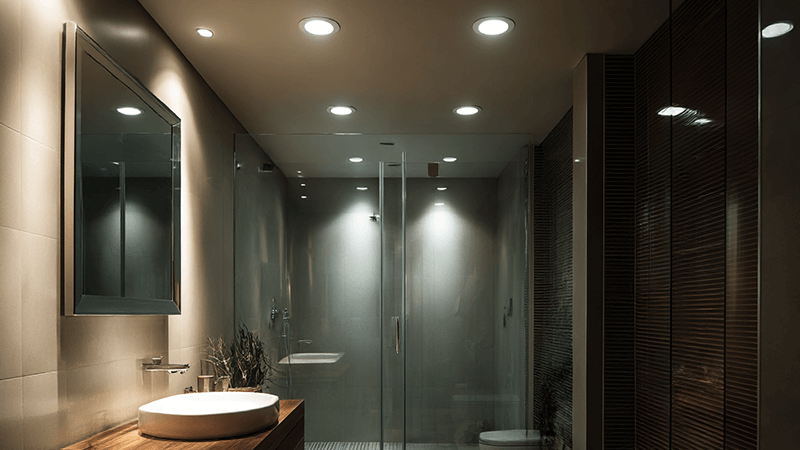
That seems straightforward, right? You just pick an IP65 downlight and the job is done. But during my years manufacturing lighting, I've seen countless IP65-rated lights fail in bathrooms for reasons that surprised my clients. The IP rating is just one piece of a much larger puzzle. To make a choice that lasts, you need to understand the whole story. Let's dig deeper into what really matters for bathroom lighting.
Is IP65 ok for bathrooms?
You trust the IP65 rating to keep water out. But then you notice condensation behind the lens, so how is that possible? I'll explain the "breathing" paradox that all sealed lights face.
IP65 is more than okay for bathrooms; it's the recommended standard for zones where water spray is a direct threat, like showers. However, its real-world effectiveness depends heavily on material quality. A good seal can't protect low-grade internal components from the trapped humidity.
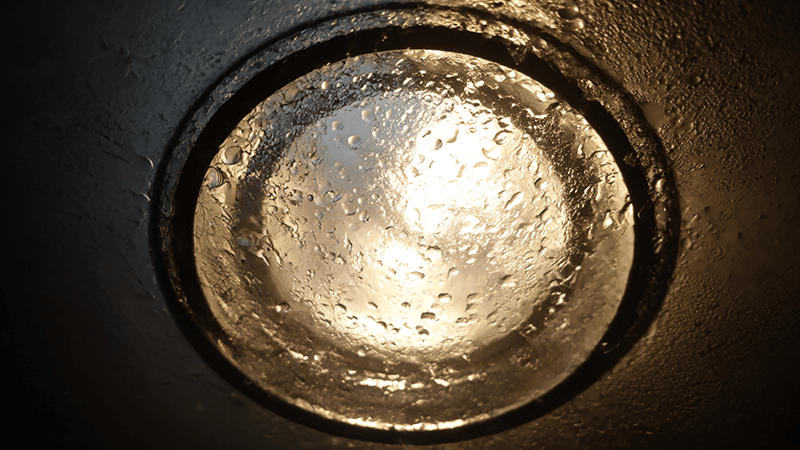
A high IP rating seems like a perfect shield against water. But the biggest enemy inside a sealed downlight isn’t a direct leak—it's condensation. I call this the "breathing paradox2." When you turn the light on, the air inside heats up, expands, and pushes its way out through tiny gaps in the seals. When you turn it off, the light cools down, and the air inside contracts, sucking in the humid bathroom air. Over many cycles, this "breathing" actively pumps moisture inside the fitting.
Once inside, this moisture starts a cascade of failures that the IP rating doesn't cover. It’s not just about the LED chip failing. I've seen it all.
The Hidden Points of Failure
- Reflectors: Cheap, plastic chrome-plated reflectors will quickly fog up and tarnish from the humidity, reducing light output and making the fixture look old.
- Fasteners: Low-quality steel screws holding the components together will rust, weakening the structure and making future repairs impossible.
- Seals: Gaskets made from cheap materials will become brittle and crack from the heat and humidity cycles, eventually breaking the IP seal completely.
I remember a client from the UAE who brought me a competitor's IP65 downlight that had failed. The main seal was intact, but inside, the screws were rusted solid and the reflector was dull and hazy. The IP rating stopped direct water, but it couldn't stop the internal damage from trapped, moist air. This taught me that the quality of every single component is what makes a downlight truly "bathroom-proof," not just the rating on the box.
What downlights can you use in a bathroom?
Choosing a bathroom downlight feels like a gamble. With hundreds of options all claiming to be waterproof, how do you pick one that actually lasts? I'll show you what to look for.
In a bathroom, use downlights with an IP rating appropriate for their specific location. Use IP65 for areas with direct water spray (Zone 1) and a minimum of IP44 for areas near sinks and baths (Zone 2). Always look for fixtures with a well-protected, separate driver.
When selecting a downlight, most people focus only on the fixture itself. But in my experience, the system's weakest link is often hidden away: the LED driver3. An IP65 downlight is only as durable as its power supply. In many designs, the driver is a separate unit that sits on top of the ceiling. If that driver isn’t also protected from moisture, the entire system is vulnerable. I’ve seen projects fail because a beautiful IP65 downlight was paired with a standard, non-IP-rated driver left exposed to all the steam and humidity in the ceiling void. It’s a classic mistake.
A System-Wide Approach to Bathroom Lighting
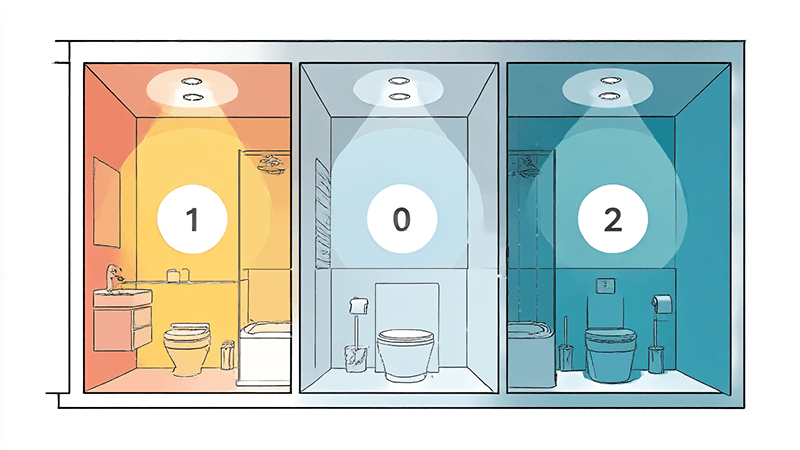
To choose the right downlight, you need to know your bathroom zones4. These are defined areas based on the risk of water exposure.
| Bathroom Zone | Location | Minimum IP Rating | My Recommendation |
|---|---|---|---|
| Zone 0 | Inside the bath or shower tray. | IP67 | Use specialized, low-voltage (12V) fittings. |
| Zone 1 | Above the bath or shower, up to 2.25m high. | IP44 | Always use IP65. This zone gets direct spray. |
| Zone 2 | 0.6m radius around the bath, shower, and sink. | IP44 | IP44 is the minimum, but IP65 offers better longevity. |
| Outside Zones | Any area outside Zones 0, 1, and 2. | No specific rating. | Use at least IP20, but IP44 is better for general humidity. |
Regulations vary by country, but these zones are a great guideline everywhere. For my clients, especially those with smaller bathrooms where steam fills the entire room, I often recommend using IP65 fixtures throughout. The small extra cost is cheap insurance for a light that will last for years instead of failing after the first season of high humidity.
Do bathroom downlights need to be IP rated?
You've probably seen a standard, non-rated downlight working in a bathroom before. So do you really need to spend more on an IP-rated one? This confusion can lead to unsafe choices.
Yes, bathroom downlights absolutely need to be IP rated. Water and electricity are a deadly combination. The IP rating is a critical safety standard that ensures the fixture is protected from moisture, steam, and splashes, preventing electrical shorts and the risk of electric shock.
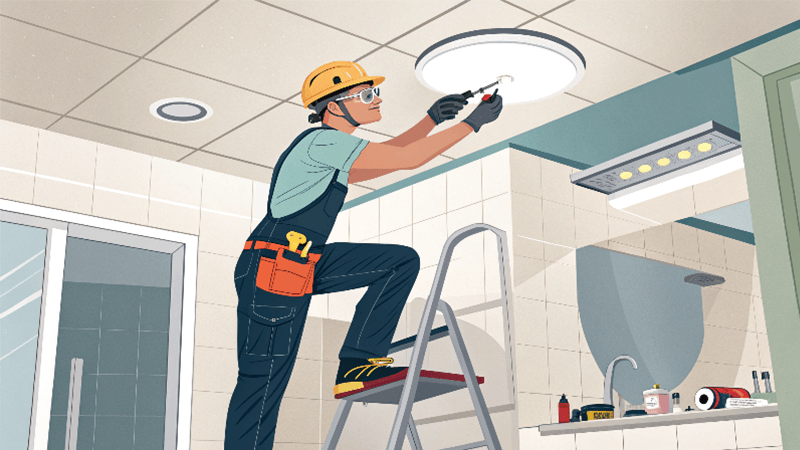
The primary purpose of an IP rating is safety. In an environment filled with water, steam, and condensation, using a non-rated electrical fixture is a serious risk. Water can easily get into the housing and come into contact with live wiring, which can cause a short circuit that could lead to a fire or a dangerous electric shock. This is non-negotiable.
But the IP rating is more than just a safety mark; it's also an indicator of overall build quality. A manufacturer can't achieve a genuine IP65 rating with poor-quality materials and sloppy construction.
Why an IP Rating is a Mark of Quality
Achieving an IP65 rating requires careful engineering. The manufacturer has to invest in:
- Better Materials: Using corrosion-resistant metals like die-cast aluminum instead of cheap stamped steel.
- Durable Gaskets: Employing high-grade silicone seals that won't crack or shrink over time, unlike cheap foam or rubber.
- Precise Manufacturing: Ensuring tight tolerances so that every part fits together perfectly, creating a reliable seal.
When you choose a downlight with a proper IP65 rating, you aren't just buying water protection. You are buying a better-built product. A company willing to invest in creating a waterproof seal is also more likely to have invested in quality reflectors, better heat sinks, and more reliable components overall. So even in areas where a lower IP rating might be technically allowed, opting for IP65 often means you're getting a more durable and longer-lasting light. It’s a smart investment in both safety and performance.
Should bathroom downlights be fire rated?
You're told you need fire-rated downlights5 for safety. But you also hear they trap heat and shorten the LED's lifespan. Let's untangle this conflict between safety and performance.
Yes, if the ceiling is also the floor of a habitable room above it, your downlights must be fire-rated. This rating is crucial for restoring the fire integrity of the ceiling after a hole has been cut, helping to prevent the spread of fire.
<sup id=](http://zsupward.com/wp-content/uploads/2025/08/bathroom-5.png) 6 expanded." title="Fire Rated Downlight Cross-Section" />
6 expanded." title="Fire Rated Downlight Cross-Section" />
A fire-rated downlight is designed to solve a serious problem. When you cut a hole in a ceiling to fit a downlight, you create a path for fire to spread to the floor above. Fire-rated downlights contain a special material called intumescent, which expands when heated to seal that hole, maintaining the ceiling's fire barrier for 30, 60, or 90 minutes. This is a critical safety feature and is often required by building codes7.
However, this creates a major technical challenge. The very design that blocks fire also blocks airflow. This brings us to the biggest conflict in modern lighting design.
The Battle Between Heat, Safety, and Light
LEDs need to stay cool to perform well and last a long time. Too much heat reduces their lifespan and can cause their light color to shift. Now, consider the environment we've created:
- An IP65 Seal: Designed to keep water out, but it also traps heat.
- A Fire-Rated Can: Designed to block fire, but it also traps heat.
We have a sealed, fire-proof container that is an ideal heat trap—the worst possible environment for an LED. This is where the quality of engineering truly shows. A cheap, poorly designed IP65 fire-rated downlight will cook itself to death in a year. A well-designed fixture solves this problem with superior thermal management8. It will feature a heavy, intelligently designed aluminum heat sink9 that effectively draws heat away from the sensitive LED chip and dissipates it, even within the sealed enclosure.
| Feature | Pro (Purpose) | Con (Side Effect) | The Engineering Solution |
|---|---|---|---|
| IP65 Seal | Waterproofing | Traps heat and moisture | High-quality materials, robust gaskets. |
| Fire Rating | Stops fire spread | Traps heat | An efficient, large aluminum heat sink. |
So when you're choosing a fire-rated downlight for a bathroom, don't just look for the ratings. Look at the build quality. A heavy, solid-feeling fixture with a substantial heat sink is a sign of good engineering that will deliver both safety and a long service life.
Conclusion
Choosing a bathroom downlight is about more than IP65. Look at the build quality, thermal design, and driver to ensure you get true safety and long-lasting, reliable performance.
Learn how to select the best waterproof lighting to prevent failures in humid environments. ↩
Understand the breathing paradox and how it affects the performance of sealed lighting fixtures. ↩
Learn about the critical role of the LED driver in ensuring the longevity of downlights. ↩
Get familiar with bathroom zones to choose the right lighting for each area. ↩
Explore the necessity of fire-rated downlights for safety in bathroom ceilings. ↩
Learn how intumescent seals work to enhance fire safety in downlights. ↩
Get informed about building codes that regulate bathroom lighting for safety. ↩
Discover how effective thermal management can prolong the life of LED downlights. ↩
Understand how aluminum heat sinks help maintain optimal LED performance. ↩