Worried about bathroom lighting safety? A wrong choice can cause hazards and costly damage. IP44 downlights1 offer a tested, reliable solution for moisture-prone areas2, ensuring peace of mind.
IP44 downlights improve bathroom safety by providing tested protection against water splashes from any direction. This makes them ideal for ceilings in most bathroom areas, preventing moisture from reaching internal electronics and reducing the risk of short circuits and electrical faults.
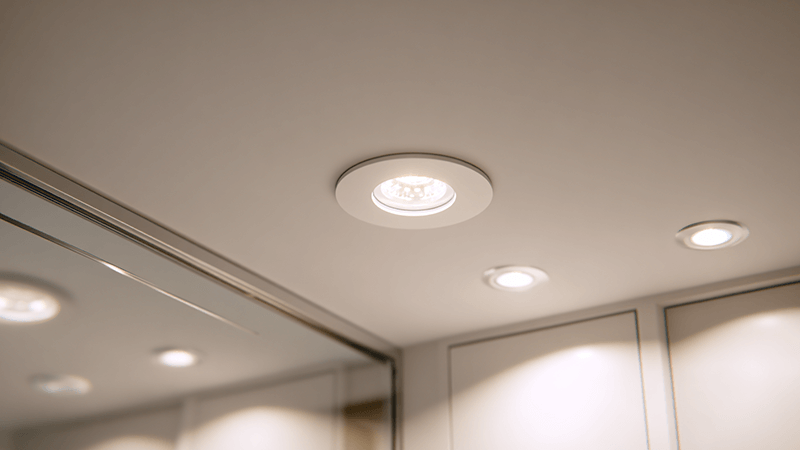
I've seen many purchasing managers, like Shaz from the UAE, struggle with specifying the exact IP rating3 needed for different bathroom zones. It’s a common point of confusion. Getting it right means balancing cost, compliance, and safety. But getting it wrong can be a serious liability. So, let’s break down the common questions I get asked all the time to give you complete clarity on this topic.
Are IP44 lights suitable for bathrooms?
Wondering if IP44 is truly enough for a bathroom? Guessing can lead to safety risks or unnecessary costs. IP44-rated lights are perfectly suitable and safe for specific bathroom zones.
Yes, IP44 lights are very suitable for bathrooms. They are designed to be splash-proof, making them safe for installation in Zone 24 and the outside zone. This typically includes the ceiling area above a sink, bath, or shower, protecting against condensation5 and splashes.
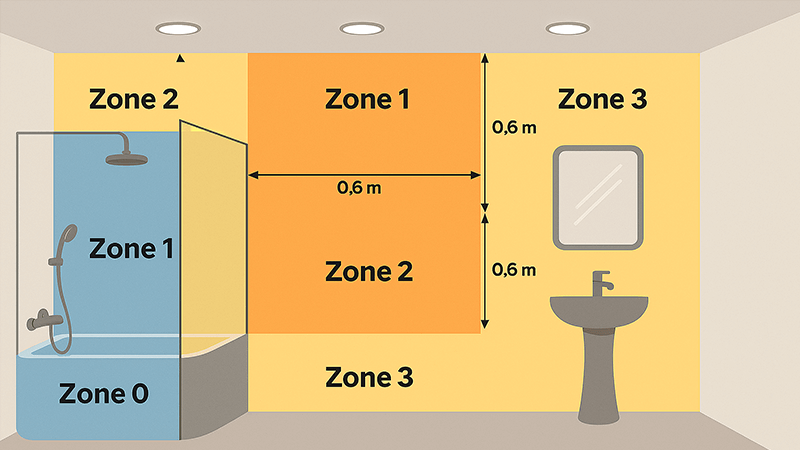
Over my years in lighting manufacturing6, one of the most frequent conversations I have with partners is about bathroom suitability. Many assume they need the highest possible IP rating everywhere, but that's not efficient or necessary. IP44 is often the perfect fit. The key is understanding what "IP44" actually means for a real-world environment like a bathroom. It’s a rating born from rigorous testing, not just a label based on how a product looks.
What does the IP44 rating mean?
The "IP" stands for Ingress Protection. The two numbers that follow have specific meanings.
- First Digit (4): Protection against Solids. This number indicates protection against solid objects larger than 1mm. In a bathroom context, this protects the internal wiring and components from things like insects or large dust particles. While dust isn't a primary hazard with moisture, this level of sealing helps maintain the light's integrity.
- Second Digit (4): Protection against Liquids. This is the critical number for bathrooms. A "4" means the product is protected against water splashes7 from any direction. Testers spray the fixture with water from all angles to ensure no harmful amount of water can get inside. This simulates the condensation, steam, and occasional splashes that are common in a bathroom.
It's important to remember that IP44 is water-resistant, not waterproof. It's not designed for submersion or direct jets of water. However, for a ceiling-mounted downlight located outside the immediate shower spray, it provides more than enough protection for a long and safe operational life. Many of my clients initially over-specify with IP658 for all bathroom areas, but when we discuss the specific zones, they realize IP44 is the smarter, more cost-effective choice for ceilings.
Are downlights good for bathrooms?
Struggling to find lighting that is both stylish and functional for a bathroom? Bulky fixtures can look dated and create shadows. Downlights offer a clean, modern, and effective solution.
Yes, downlights are an excellent choice for bathrooms. They provide clean, uniform illumination without taking up visual space. When specified with the correct IP rating, like IP44 for ceilings, they are one of the safest and most popular solutions for modern bathroom design9.
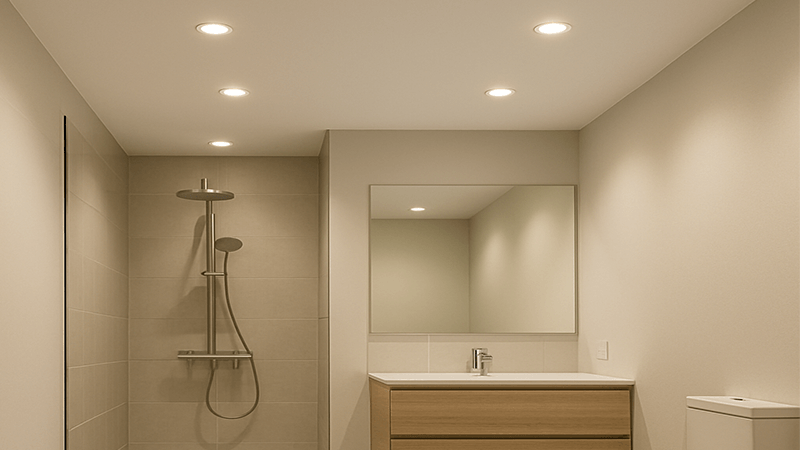
I remember working on a large residential project in Dubai where the contractor, a longtime partner, was hesitant about using downlights10 in the bathrooms. He was used to traditional wall sconces. He was concerned about creating a "clinical" feel and worried about performance in a humid environment. I sent him some samples of our new IP44 rated CCT selectable downlights to test in a mock-up bathroom, and he was immediately convinced. The ability to create layered, functional light completely changed the space.
Why choose downlights for a bathroom?
Downlights offer several advantages that make them almost purpose-built for bathroom applications.
| Feature | Advantage in a Bathroom |
|---|---|
| Sleek, Minimalist Design | They recess into the ceiling, creating a clean, uncluttered look that makes small bathrooms feel larger. This is a huge plus in modern interior design. |
| Uniform Light Distribution | By spacing them correctly, you can achieve even, shadow-free light across the entire room. This is crucial for tasks like shaving or applying makeup at the vanity. |
| Task & Ambient Lighting | You can use them for general room illumination (ambient) and place them strategically for focused task lighting11 over showers, vanities, and tubs. |
| Safety and Compliance | Downlights designed for bathrooms come with the necessary IP ratings (like IP44 or IP65), ensuring they are sealed and safe for use in damp or wet locations. |
To get the most out of downlights, placement is key. I always advise clients to think in layers. Use a grid of downlights for general ambient lighting12. Then, add one or two directly over the vanity mirror to eliminate face shadows. A dedicated downlight over the bathtub or in the shower enclosure (with the correct IP rating, of course) adds a touch of luxury and improves safety. This layered approach, which is easy to achieve with downlights, is what separates a basic bathroom from a well-designed one.
What IP rating should bathroom downlights be?
Choosing the right IP rating for a bathroom can feel complicated. An incorrect choice compromises safety or inflates your project budget unnecessarily. The right IP rating depends entirely on the zone.
Bathroom downlights should have a minimum IP rating based on their location. For ceilings in Zone 2 and outside zones (most of the bathroom), IP44 is sufficient. For downlights inside a shower cubicle (Zone 1), a higher rating of IP65 is required.
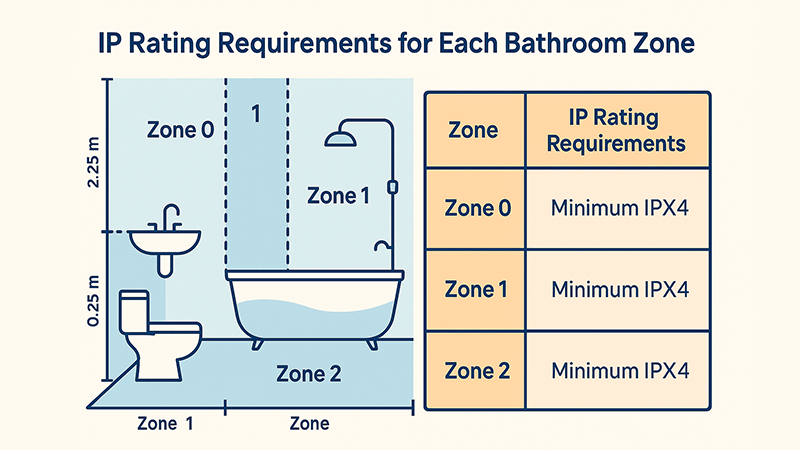
Understanding bathroom zones is the most important skill for a purchasing manager sourcing lighting. It’s not about finding one "best" IP rating; it’s about matching the rating to the risk. Regulations divide a bathroom into zones based on their proximity to water sources. As a manufacturer, we design and test our products to meet the standards for these specific zones. When I explain this to clients, it removes all the guesswork. They can purchase with confidence, knowing they are compliant and safe without overspending.
A Breakdown of Bathroom Zones and IP Ratings
To make it simple, let's break down the zones and the required IP ratings for lighting.
-
Zone 0
- Location: Inside the bath or shower tray itself. Any fitting here must be low voltage (max 12V).
- Required IP Rating: IP67. This means it is fully immersion-proof. This is very rare for downlights, which are typically not installed here.
-
Zone 1
- Location: The area directly above the bath or shower, up to a height of 2.25m from the floor. This area is subject to direct water spray.
- Required IP Rating: IP65. The '6' provides total dust protection, and the '5' protects against jets of water from any direction. A downlight installed in a shower ceiling falls into this zone.
-
Zone 2
- Location: This covers the area stretching 0.6m outside the perimeter of the bath or shower and to a height of 2.25m from the floor. It also often includes the area around the sink. Water splashes are possible but direct jets are not.
- Required IP Rating: IP44. This is where most bathroom downlights are installed—on the main ceiling area. An IP44 rating ensures protection from splashes, steam, and condensation.
-
Outside Zones (formerly Zone 3)
- Location: Any area outside of zones 0, 1, and 2. No specific IP rating is technically required here as there's no direct water threat.
- Recommended IP Rating: IP44. I always recommend sticking with at least IP44 for all ceiling downlights in a bathroom. Why? Because steam and condensation don't follow strict zones. Using a consistent IP44 rating provides a baseline of moisture protection and simplifies sourcing.
Is IP44 or IP65 better for bathrooms?
Deciding between IP44 and IP65 can be confusing. You want to ensure safety without paying for protection you don't need. The "better" choice depends entirely on the light's exact position.
Neither IP44 nor IP65 is universally "better"; they serve different purposes. IP65 is better for areas with direct water jets, like inside a shower (Zone 1). IP44 is better for most other bathroom areas like the main ceiling (Zone 2), offering sufficient protection at a lower cost.
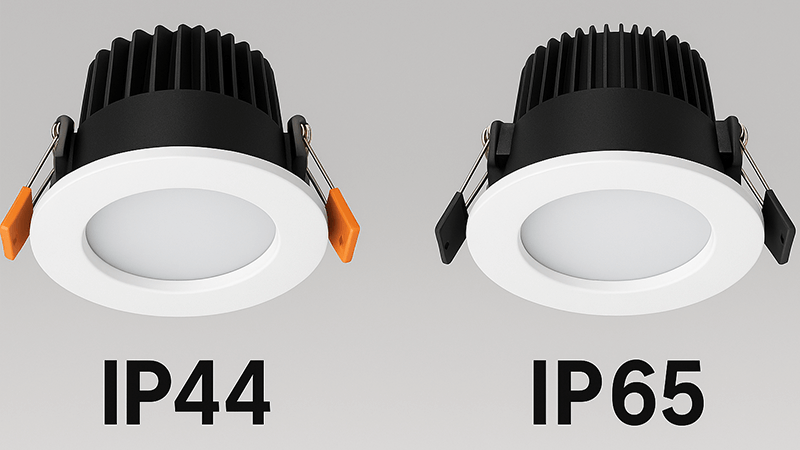
I often speak with product designers like Shaz who are trying to optimize their product catalog. They ask, "Michael, should we just stock IP65 and recommend it for everything?" My answer is always no. While it seems simpler, it's not the best service for your clients. It forces them to pay a premium for over-engineered products in areas where IP44 is perfectly safe and compliant. The role of a good supplier is to provide the right solution, not just the most powerful one. Offering both, and educating your clients on where to use them, builds trust and demonstrates expertise. It shows you are looking out for their budget as well as their safety.
Choosing Between IP44 and IP65: A Practical Guide
The core of the decision comes down to the second digit in the IP rating: water ingress protection.
- IPx4 (Splashes): The fixture is tested by spraying water at it from all directions. This simulates the condensation and splashes found in a typical Zone 2 environment.
- IPx5 (Jets): The fixture is tested by spraying it with a water jet from a nozzle. This is a much more intense test, simulating direct spray from a shower head.
Here's how to decide for your projects:
| Location in Bathroom | Recommended IP Rating | Why? |
|---|---|---|
| Main Ceiling (away from shower) | IP44 | This area is in Zone 2 or an outside zone. It's subject to steam and condensation, but not direct water jets. IP44 is specifically designed for these splash-proof13 conditions, making it the most cost-effective and compliant choice. |
| Ceiling directly inside a shower cubicle | IP65 | This area is in Zone 1. The downlight could be hit by direct spray from the shower head. IP65's protection against water jets is essential here for safety and product longevity. |
| Over a Vanity/Sink | IP44 | This is typically considered Zone 2. While there can be splashes from the sink, they won't be powerful jets. IP44 offers sufficient protection. |
| Wall lights (above 2.25m) | IP44 | Even if a wall light is far from the shower, steam rises. I recommend IP44 as a safe baseline to prevent long-term moisture damage to any light in the bathroom. |
By offering both IP44 and IP65 downlights, you empower your clients to build a safe, compliant, and cost-effective lighting scheme. You prove yourself not just as a supplier, but as a knowledgeable partner.
Conclusion
In summary, IP44 downlights are a safe, compliant, and cost-effective lighting solution for most bathroom areas, protecting against splashes and condensation, which is key for long-term reliability and safety.
Explore how IP44 downlights can enhance safety and reliability in moisture-prone areas. ↩
Discover the best lighting options that ensure safety and durability in moisture-prone environments. ↩
Learn about IP ratings and their significance in ensuring safe lighting installations. ↩
Get clarity on Zone 2 regulations and their implications for bathroom lighting safety. ↩
Learn about the effects of condensation on lighting fixtures and how to mitigate risks. ↩
Stay updated on the latest trends in lighting manufacturing specifically for bathrooms. ↩
Understand the impact of water splashes on lighting selection and safety in bathrooms. ↩
Discover when IP65 rated lights are necessary for optimal safety in bathroom environments. ↩
Explore essential elements that contribute to a stylish and functional modern bathroom. ↩
Discover the benefits of downlights for modern and efficient bathroom lighting. ↩
Learn how to implement task lighting for improved functionality in bathroom spaces. ↩
Explore the role of ambient lighting in creating a comfortable bathroom atmosphere. ↩
Understand the meaning of splash-proof and its importance in bathroom lighting. ↩