Worried about fire safety in your bathroom? A downlight cutout can let fire spread fast. Fire-rated downlights seal this gap, protecting your home and giving you peace of mind.
Yes, bathroom downlights should be fire-rated if they are installed in a ceiling with a habitable room above. These lights are designed to seal the cutout, stopping fire and smoke from spreading through the ceiling void for a specified time, which is a critical safety requirement.
Choosing the right downlight is about more than just looks and brightness; it's about safety. But the rules can be confusing. I've seen many projects where this detail is overlooked, leading to major issues later. Let's break down exactly what you need to know to make the right choice for your projects and keep everyone safe.
Do I need fire rated downlights in the bathroom?
Unsure if your bathroom project requires fire-rated downlights1? Making the wrong choice can lead to failed inspections or serious safety risks. Knowing the rules for your ceiling type simplifies the decision.
You need fire-rated downlights in a bathroom when the ceiling is below a habitable room2. This is to maintain the fire integrity3 of the ceiling. If the space above is just a roof loft, they are generally not required, but always check local building codes4.
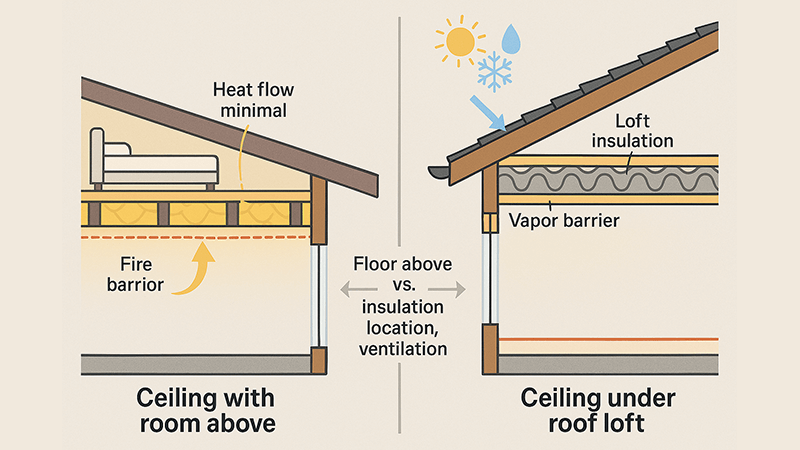
The need for fire-rated downlights comes down to one simple question: what is above the ceiling? If the bathroom is on the ground floor and there's a bedroom or another living space directly above it, you absolutely need fire-rated downlights. Think of your ceiling as a fire barrier5. When you cut a hole in it to install a downlight, you create a weak spot. A fire-rated downlight is designed to plug that hole during a fire. It contains a special material called intumescent that expands when it gets hot. This expansion seals the opening, preventing fire and smoke from rushing into the room above. This action restores the ceiling's fire resistance for a specific period, usually 30, 60, or 90 minutes.
However, if the bathroom is on the top floor, with only a roof void or attic space above, fire-rated downlights are not usually a legal requirement. This is because there is no habitable room to protect directly above. Even so, I often recommend them for peace of mind. Safety is an area where I believe it’s better to exceed the minimum standards.
| Ceiling Location | Habitable Room Above? | Fire-Rated Downlight Required? | Reason |
|---|---|---|---|
| Ground Floor Bathroom | Yes (e.g., Bedroom) | Yes | To maintain the fire barrier between floors. |
| Top Floor Bathroom | No (e.g., Roof/Attic) | Generally No | No habitable space above to protect. |
| Apartment/Multi-Story Building | Yes (Another Apartment) | Yes | Essential for fire compartmentation6. |
Remember to always consult and follow your local building regulations, as they can vary by region and are the ultimate authority.
Are all downlights fire rated?
Assuming all downlights are fire-rated is a common and dangerous mistake. Installing a non-rated downlight where a rated one is needed compromises the entire ceiling's fire barrier. Learning to identify them is essential.
No, not all downlights are fire-rated. It is a specific safety feature. Fire-rated models are clearly marked as such on the product and packaging, often stating the rating in minutes (e.g., 30, 60, 90). Always check the specifications before purchasing or installing.
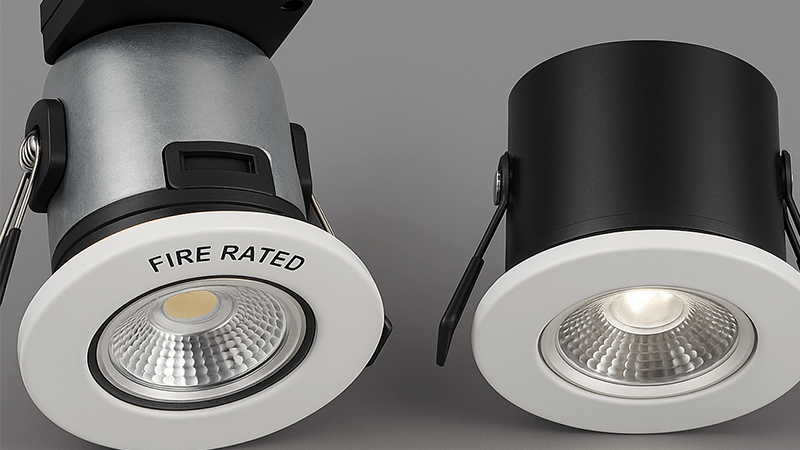
It's a critical mistake to assume every downlight offers fire protection. Standard, non-fire-rated downlights7 are essentially just a light fitting in an open can. They offer no resistance to fire. If a fire starts, the hole you cut for that downlight becomes a chimney for flames and toxic smoke. As a manufacturer, I can tell you that the difference in construction is significant. A fire-rated downlight is a more complex piece of engineering.
How to Identify a Fire-Rated Downlight
- Look for the 'Hood': Many fire-rated downlights have a steel "can" or "hood" over the back. This hood contains the intumescent material8 and helps to contain any fire. Non-rated versions are often open at the back.
- Check Product Markings: The body of the downlight itself, its box, and the technical datasheet will explicitly state that it is fire-rated. It will also specify the duration of protection, like "BS 476-21 compliant" or "90-minute fire-rated." If it doesn't say it's fire-rated, it isn't.
- Heavier and More Robust: Due to the extra materials like the steel can and intumescent lining, fire-rated downlights are noticeably heavier and feel more solid than their non-rated counterparts.
In my years in the industry, I've seen the consequences of using the wrong product. I once had a client, a contractor, who failed an inspection on a large apartment complex. He had mistakenly installed non-rated downlights between floors. The cost to replace every single fixture was huge, not to mention the project delays. It was a painful lesson for him. This is why, as a purchasing manager like Shaz, verifying the product certification is one of the most important parts of your job. Never take a supplier's word for it; always ask for the test reports and certifications.
What are the rules for bathroom lights?
The rules for bathroom lights seem complex, with talk of zones and IP ratings9. This can make choosing the right product confusing. Getting it wrong can lead to safety hazards10 or failed inspections.
Bathroom lighting rules are based on IP (Ingress Protection) zones. These zones relate to the fixture's distance from water sources. The closer to water, the higher the required IP rating to protect against water and moisture, ensuring electrical safety.
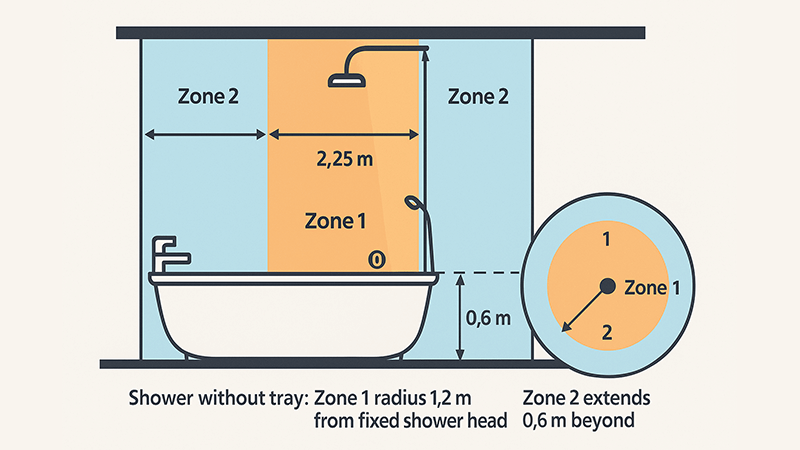
Understanding bathroom zones is the key to safety. Think of it as creating safe electrical areas in a wet environment. These zones are defined by how much water a light fitting is likely to encounter.
The Bathroom Zones Explained
- Zone 011: This is inside the bath or shower tray itself. Any light here must be low voltage (max 12V) and be totally immersion-proof, rated at least IP67. This is very rare for residential projects.
- Zone 112: This is the area directly above the bath or shower, up to a height of 2.25m from the floor. Lights in this zone must have an IP rating of at least IP4413, but IP6514 is highly recommended for complete protection against direct water jets from a showerhead.
- Zone 215: This area covers a 0.6m radius around the perimeter of the bath, shower, and sink. It also includes the space above Zone 1. The minimum requirement here is IP44.
The Unzoned Area
Any area outside of zones 0, 1, and 2 is considered an "unzoned" or "outside" area. In theory, no specific IP rating is required here. However, bathrooms are humid, steamy places. I always advise using a minimum of IP44 for all downlights in a bathroom, regardless of the zone. This ensures durability and prevents issues from condensation over time.
I remember helping a client who was developing a series of luxury homes16. The designer wanted a specific aesthetic, but the chosen lights were only IP20. I had to explain that while they would be outside the main zones, steam and condensation could still cause them to fail or even short-circuit over time. We worked together to find an IP44-rated alternative that matched his design vision. It’s my job to ensure the product is not only beautiful but also safe and long-lasting. For a purchasing manager, this foresight protects your company's reputation and avoids costly replacements down the line.
Is IP65 good for a bathroom?
You see "IP65" on a product, but what does it really mean for a bathroom? Choosing a rating that's too low is risky, but is going for a higher rating like IP65 always necessary?
Yes, IP65 is excellent for a bathroom. It means the light is fully protected against dust and can withstand direct jets of water. This makes it safe for use in Zone 1, such as directly over a shower, and is a great choice for any bathroom area.
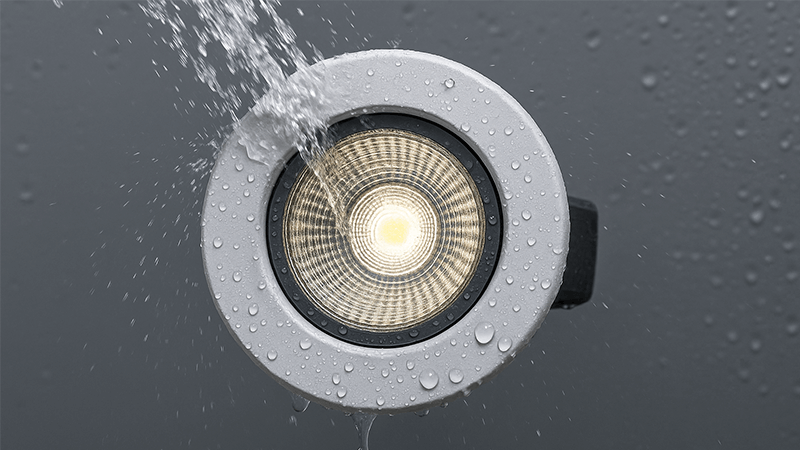
Let's break down that "IP65" rating so it's perfectly clear. The "IP" stands for Ingress Protection. It's a universal standard used to define how well a product is sealed against foreign bodies (like dust) and moisture.
- The first digit (6) refers to protection against solid objects. A '6' is the highest possible rating. It means the enclosure is completely dust-tight. No dust can get inside.
- The second digit (5) refers to protection against liquids. A '5' means the product is protected against low-pressure jets of water from any direction. Think of a showerhead spraying it directly.
So, when you choose an IP65-rated downlight, you are getting a product that is fully sealed against dust and can handle being directly sprayed with water. This is why it's the go-to rating for areas like Zone 1, right above a shower or bath where it will definitely get wet.
While Zone 2 and unzoned areas only require IP44 (splash-proof), I often specify IP65 for the entire bathroom project. Why? It creates a uniform, high-safety standard across the installation. It means you don't have to worry about which downlight goes where, simplifying purchasing and installation. It also gives the end-user total peace of mind. For a purchasing manager like Shaz, stocking a single, versatile IP65 downlight can streamline inventory and cover almost any bathroom application your clients have. It's a smart, safe, and efficient choice. In my own factory, I always push for higher IP ratings on our bathroom products because I know it prevents future problems for my clients. A product that can withstand the harshest conditions in the bathroom will perform flawlessly in the driest ones.
Conclusion
In short, use fire-rated and appropriately IP-rated downlights in your bathroom projects. This ensures you meet safety regulations, protect property, and deliver a secure, lasting installation for your clients.
Learn about fire-rated downlights and their critical role in preventing fire spread in your home. ↩
Understanding habitable rooms is crucial for compliance with safety regulations in construction. ↩
This resource will guide you on maintaining fire integrity in your building projects. ↩
Understanding local building codes is essential for ensuring compliance and safety in construction. ↩
Explore the concept of fire barriers and their critical role in fire safety. ↩
Learn about fire compartmentation and its importance in building safety and design. ↩
Understand the dangers of non-fire-rated downlights and why they should be avoided. ↩
Explore the properties of intumescent materials and their role in fire safety. ↩
This link will clarify IP ratings and their significance in ensuring electrical safety in bathrooms. ↩
Learn about common safety hazards in bathroom lighting to avoid potential risks. ↩
Explore the specific safety requirements for Zone 0 to ensure compliance and safety. ↩
Learn about the lighting requirements for Zone 1 to ensure safety in wet areas. ↩
Discover the significance of IP44 ratings in ensuring safety for bathroom lighting. ↩
Learn why IP65 is an excellent choice for bathroom lighting and its protective features. ↩
This resource will help you understand the regulations for lighting in Zone 2 for safety. ↩
Explore lighting considerations for luxury homes to ensure both aesthetics and safety. ↩