Bathroom lights giving you safety concerns? Water damage can cause failures and electrical hazards. IP44 downlights offer the protection you need for a safe, reliable, and beautifully lit bathroom.
The best IP44 downlights for residential bathrooms are sealed LED units. They combine moisture resistance with energy efficiency and long life. Look for options with a good CRI for accurate color, and consider dimmable features for creating ambiance. These provide a perfect balance of safety and performance.

So, sealed LED units are the way to go. But that's just the start. You're probably wondering about specific locations in the bathroom, different IP ratings, and why LED is the best choice. I want to help you make the perfect purchasing decision for your projects. Let's break it down further, so you have all the information you need.
What downlights are best for bathrooms?
Choosing the right downlight for a bathroom can be confusing. The wrong light can look out of place or fail quickly due to moisture. The best downlights are sealed, moisture-resistant, and aesthetically pleasing.
The best downlights for bathrooms are specifically designed for damp environments. These include Fire-Rated IP65 downlights for shower areas and IP44 downlights for general ceiling use. Look for integrated LED models for performance and longevity, ensuring a seamless and reliable lighting solution for any bathroom design.

When I talk with purchasing managers like Shaz, the first thing we discuss isn't a specific product, but the application. A bathroom is not just one space; it's a collection of zones with different safety requirements. Choosing the "best" downlight means matching the right product to the right zone. I have seen costly mistakes happen when this simple rule is ignored. The key is to think about safety first, then performance, and finally aesthetics.
Understanding Bathroom Zones
In the lighting industry, we follow electrical regulations that divide a bathroom into zones. This ensures everyone's safety.
- Zone 0: This is inside the bath or shower basin itself. Any fitting here must be low voltage (max 12V) and fully water-proof, rated at least IP67.
- Zone 1: This is the area directly above the bath or shower, up to a height of 2.25m from the floor. Here, you need a light with an IP65 rating. The "6" means it is dust-tight, and the "5" means it is protected against jets of water from any direction.
- Zone 2: This is the area stretching 0.6m outside the perimeter of the bath and shower and to a height of 2.25m. An IP44 rating is required here.
- Outside Zones: This is any area outside of zones 0, 1, and 2. While technically no IP rating is required, I always recommend using IP44 rated downlights for the entire bathroom ceiling. Steam and condensation don't follow neat lines, and using a consistent IP44 rating ensures longevity and safety everywhere.
Material and Finish Matter
Moisture1 is the enemy of most metals and electronics. The materials used in a bathroom downlight are just as important as the IP rating2.
- Housing: Die-cast aluminum3 is a popular choice for its excellent heat dissipation. However, it must be properly treated. I always look for a high-quality powder coating or an electrophoretic coating. This prevents the aluminum from oxidizing and looking terrible after a few years.
- Diffuser: The lens covering the light source should be well-sealed. Polycarbonate (PC)4 is durable and impact-resistant. Glass can offer a clearer light but is more fragile. For most residential projects, a frosted PC diffuser provides a great balance of soft light and durability.
Comparing Downlight Types for Bathroom Use
Let's look at the options. This table makes it clear why one choice is superior.
| Feature | Halogen Downlight | CFL Downlight | Integrated LED Downlight5 |
|---|---|---|---|
| Moisture Resistance | Poor, susceptible to failure. | Moderate, but electronics can fail. | Excellent, when in a sealed unit. |
| Energy Efficiency6 | Very Low | Moderate | Very High |
| Lifespan7 | ~2,000 hours | ~8,000 hours | 30,000 - 50,000+ hours |
| Heat Output8 | Very High (Fire risk) | Low | Very Low |
| Best For | Phased out, not recommended. | Budget installs (not ideal). | All bathroom applications. |
Based on my experience, integrated LED downlights9 are the only choice I recommend for new bathroom projects. They are safer, last longer, and save the client money in the long run.
What IP rating do you need for bathroom downlights?
You're worried about choosing lights that might fail or be unsafe in a bathroom. A wrong IP rating can lead to short circuits or corrosion, causing costly replacements. This is a common fear.
To be safe, you need at least an IP44 rating10 for most bathroom ceiling downlights. For areas directly above a shower or bath (Zone 1), you must use an IP65 rating. This ensures protection against both splashes and jets of water, guaranteeing safety and product longevity.
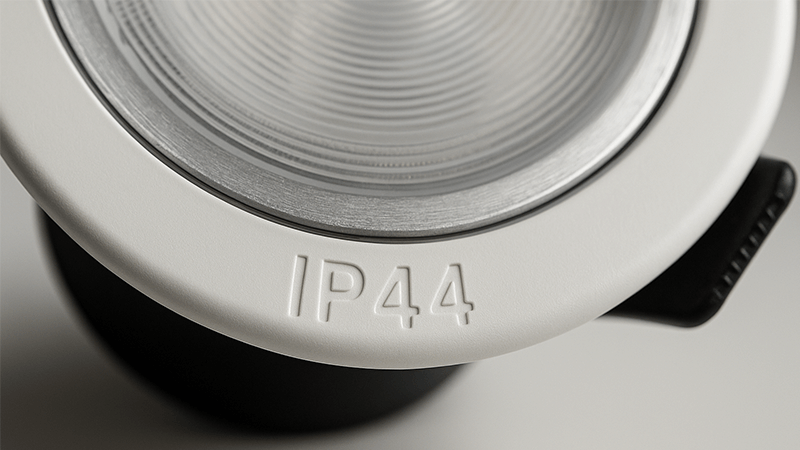
I often explain the IP rating system to clients using a simple breakdown. "IP" stands for Ingress Protection11. It's a universal standard that tells us how well a piece of equipment is sealed against solids and liquids. The two numbers after "IP" each mean something very specific. Thinking about it this way removes the mystery and helps you choose the right product with confidence. It's a simple code that, once you understand it, makes sourcing much easier.
Breaking Down the IP Code
The IP rating is your best guide to a product's durability in a damp environment. Let's look at what the numbers mean for downlights.
-
The First Digit (Solids): This number ranges from 0 to 6. It tells you the level of protection against solid objects, from large body parts to tiny dust particles. For a downlight sealed in a ceiling, we are mostly concerned with dust and insects.
- IP4X: This means the fixture is protected against solid objects larger than 1mm. This is important to prevent insects or large debris from getting inside the housing.
- IP6X: This means the fixture is completely dust-tight. No dust can get in. This is the highest level of protection and is standard for high-quality downlights like our IP65 models.
-
The Second Digit (Liquids): This number is crucial for bathrooms. It ranges from 0 to 9 and tells you how well the light is protected against moisture.
- IPX4: Protected against splashing water from any direction. This is your minimum standard for a bathroom ceiling (Zone 2 and outside zones). It can handle steam and condensation perfectly.
- IPX5: Protected against low-pressure water jets from any direction. This is what you need for Zone 1, directly over a shower. It ensures that a direct spray from a showerhead won't cause any issues.
- IPX7: Protected against temporary immersion in water. You'll find this rating on lights designed to be installed inside a bath or a wetroom floor (Zone 0).
IP Rating Application Chart
This table helps you visualize which IP rating to use where. I tell my partners to save this as a quick reference tool.
| Bathroom Zone | Location | Minimum IP Rating Required | My Recommendation |
|---|---|---|---|
| Zone 0 | Inside the bath or shower floor | IP67 | IP67 (Low Voltage) |
| Zone 1 | Directly above the bath or shower (up to 2.25m) | IP65 | IP65 |
| Zone 2 | 0.6m around the bath/shower (up to 2.25m) | IP44 | IP44 or IP65 |
| Outside Zones | All other areas of the bathroom ceiling and walls. | None (technically) | IP44 (as a minimum) |
I remember a project with a hotel developer in the UAE. They were on a tight budget and wanted to use IP20 downlights everywhere except directly over the showers. I strongly advised against it. I explained that steam from a hot shower fills the whole room, and over time, the moisture would corrode the IP20 fittings. We compromised on IP44 for the main ceiling areas. A year later, the client called to thank me. A competing hotel that opened at the same time had to replace dozens of their cheap downlights, while his still looked and worked like new. That is the value of choosing the right IP rating from the start.
Are LED downlights suitable for bathrooms?
You may wonder if the advanced electronics in LED lights can handle bathroom humidity. It's a valid concern, as moisture is the enemy of circuits and drivers. Failure would be a disaster.
Yes, LED downlights are perfectly suitable and are the best choice for bathrooms. When housed in a sealed, IP-rated fixture (like IP44 or IP65), the LED chip and driver are fully protected from moisture and steam, ensuring a long, safe, and energy-efficient life.
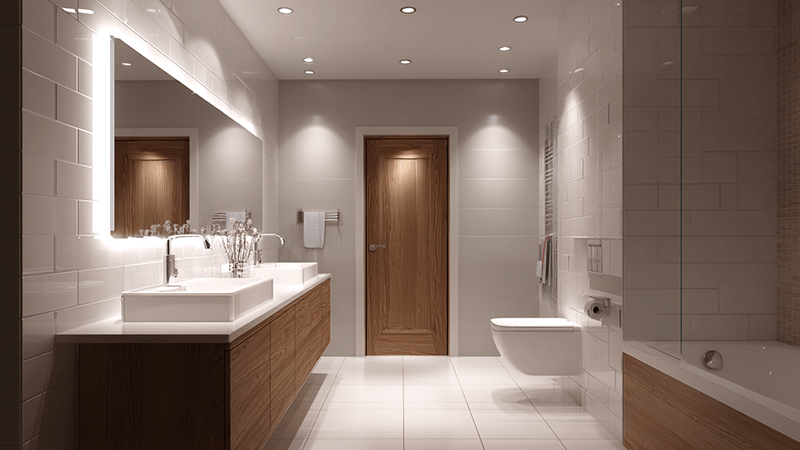
When I first started in this industry, halogen lamps were the standard. They were hot, inefficient, and a real safety concern in a bathroom ceiling. The arrival of LEDs changed everything. I remember seeing the first sealed LED downlight prototypes and realizing this was the future. The technology has only improved since then. LEDs run cool, use very little energy, and their long lifespan is perfect for a room where changing a bulb can be difficult. They are not just suitable; they are the ideal solution.
Why LEDs Excel in Humid Environments
LEDs have several inherent advantages that make them superior to old technologies, especially in a place like a bathroom.
- Low Heat Operation: Unlike halogen bulbs that get incredibly hot, LEDs produce very little heat. This is a major safety benefit. Less heat means a lower risk of fire, especially in a ceiling void with insulation. It also means the fixture's seals and gaskets don't degrade from thermal stress, maintaining the IP rating for longer.
- Sealed Unit Design: The best bathroom LED downlights are integrated units. This means the light source and the driver are sealed within the housing. There are no gaps for moisture to enter, which was a common failure point for older lamps where you had to replace the bulb. This design integrity is key to their long life in damp conditions.
- Energy Efficiency = Less Cost: A bathroom light might be on for several hours a day, especially in a family home. An LED downlight uses up to 90% less energy than a comparable halogen bulb. For a client with multiple properties or a large family, this translates into significant savings on electricity bills over the product's lifespan.
Going Beyond the Bathroom
The features that make IP44 LED downlights perfect for bathrooms also make them incredibly versatile for other damp or semi-exposed areas. As a manufacturer, I've supplied these products for a wide range of applications. This makes them a great stock item for a distributor because they solve many problems.
I have seen our IP44 downlights used effectively in:
- Kitchens: Especially above sinks or near cooking areas where steam and grease can be an issue. The sealed front prevents particle buildup on the electronics.
- Laundry Rooms: Washers and dryers, especially ventless dryers, can create a lot of humidity. An IP44 downlight is a reliable choice that will not fail due to the damp air.
- Covered Outdoor Areas: They are perfect for sheltered balconies, carports, and covered walkways. They are protected from ambient humidity and splashing rain.
- Spa and Gym Changing Rooms: These high-humidity environments are a perfect match for IP44 or IP65 fittings. They provide safe, reliable lighting that can withstand the constant moisture.
When you select a good quality IP44 LED downlight, you are sourcing a product that can serve many needs for your clients, increasing its value and sales potential.
What light is recommended for a bathroom?
Finding the perfect light for a bathroom feels complicated. You need to balance brightness for tasks, ambiance for relaxing, and of course, safety. It's easy to get it wrong.
A layered lighting approach is recommended. Use bright, high-CRI LED downlights on the ceiling for general illumination, and add wall-mounted vanity lights around the mirror for task lighting. For ambiance, ensure all lights are on a dimmer switch.
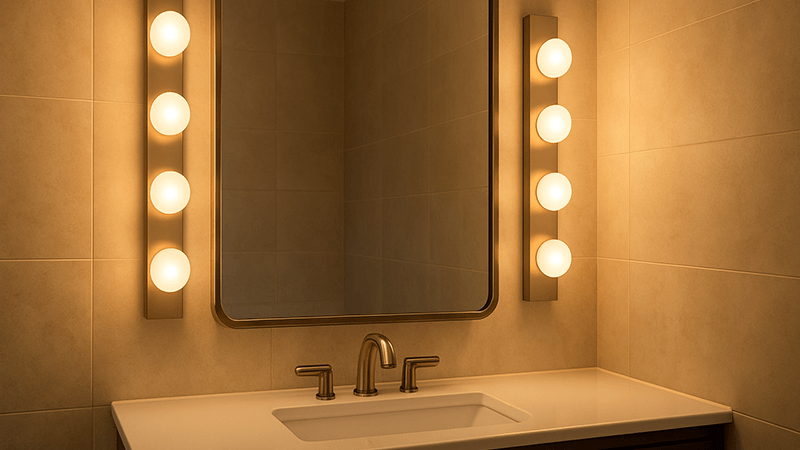
A bathroom is no longer just a functional room. For many, it's a private sanctuary. The lighting has to support this dual purpose. I always tell my project partners that one type of light is not enough. You wouldn't light a kitchen with just one bulb, and the same principle applies here. Creating a lighting "plan" or "scheme" is the mark of a professional. It involves layering different light sources to create a space that is both functional and beautiful. This approach shows your client you are thinking about how they will actually live in the space.
Creating the Perfect Bathroom Lighting Scheme
A great bathroom lighting plan consists of three layers. Let's look at each one.
-
1. Ambient Lighting (General Light): This is the main source of light that fills the room. It provides overall visibility for safely moving around.
- Product: Ceiling-mounted LED downlights are the best choice.
- Specification: Use IP44 or IP65 rated downlights depending on the zone. A color temperature of 3000K (Warm White) or 4000K (Cool White) is usually preferred. A wide beam angle (60° or more) helps to spread the light evenly.
- My Tip: I always advise installing them on a dimmer switch. This allows the user to turn the brightness down for a relaxing bath.
-
2. Task Lighting12 (Focused Light): This is directed light for specific activities like shaving, applying makeup, or brushing teeth. This is the most important light for functionality.
- Product: Wall-mounted sconces on either side of the mirror or a single fixture above it.
- Specification: The key here is high Color Rendering Index (CRI). You need a CRI of 90 or above. This ensures that skin tones and makeup colors look accurate. Placing lights on both sides of the mirror is best as it eliminates shadows on the face.
- My Tip: Avoid putting a downlight directly over the sink. It will cast a strong, unflattering shadow down the face.
-
3. Accent Lighting13 (Decorative Light): This layer adds depth and interest. It's not always necessary for smaller bathrooms, but it elevates a luxury design.
- Product: Low-profile LED strips or miniature spotlights.
- Specification: Use IP67 rated LED tape to backlight a mirror, light up a shower niche, or glow from under a floating vanity. It creates a "wow" factor.
- My Tip: Keep the accent lighting subtle. It's meant to highlight features, not overwhelm the space. A warm 2700K or 3000K color temperature works best for a spa-like feel.
A Quick Guide to Bathroom Lighting Layers
| Lighting Layer | Purpose | Recommended Product | Key Specification |
|---|---|---|---|
| Ambient | General room illumination | IP-rated LED Downlights | Dimmable, Wide Beam Angle |
| Task | For grooming at the mirror | Wall Sconces / Vanity Lights | CRI 90+, Flanking the mirror |
| Accent | Highlight architectural features, create mood | LED Strip Lights, Mini Spotlights | Low-profile, IP67 for wet areas |
By presenting a layered lighting plan to your clients, you move the conversation from "how much is one light" to "how do we create the best experience." It demonstrates your expertise and helps them achieve a result they will love. This is how we build long-term partnerships.
Conclusion
In summary, the best bathroom downlights are IP-rated, integrated LED models. Layering them with task lighting and dimmers creates a safe, functional, and beautiful space that any client will value.
Understanding moisture's impact can help you choose the right materials for your projects. ↩
Understanding IP ratings is crucial for selecting safe and reliable lighting fixtures. ↩
Explore the advantages of die-cast aluminum for durability and heat dissipation. ↩
Discover why polycarbonate is a preferred choice for durable and impact-resistant lighting. ↩
Find out why integrated LED downlights are the best choice for modern lighting solutions. ↩
Discover how energy-efficient lighting can save you money and reduce your carbon footprint. ↩
Learn about the longevity of various downlight options to make informed choices. ↩
Understanding heat output is essential for ensuring safety in lighting installations. ↩
Find out why LED downlights are the ideal choice for moisture-prone environments. ↩
Learn about the protection level of IP44 rated lights and their suitability for bathrooms. ↩
Gain insights into how Ingress Protection ratings ensure product durability. ↩
Learn about the importance of task lighting for functionality in bathroom settings. ↩
Discover how accent lighting can elevate the design and mood of a bathroom. ↩