Choosing the wrong light color can ruin a room's atmosphere. It makes your space feel cold or strange. Understanding CCT is key to creating the perfect mood for every room.
The best color temperature for downlights depends on the room's purpose. Warm White (2700K-3000K) is perfect for relaxing spaces like living rooms. Cool White (4000K) suits work areas like kitchens and offices. Daylight (5000K+) fits task-heavy zones like bathrooms and garages.
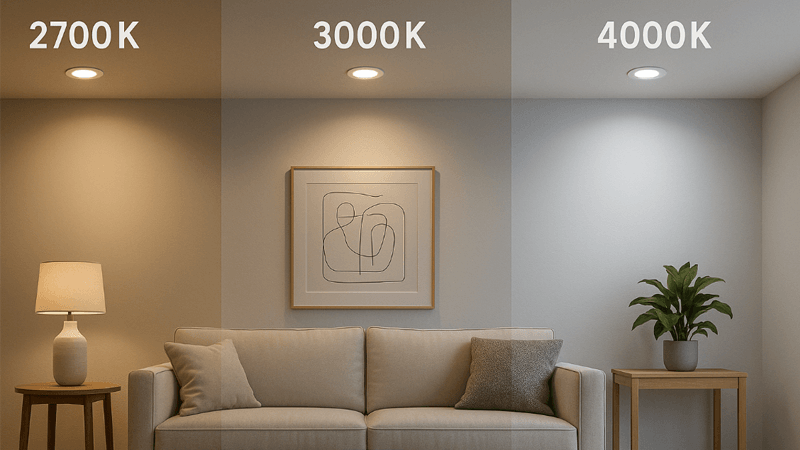
Picking the right color temperature1, or CCT2, seems simple. But the "best" choice is more complex than you might think. It involves things you might not expect, like your home's location, the colors of your walls and furniture, and even the hidden electronics inside the light fixture itself. As a lighting manufacturer, I've seen how these details can make or break a lighting project3. I'll walk you through everything you need to know, so you can choose with confidence and get the quality lighting you deserve. Let's dive in.
What is the best color temperature for LED lights?
LED options are everywhere, and it's overwhelming. You worry you'll choose a CCT that looks harsh or unnatural in your space. Learn how your location influences the ideal LED color.
There is no single "best" CCT for all LED lights. It is about matching the light to your specific environment. People in regions with warm, golden sunlight often prefer warmer CCTs (2700K-3000K). Those in areas with cooler, bluer daylight might find cooler CCTs (4000K-5000K) more natural.

Where You Live Matters More Than You Think
I've discovered that our preference for light color is deeply connected to the natural light4 we see every day. This goes beyond culture; it’s about geography. People living near the equator experience intense, direct sunlight that has a warm, golden quality. Their eyes and brains are accustomed to this light. In contrast, people in northern latitudes, like Scandinavia or Canada, get more diffuse, cooler-toned daylight, especially during the long winters. Their "natural" is a crisp, blue-ish white light.
I see this pattern constantly with my global clients. For example, I work closely with a purchasing manager named Shaz Mahamood in the UAE. For his residential and hospitality projects, he almost exclusively specifies 3000K. He explained that in Dubai, where the sun is intensely warm, a 4000K light feels sterile and unnatural indoors. It fights with the ambient light5. On the other hand, a project I supplied in Finland requested 4000K downlights for living spaces because it mimicked the crisp, bright daylight they valued. The goal is for your artificial light6 to feel like a natural extension of the sunlight outside.
Here’s a simple breakdown:
| Geographic Region | Typical Daylight Quality | Common CCT Preference | Why it Works |
|---|---|---|---|
| Tropical/Equatorial | Intense, warm, golden light | 2700K - 3000K | It mimics the natural warm sunlight, feeling familiar and comfortable indoors. |
| Temperate Latitudes | Varies; can be warm or cool | 3000K - 4000K | This flexible range works well with changing seasons and light conditions. |
| High Latitudes | Cooler, blue-toned, diffuse light | 4000K - 5000K | It complements the crisp natural light, enhancing alertness and focus. |
Is 3000K or 4000K better for home?
The 3000K versus 4000K debate is confusing. If you choose wrong, your cozy living room could feel like a cold office. The secret is to match the CCT to your home's materials.
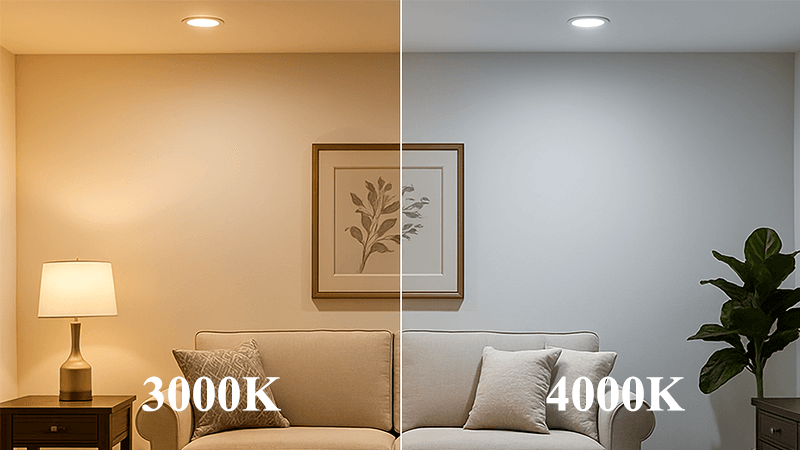
Choose 3000K (Warm White) for homes with warm materials like wood floors, beige paint, and traditional decor7. Use 4000K (Cool White) for modern homes8 with cool materials like white cabinets, gray surfaces, and metal accents to create a crisp, clean aesthetic.
Your Light and Your Materials Must Work Together
The CCT you choose has a dramatic effect on how the colors and textures in your home appear. This is because of something called the Spectral Power Distribution9, or SPD. Think of it as the "recipe" of colors within the white light. A 3000K light has more red and yellow in its recipe, while a 4000K light has more blue. This recipe changes how the light interacts with your walls, floors, and furniture.
I learned this important lesson on a project with my client, Shaz. He was outfitting a luxury apartment lobby10 that was filled with beautiful dark wood paneling and beige marble floors. He was leaning toward 4000K for a "modern" feel. I knew this might be a mistake, so I sent him samples of both 3000K and 4000K downlights from my factory. The difference was stunning. Under the 4000K light, the rich wood looked flat and lifeless, and the beige marble took on a grayish, unappealing tint. But when he switched on the 3000K light, the room came alive. The light's warmer spectrum made the wood grain glow and brought out the beautiful warm veins in the marble. The choice was suddenly simple. It showed us that you aren’t just lighting a room; you are lighting the materials within it.
Use this table to guide your choice:
| Material / Surface | Effect of 3000K (Warm White) | Effect of 4000K (Cool White) | Best For... |
|---|---|---|---|
| Wood (Oak, Cherry, Walnut) | Enhances warm, golden tones. Looks rich and natural. | Can make the wood look dull or washed out. | Cozy living rooms, traditional kitchens, studies. |
| White Walls/Cabinets | Appears as a soft, creamy, inviting white. | Appears as a crisp, pure, clean white. | Modern kitchens, minimalist spaces, bathrooms. |
| Gray Tones & Concrete | Can look muddy or take on a brownish hue. | Looks sharp, modern, and clean. Emphasizes coolness. | Contemporary lofts, industrial designs, garages. |
| Beige/Cream Paint | Brings out the warm undertones. Looks cozy and welcoming. | Can make it look dingy, sometimes with a greenish cast. | Bedrooms, family rooms, hallways. |
What is the best color temperature for recessed lighting?
Choosing recessed lights feels permanent and stressful. You worry about unseen problems like flicker ruining your home's comfort. Look beyond CCT to the quality of the technology behind it.
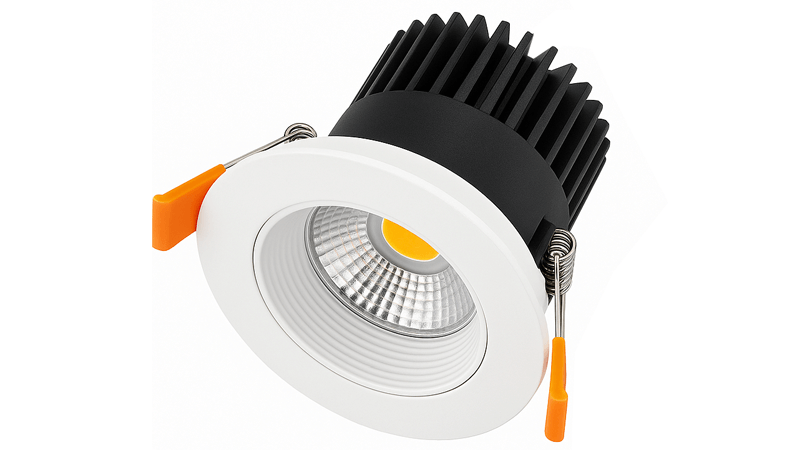
The best CCT depends on the room, but the quality of the light fixture is most important. A high-quality driver11 ensures consistent color and prevents eye-straining flicker. Often, a fixed CCT downlight from a good brand provides a better, more reliable result than a selectable switch model.
Look Deeper Than the CCT Number
When you buy a recessed light, you're buying more than just a CCT value. You are buying a complete system, and the most critical, yet unseen, part of that system is the driver. The driver is the small power supply that converts your home's AC power to the DC power the LED needs. The quality of this component is everything. Low-quality drivers are the primary cause of flicker—a rapid, often invisible strobing that can lead to headaches, eye strain, and a general feeling of discomfort.
I've learned this the hard way. Early in my manufacturing career, I sourced some very low-cost drivers to win a bid on a large residential project. The lights looked fine when installed. However, a few months later, the client called to complain that working in their home office was giving them severe headaches. I visited the site, and while my eyes couldn't perceive the flicker, my phone's slow-motion camera told a different story. The video revealed a chaotic, flashing strobe effect. It was an expensive lesson in quality.
This brings me to CCT-selectable fixtures12. These lights, which let you choose between 3000K, 4000K, and 5000K with a simple switch, are often a clever supply chain solution disguised as a user benefit. They allow distributors like Shaz to stock one product instead of three, simplifying their inventory. However, to keep these versatile units affordable, manufacturers sometimes compromise on the quality of the driver and LEDs. For a project demanding long-term reliability and the best possible light quality, I always recommend a dedicated, single-CCT fixture. When you specify a high-quality 3000K downlight, you're not just buying a color; you're buying a better-engineered product with a superior driver that protects you from the hidden risk of flicker.
Is 5000K or 6000K better for bathrooms?
Getting bathroom lighting13 right is crucial. Bad lighting can make simple tasks like shaving difficult and make you look washed-out in the mirror. Use a bright, clear CCT for task areas.
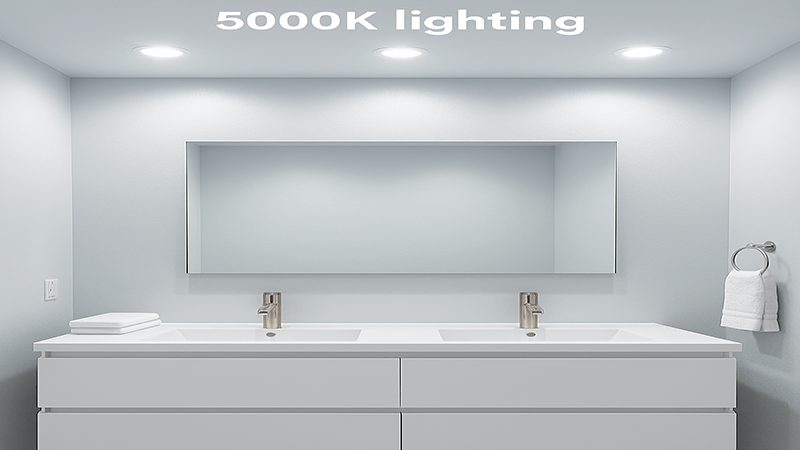
For bathrooms, 5000K is generally the better choice. It provides a bright, clean, neutral daylight that is excellent for tasks like applying makeup or shaving. 6000K and higher can appear too blue and clinical, making skin tones look unnatural and the room feel cold.
Layer Your Bathroom Light for Tasks and Relaxation
The bathroom is a unique space that demands different types of light. You need bright, accurate light for task-oriented grooming14, but you also want a softer, more relaxing light for unwinding in a bath. Using a single CCT for the entire room is a mistake. The best solution is a layered lighting approach15.
For the task areas, particularly around the vanity mirror, a bright and clean light is essential. My client Shaz, who specifies lighting for many hotel projects, knows this well. For the main bathroom mirror lighting, we almost always use 4000K or 5000K. He finds that 5000K gives guests a true-to-life reflection for makeup and grooming without being overly harsh. He avoids 6000K entirely in these spaces, calling it "hospital light" because its strong blue tint is unflattering to skin tones and makes the space feel sterile.
However, that bright light isn't needed everywhere. For general ambient lighting, a slightly warmer CCT can make the room feel more comfortable. And for the shower or a niche, a warm glow can create a spa-like atmosphere. By layering different color temperatures, you create a bathroom that is both highly functional and beautifully atmospheric.
Here is a simple plan for layering bathroom light:
| Bathroom Zone | Recommended CCT | Lighting Type | Why This Works |
|---|---|---|---|
| Vanity/Mirror | 4000K - 5000K | Vertical Sconces or a Backlit Mirror | Provides bright, clear, shadow-free light for tasks. A high Color Rendering Index (CRI) is essential here. |
| General Ceiling | 3000K - 4000K | Recessed Downlights | Fills the room with comfortable ambient light. A warmer tone here makes the overall space feel less clinical. |
| Shower/Tub Area | 3000K | A single, wet-rated downlight | Creates a warmer, more relaxing atmosphere for bathing, separating it from the brighter task areas. |
| Accent/Niche | 2700K - 3000K | LED Strip Lighting | Adds a soft, warm glow for pure ambiance or can be used as a functional night light. |
Conclusion
Choosing the right CCT involves more than just a number. It's about matching the light to your space, materials, and needs to achieve a perfect, high-quality, and comfortable result.
Color temperature significantly influences the mood and feel of a room, making it essential to understand. ↩
Understanding CCT is crucial for selecting the right lighting to enhance your space's atmosphere. ↩
Understanding the nuances of lighting can make or break a project, ensuring quality and satisfaction. ↩
Natural light affects our perception of color and comfort, making it essential to consider in lighting design. ↩
Ambient light sets the overall mood of a room, making it crucial for comfort and relaxation. ↩
Artificial light should complement natural light to create a harmonious indoor environment. ↩
Traditional decor pairs well with warmer CCTs, creating a cozy and inviting atmosphere. ↩
Modern homes benefit from cooler CCTs that enhance sleek designs and materials. ↩
Learning about SPD helps you understand how different light colors affect your home's materials. ↩
Choosing the right lighting for luxury spaces enhances aesthetics and creates a welcoming atmosphere. ↩
A high-quality driver prevents flicker and ensures consistent light quality, enhancing comfort. ↩
CCT-selectable fixtures offer versatility, but understanding their quality is key for long-term use. ↩
Choosing the right bathroom lighting is crucial for tasks like grooming and creating a relaxing atmosphere. ↩
Bright, clear lighting is essential for tasks like shaving and applying makeup in bathrooms. ↩
A layered lighting approach combines different CCTs for functionality and ambiance in spaces like bathrooms. ↩