Are you worried about imported downlights failing quality checks? Non-compliance can cause seized shipments and huge financial losses. Knowing the right certifications ensures every order is smooth and reliable.
For COB LED downlights, you must look beyond just the CE mark. The key is to verify it with a full test report from a respected third-party lab like TUV, SGS, or Intertek. A simple self-declaration from the factory is not enough and carries significant risk.
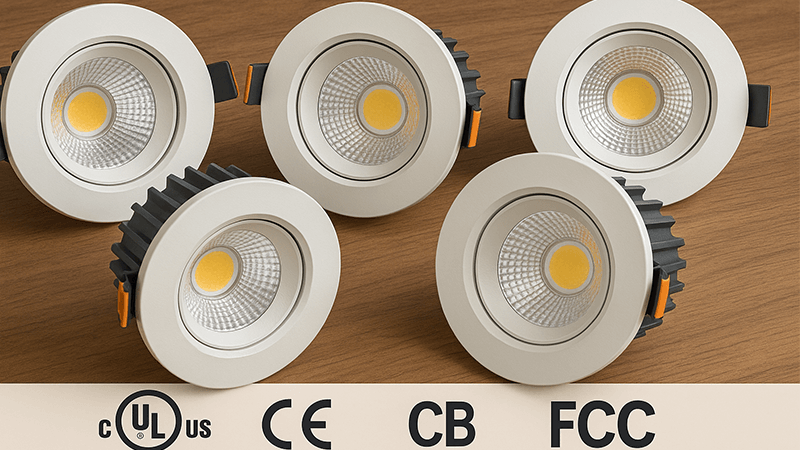
Those certification logos on a product sheet look reassuring, but they don't always tell the whole story. As a manufacturer for over a decade, I've seen how some suppliers cut corners, putting buyers at risk. The difference between a sticker and a genuine, verified certificate can be the difference between a successful project and a costly disaster. Let's look closer at what you really need to ask for.
What certification is required for LED lights?
Are you confused by the alphabet soup of certifications like CE, EMC, and LVD? Choosing a product without the right ones can block market access and create serious legal troubles. Let's clarify the essential certifications you absolutely need for your region.
For the European market, CE marking is mandatory for LED lights. This is built on the Low Voltage Directive (LVD) for electrical safety and the Electromagnetic Compatibility (EMC) directive for electronic interference. Other major markets require their own specific certifications, like UL for North America.
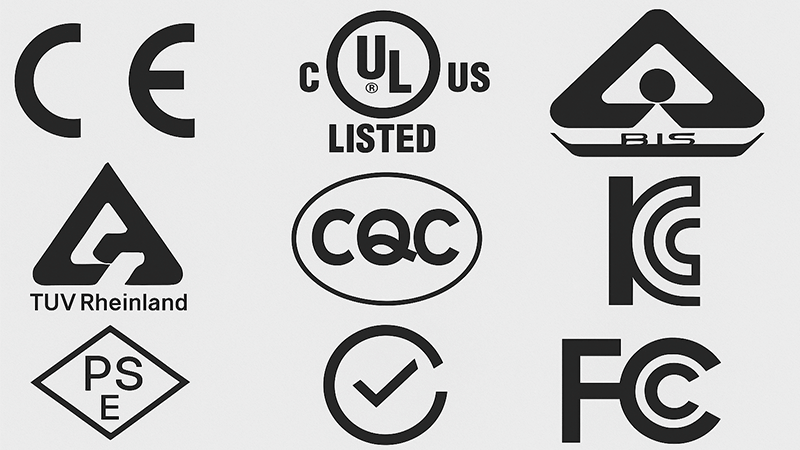
When I started in this industry, the rules around certification seemed complex. But I quickly learned how critical they are. The core requirement for many, especially in Europe, is the CE mark. This indicates the product meets the EU's health, safety, and environmental protection standards. The two main pillars for LED lighting are LVD and EMC. LVD ensures the light is safe to use within its specified voltage range, protecting users from electric shock. EMC ensures the light's electronics don't interfere with other devices, like your Wi-Fi or radio.
The problem is, a manufacturer can legally print a CE mark based on their own internal tests, a process called "self-declaration." Many small factories exploit this. They do no testing at all and simply stamp the CE logo on their products. This is a huge risk for you, the buyer. If the authorities check your shipment and find the products aren't actually compliant, the goods will be confiscated.
To protect yourself, you need to go a step further. Always ask your supplier for the full test report1s that support their CE claim2. And more importantly, check who issued those reports.
Verified by a Third Party
A self-declared certificate is just a piece of paper from the factory. A certified test report from a reputable third-party laboratory is proof. These labs have the equipment and expertise to conduct proper testing.
- Self-Declaration: The factory claims the product is compliant, often without proof.
- Third-Party Certification3: An independent lab like TUV, SGS, or Intertek tests the product and confirms it meets the standards.
How to Tell the Difference
I always tell my clients, like Shaz, to look for the Notified Body (NB) number4 next to the CE mark on the documentation. This four-digit number identifies the independent body that certified the product. A Declaration of Conformity (DoC)5 without an NB number or a reputable lab's name on the test report is a major red flag.
| Feature | Self-Declaration (High Risk) | Third-Party Certification (Low Risk) |
|---|---|---|
| Testing Body | The manufacturer themselves | Independent Lab (TUV, SGS, Intertek) |
| Proof | A simple document, no test data | Full, detailed test report available |
| Verification | Difficult, relies on trust | Easy, check the Notified Body (NB) number |
| Market Acceptance | Often rejected by customs/projects | Widely accepted and trusted globally |
| Your Role as a Buyer | Ask for the DoC. | Ask for the DoC and the full test report. |
I remember a new client from the UAE who had a shipment of LED panels stopped by customs. His previous supplier provided a DoC, but it was just a self-declaration. The products had never been tested. He lost the entire shipment and a valuable contract. Now, he never places an order without first seeing a valid third-party test report. It's a simple step that provides complete peace of mind.
What is the BIS certificate for LED lights?
Are you planning to sell LED lighting in India? You might be facing a complex import process, risking delays or rejection if your products lack the right paperwork. Understanding BIS is the key to unlocking this massive market smoothly.
The BIS certificate6 is a mandatory requirement from the Bureau of Indian Standards7 for specific LED lighting products sold in India. It ensures these products meet Indian standards for safety and quality. Without this certification, your products cannot legally enter the country.
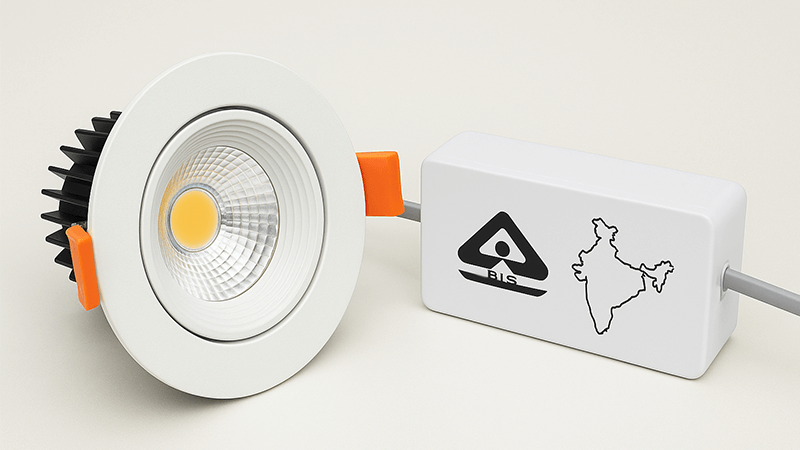
The Indian market is one of the fastest-growing in the world, but it has very specific rules. The Compulsory Registration Scheme (CRS)8 under the Bureau of Indian Standards (BIS) covers many electronic items, including certain types of LED lights. I've worked with many clients targeting India, and navigating the BIS process is always the first major hurdle. It's not optional; it's a legal requirement.
The main goal of BIS is to protect Indian consumers from unsafe or substandard goods. For LED lighting, this means the products have undergone rigorous testing in BIS-approved labs located within India. This is a key point—you can't use test reports from labs in other countries. The entire process has to happen through the official Indian system.
This local testing requirement presents a challenge. It means the manufacturer must have a registered presence or an Authorized Indian Representative (AIR)9 to manage the application and sample submission process. This involves a lot of coordination and expense, which is why many smaller factories simply don't offer BIS-certified products.
Key Steps for BIS Compliance
If a supplier tells you their lights are "ready for India," you need to verify their BIS status. Don't just take their word for it.
- Check the Product Scope: First, confirm if your specific product (like COB downlights, drivers, or self-ballasted lamps) falls under the BIS Compulsory Registration Scheme. The list is updated regularly.
- Verify the Registration: Ask for the BIS registration number. You can check this number on the official BIS website to see if it's active and if it covers the exact model you are buying.
- Confirm the Brand and Factory: The BIS registration is tied to a specific brand name and manufacturing location. If your supplier is just a trading company, they must source from the exact factory listed on the certificate.
What This Means for You
As a purchasing manager, your due diligence is crucial. A fake or invalid BIS certificate is as bad as having no certificate at all.
| Action Item for Buyers | Why It's Important |
|---|---|
| Request the BIS Registration Number | This is the primary proof. Without it, there is no certification. |
| Cross-Reference on the BIS Website | This verifies the number is real, active, and matches the product and factory. |
| Confirm Factory Address | Ensures the lights are made in the certified facility, not a cheaper substitute. |
| Check Product Labeling | The final product must be marked with the Standard Mark and registration number. |
I helped a distributor in Dubai who wanted to re-export to India. His supplier claimed BIS compliance but couldn't produce the registration number. We investigated and found they had never even started the process. We switched to a manufacturer who already had a portfolio of BIS-certified drivers, which saved the project from months of delays and potential cancellation. For the Indian market, BIS isn't just a certificate; it's your license to operate.
Do LED lights need FCC certification?
Are you sourcing LED lights10 for the North American market? You may be focused on safety certifications like UL, but ignoring FCC rules can get your products blocked from sale. This electronic interference standard is a non-negotiable part of market entry.
Yes, most LED lights need FCC certification11 because they contain electronic drivers that can cause electromagnetic interference12. This certification, typically an FCC Part 15 Supplier's Declaration of Conformity (SDoC), ensures the light won't disrupt radios, Wi-Fi, and other devices.
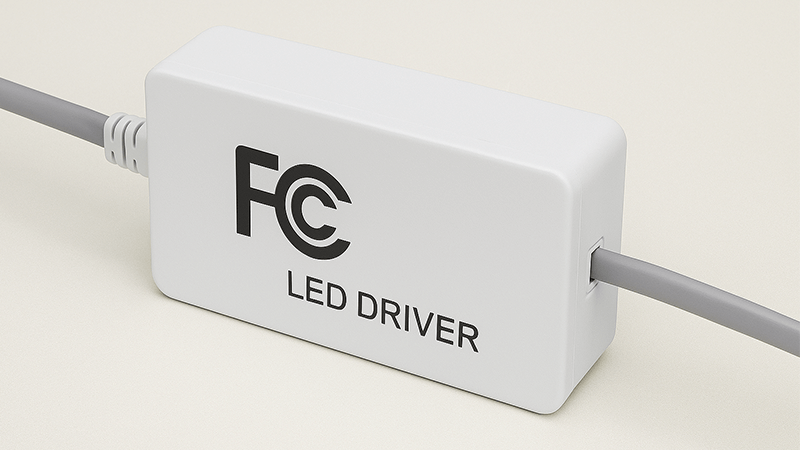
Many people think the FCC only deals with phones and radios, but its rules apply to almost any electronic device—including LED lights. The internal driver in a COB downlight is a small power supply that operates at a high frequency. If it's not designed correctly, it can "broadcast" electronic noise and interfere with communications. Imagine an office where turning on the lights makes the Wi-Fi stop working. That's what FCC rules are designed to prevent.
For most LED lighting products, the required certification falls under FCC Part 15, which covers unintentional radiators. The compliance process for this is usually a Supplier's Declaration of Conformity (SDoC)13. This means the manufacturer is responsible for testing the product to ensure it meets the limits for radiated and conducted emissions. They must have a test report from an accredited lab to prove it.
While the supplier can "declare" conformity, unlike some CE self-declarations, the expectation in the U.S. market is that you have a real test report from a credible lab to back it up. The Federal Communications Commission can request this report at any time, and if you can't provide it, you could face fines and be forced to recall the product.
The Two Types of FCC Compliance for Lighting
It's important to know which level of verification your product needs, as this affects the testing and documentation required.
- Supplier's Declaration of Conformity (SDoC): This is the most common path for LED lighting. The manufacturer (or importer) takes responsibility for compliance, supported by a test report. The product must be labeled with specific FCC text.
- Certification: This is a more rigorous process for devices with a higher risk of interference (like wireless transmitters). It requires submission to a Telecommunication Certification Body (TCB) for approval and an FCC ID number. This is generally not required for standard hard-wired downlights but might apply to smart or wireless-controlled lighting.
Your Checklist for FCC Compliance
When sourcing for the U.S. or Canadian markets (where ISED rules align with FCC), don't overlook this detail.
| Verification Step | What to Ask Your Supplier |
|---|---|
| Confirm the Compliance Path | "Is this product covered by SDoC or does it require full certification?" |
| Request the Test Report | "Can you provide the full FCC Part 15 test report from an accredited lab?" |
| Check the Responsible Party | The SDoC must name a U.S.-based responsible party. This is often the importer. |
| Inspect Product and Packaging Labeling | Look for the required FCC compliance statement and logo. |
A few years ago, a large U.S. distributor I work with started receiving complaints about one of their downlight models interfering with garage door openers. The original supplier had skipped FCC testing to save money. We had to quickly source a compliant driver and help them manage a costly product replacement program. It was a tough lesson for them: FCC isn't just a formality; it's a critical performance and quality standard.
Do LED lights need to be UL certified?
Are you importing LED lights into North America? You know quality is important, but a product without the right safety mark is a product you can't sell. A fire or electrical hazard linked to your product could lead to devastating legal and financial outcomes.
Yes, for the North American market, LED lights and their components must be certified by a Nationally Recognized Testing Laboratory (NRTL)14. UL (Underwriters Laboratories) is the most recognized NRTL mark, signifying the product meets critical U.S. and Canadian safety standards.
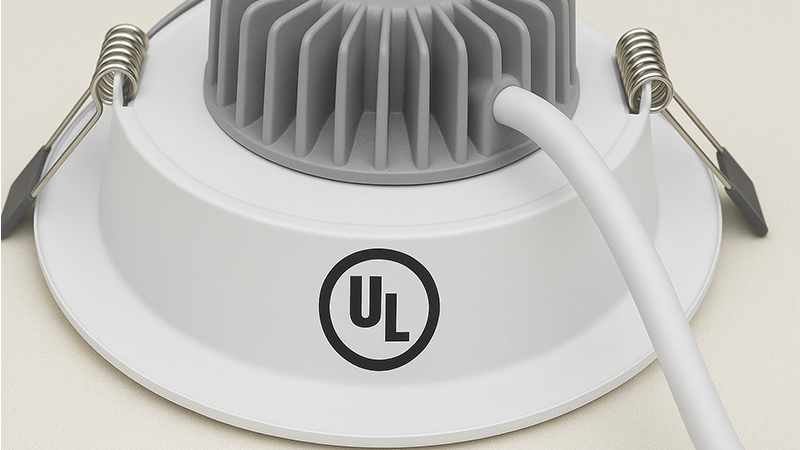
In my experience, no certification is taken more seriously in the North American lighting market than UL. While it's not technically a federal law, it's a practical necessity. Electrical inspectors, contractors, and insurance companies all require it. No licensed electrician will install a non-listed fixture in a commercial building. Trying to sell an unlisted LED light in the U.S. or Canada is nearly impossible.
The UL mark isn't just about the final product. It's a comprehensive system that looks at the entire assembly, from the internal driver and wiring to the heatsink and housing. UL's standards are designed to prevent fire and electric shock, making them essential for user safety.
There are different types of UL marks, and as a buyer, you need to understand the difference.
UL Listed vs. UL Recognized
This distinction is crucial and often misunderstood. A mistake here can lead to you buying components that aren't suitable for your final product.
- UL Listed: This mark is for standalone products. A "UL Listed" downlight can be installed directly out of the box. It means the entire fixture as a complete unit has been tested and certified for safety. This is what you should look for on finished fixtures.
- UL Recognized Component (RU Mark)15: This mark is for components that are part of a larger product, like an LED driver or a connector. An "RU" driver is intended to be used inside a "UL Listed" fixture. It is not certified as a final product.
The danger is buying a fixture made with some "UL Recognized" parts, where the supplier wrongly claims the whole fixture is UL compliant. To be truly UL Listed16, the final assembled product must be tested and certified.
How to Verify UL Certification
The UL mark is one of the most counterfeited marks in the world. Always verify it.
| Verification Method | How to Do It | Why It's Critical |
|---|---|---|
| Ask for the UL File Number | Every UL Listed product has a file number (e.g., E123456). | This number is unique to the manufacturer and product category. |
| Search the UL Product iQ™ Database17 | Go to UL's online database (iq.ul.com) and enter the file number or company name. |
This is the only way to be 100% sure the certification is real, active, and applies to the product you are buying. |
| Check the Holographic Label | Authentic UL labels have holographic elements and unique serial numbers. | This helps you spot fake labels on the physical product. |
I once had a potential client, a project contractor in the U.S., who was about to order 2,000 downlights from a new supplier. The price was great, and the spec sheet showed a UL logo. I advised him to ask for the UL file number. The supplier stalled for days before admitting they didn't have one. The logo was fake. That simple check saved my client from installing 2,000 uninsurable, non-compliant, and potentially dangerous fixtures.
Conclusion
In summary, choosing COB downlights requires more than just checking a box. Verify CE with third-party reports, confirm regional needs like BIS or UL, and never trust a logo alone.
Explore the importance of test reports in verifying product safety and compliance. ↩
Understanding CE claims is crucial for ensuring product compliance and safety in the European market. ↩
Explore the importance of third-party certification for product safety and market acceptance. ↩
Learn how the NB number ensures product compliance and protects consumers. ↩
Discover the significance of a DoC in verifying product compliance with safety standards. ↩
Understanding the BIS certificate is essential for selling LED lights in India legally. ↩
Explore how BIS ensures product safety and quality in the Indian market. ↩
Learn about CRS and its impact on importing electronic items into India. ↩
Find out how an AIR can facilitate the BIS compliance process for manufacturers. ↩
Explore the critical factors to consider for compliance when sourcing LED lighting products. ↩
Understanding FCC certification is vital for ensuring compliance in the North American market. ↩
Understanding electromagnetic interference is key to ensuring product compliance and performance. ↩
Learn about SDoC and its role in ensuring product compliance with FCC regulations. ↩
Explore the importance of NRTL certification for product safety in North America. ↩
Learn the distinction to avoid compliance issues when sourcing lighting components. ↩
Understanding UL Listed products is crucial for ensuring safety and compliance in lighting. ↩
Discover how to ensure the authenticity of UL certification for your products. ↩