Struggling to source lighting that stays ahead of trends? Choosing outdated tech can make your projects look old fast. Understanding COB LED evolution is key to staying competitive.
The future of COB LED downlights centers on pushing efficiency to its limits and expanding value. Expect higher lumens per watt, integrated smart controls, and human-centric designs that merge light with architecture.
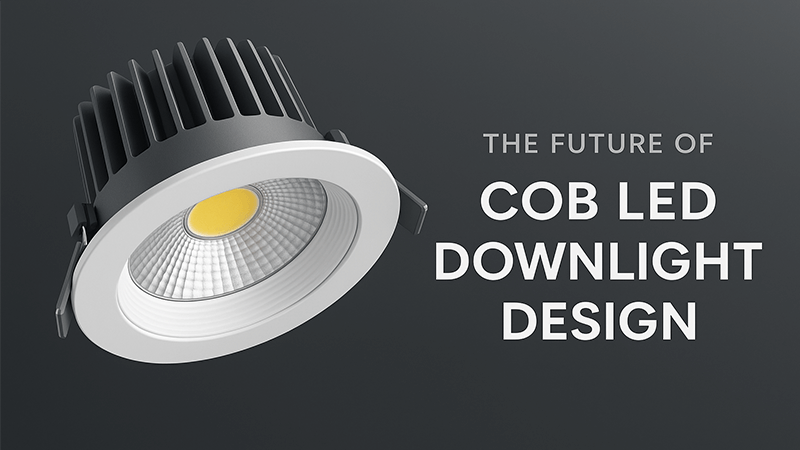
As someone who has been in the lighting industry for years, I see these trends shaping the conversations I have with partners like you. You're not just looking at the big picture of "what's next"; you have specific, practical questions that impact your projects and budgets right now. To stay ahead, you need clear answers on performance1, lifespan2, and application3. Let's dive into the details that matter most to a purchasing professional, starting with the core of it all: energy efficiency4.
Is COB energy-efficient?
Worried about project energy costs? Inefficient lighting can drain budgets and disappoint clients. COB LEDs5 provide a powerful, highly efficient solution to cut electricity use significantly.
Absolutely. COB (Chip-on-Board) technology is very energy-efficient. It packs many LED chips closely together, creating a powerful, single light source. This design maximizes light output while minimizing energy waste.
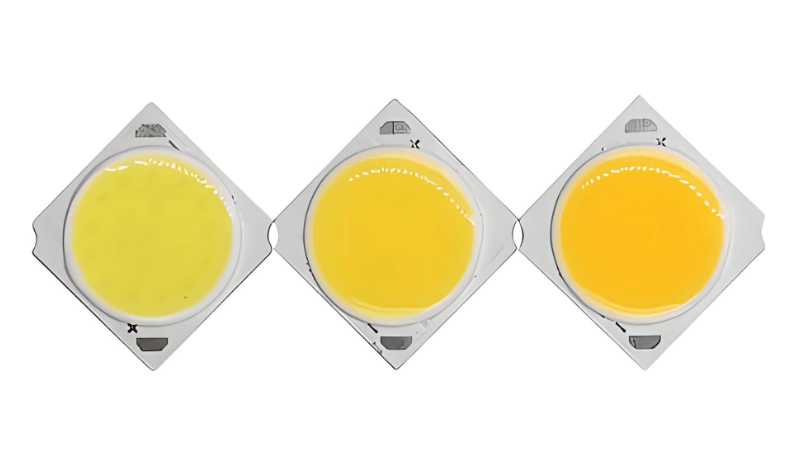
To really understand why COB is a go-to for efficiency, we need to look closer at how it's made. It's not just about the final product; the engineering behind it is what makes the difference. I've seen firsthand how this technology has evolved, moving from a niche option to a mainstream solution for projects where performance is non-negotiable. For a purchasing manager like you, knowing these details helps you justify your sourcing decisions and explain the value to your clients.
The Technical Edge of COB
The term "Chip-on-Board" describes the manufacturing process perfectly. Multiple LED chips are mounted directly onto a single substrate, like aluminum or ceramic, and wired together into one circuit. This dense packing creates a single, uniform light source. More importantly, this design is fantastic for heat management6. The substrate acts as a large, direct heat sink, pulling warmth away from the LED chips efficiently. Better heat dissipation means the chips run cooler, which not only improves their energy efficiency (lumens per watt7) but also dramatically extends their operational life. Poor heat management is the number one enemy of any LED, and the fundamental design of COB technology8 tackles this problem head-on.
COB vs. Older Lighting Technologies
When you're evaluating options, a direct comparison is often the most helpful way to see the benefits. Let's put COB technology side-by-side with older options you might still encounter in retrofit projects.
| Feature | COB LED | SMD LED | Halogen |
|---|---|---|---|
| Lumens per Watt | 100-170+ lm/W | 80-120 lm/W | 15-25 lm/W |
| Heat Management | Excellent (Direct path to heat sink) | Good (Requires complex PCB layout) | Very Poor (Generates significant heat) |
| Light Quality | High, uniform beam without multiple shadows | Can create multiple shadows ("pixelated" look) | Excellent (High CRI), but warm color only |
| Energy Use | Very Low | Low | Very High |
I remember a hotel project in Dubai where the client was hesitant to invest in a full COB downlight retrofit9. We ran a pilot in one wing of the hotel, replacing their old 50W halogens with our 7W COB downlights. The light quality was better, the look was more modern, and their energy bill for that wing dropped by over 80%. When they saw the numbers, the decision to upgrade the entire property was easy. This is the kind of real-world data that makes COB a smart business choice.
What energy-saving light has a 50,000-hour lifespan?
Searching for lights that last? Frequent replacements drive up maintenance costs and hassle. High-quality LED lights, especially COB downlights, are designed to solve this exact problem.
A quality-manufactured LED light, particularly one using a COB chip, is the energy-saving light10 that can achieve a 50,000-hour lifespan. This longevity comes from superior thermal management and the use of high-grade components.
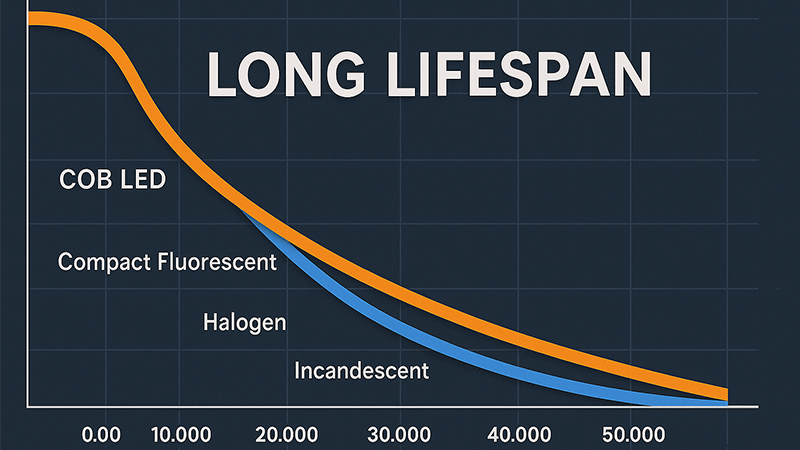
The 50,000-hour figure is more than just a marketing number; it’s a standard of quality that we in the manufacturing business work very hard to achieve. For someone in your position, understanding what makes this long life possible is crucial for differentiating between a reliable product and one that will fail prematurely. It’s not just the LED chip itself that guarantees a long life. The entire system—the driver, the heat sink, and the housing—must work together perfectly. As a manufacturer, I focus obsessively on these components because I know a single weak link can compromise the whole product.
The Anatomy of a Long-Lasting Downlight
Think of a COB downlight not as a single part, but as a system of three critical elements. The failure of any one of these can drastically shorten the product's life.
-
The COB Chip: The quality of the LED chips and the substrate they are mounted on is the foundation. Top-tier manufacturers use chips from reputable brands and substrates with high thermal conductivity11. This ensures the light source itself is built to last. A cheap chip will lose brightness and color consistency quickly.
-
The Heat Sink: This is the most critical component for longevity. Even the best COB chip will fail if it overheats. A well-designed heat sink, typically made of die-cast aluminum, must have enough surface area and an efficient shape to dissipate heat into the air. When I review a new downlight design, I spend most of my time analyzing the thermal engineering. We run simulations and physical tests to ensure it can handle heat under the toughest conditions.
-
The LED Driver: The driver is the power supply that converts AC voltage to the low-voltage DC needed by the LED. A cheap, poorly made driver is the most common point of failure in an LED fixture. A high-quality driver provides stable power, protects against voltage spikes, and is made with components that can withstand heat and continuous use for years. This is an area where cutting corners to save a few dollars can lead to massive maintenance costs down the line.
Calculating the Real-World Value
A 50,000-hour lifespan is impressive, but what does it mean for your projects? Let’s put it into context.
| Usage Scenario | Hours Per Day | Lifespan in Years |
|---|---|---|
| Commercial Office | 12 hours | 11.4 years |
| Retail Store | 16 hours | 8.5 years |
| Residential (High Use) | 8 hours | 17.1 years |
This long life provides a huge advantage in total cost of ownership. It practically eliminates the labor costs associated with replacing bulbs in hard-to-reach commercial ceilings. For a client managing a large facility, this is a massive operational saving12.
Is COB light good for a living room?
Picking the right light for a home is tough. You want it to be functional and create a welcoming mood. COB downlights excel at both tasks brilliantly.
Yes, COB downlights are excellent for living rooms. Their high Color Rendering Index (CRI)13 makes colors look natural and vibrant, while their single-source light creates clean, focused beams perfect for accent lighting or general illumination.
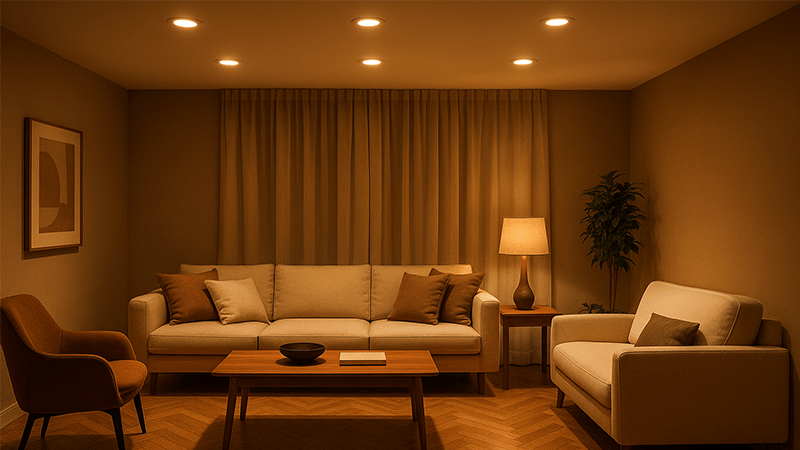
A living room is the heart of a home, so the lighting has to be just right. It needs to be versatile—bright enough for reading, but also soft and dimmable for a relaxing evening. In my experience, COB downlights offer the control and quality needed for such a multi-functional space. The key is in choosing the right specifications like color temperature and beam angle14. I often advise clients to think about lighting in layers, and COB downlights are a fantastic tool for creating a base layer of high-quality, comfortable light.
Creating the Perfect Living Room Atmosphere
To get the best result with COB downlights in a residential setting, you need to consider a few key factors. It's not just about installing a light; it's about designing an experience. This is where your expertise can guide the client to make choices that truly enhance their living space.
1. Color Temperature (CCT)
The color of the light has a huge impact on the mood of a room. For living rooms, a warm and inviting atmosphere is usually desired.
- 2700K - 3000K (Warm White): This is the sweet spot for most living rooms. It creates a cozy, relaxing ambiance similar to that of traditional incandescent bulbs. It's perfect for spaces where people unwind and socialize.
- 4000K (Neutral White): This can work in very modern, minimalist living rooms with a cool color palette, but it can sometimes feel a bit clinical or office-like for a relaxation space. I generally recommend sticking to the warmer end of the spectrum.
2. Color Rendering Index (CRI)
For a space where you want home decor, artwork, and even people's faces to look their best, a high CRI is essential.
- CRI > 90: This is the standard I recommend for all residential application3s. It ensures that colors appear rich, natural, and true to life. A low CRI light can make a beautifully designed room look dull and washed out. With COB technology, achieving a CRI of 90, 95, or even 97 is very common and provides superior light quality.
3. Beam Angle and Layout
The beam angle determines how wide or narrow the cone of light is. A strategic combination of beam angles can create a layered and dynamic lighting design.
- Wide Beam (45°-60°): Use these for general illumination. Spacing them correctly provides smooth, even light across the floor.
- Narrow Beam (15°-24°): These are perfect for accent lighting. Use them to highlight architectural features like a textured stone wall, a fireplace, or a piece of art. This creates visual interest and depth in the room.
My advice to a client would be to use a grid of wide-beam COB downlights for the main ambient lighting, then add a few narrow-beam versions on a separate, dimmable circuit to draw attention to key features. This gives them complete control to change the room's atmosphere with the push of a button.
What are the lighting trends for 2026?
Sourcing for the future is risky. You need to know which trends are fads and which will become market standards. The future is about smarter, healthier, more integrated lighting.
By 2026, the biggest lighting trends15 will be human-centric lighting16 that tunes to our body clock, fully integrated smart controls becoming standard, and miniaturization17, with powerful, tiny fixtures blending seamlessly into architecture.
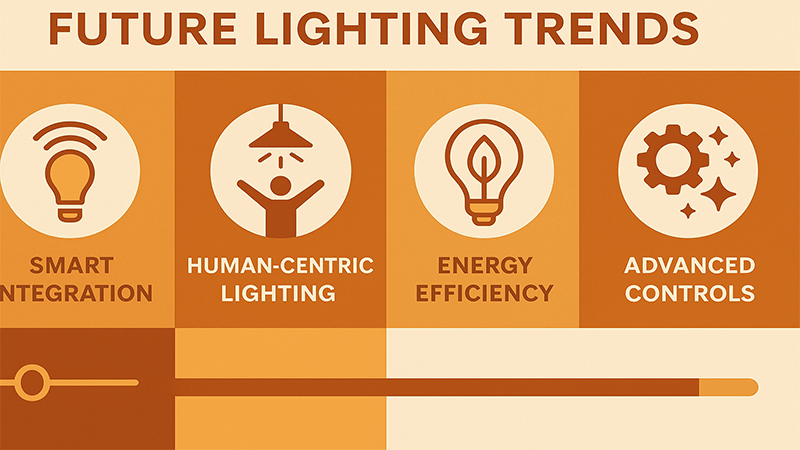
Looking ahead is the most exciting part of my job. We're moving beyond an era where light was just for seeing. The future is about how light makes us feel, how it improves our well-being, and how it interacts with our environment intelligently. For you, as a purchasing manager, staying on top of these trends means you can source products that will not only be relevant but in high demand in the coming years. These aren't just ideas; they are the technologies that my R&D team is actively developing right now.
Trend 1: Human-Centric Lighting (HCL)
This is perhaps the most significant shift. HCL, also known as tunable white lighting18, is about creating lighting that mimics the natural daily cycle of sunlight.
- How it Works: The light fixture's color temperature and intensity change throughout the day. It provides cool, energizing blue-tinted light (around 5000K-6000K) in the morning and afternoon to boost alertness and productivity. In the evening, it shifts to a very warm, relaxing amber light (around 2200K-2700K) to help our bodies prepare for sleep.
- Why it Matters: This technology supports our natural circadian rhythm, which can lead to better sleep, improved mood, and higher productivity. It's moving from a luxury feature in high-end offices to a wellness standard in homes, schools, and healthcare facilities. COB technology is perfect for this, as new "dim-to-warm" and tunable white COB chips are becoming more efficient and affordable.
Trend 2: Seamless Smart Integration
Smart lighting is not new, but the trend is moving away from complex, standalone systems and towards seamless, effortless integration.
- What to Expect: Forget needing separate apps for everything. By 2026, expect a majority of quality light fixtures to come with built-in compatibility for major smart home ecosystems (like Google Home, Apple HomeKit) and building management protocols (like DALI, KNX). Voice control and automated schedules based on occupancy or daylight will be standard features, not premium add-ons.
- Miniaturization: As COB technology gets more efficient, we can get more light from a smaller source. This allows for the design of incredibly small, yet powerful, "trimless" downlights that disappear into the ceiling. This minimalist aesthetic is in high demand in modern architecture, allowing the focus to be on the light's effect, not the fixture itself.
I am already in discussions with project contractors who are requiring these features for buildings that won't even be completed for another two years. The market is planning ahead, and sourcing products that are ready for this smarter, healthier future is the best way to secure long-term success.
Conclusion
The future of COB downlights is bright. It focuses on pushing efficiency, integrating smart and human-centric features, and packing more power into smaller, more elegant designs.
Understand the importance of lighting performance in managing project costs and client satisfaction. ↩
Discover the longevity of COB LED lights and how it affects maintenance and replacement costs. ↩
Find out where COB lighting excels and how it can enhance various environments. ↩
Explore how energy efficiency can significantly reduce costs and improve sustainability in your lighting projects. ↩
Learn about COB LEDs and their advantages in energy savings and performance for your lighting needs. ↩
Explore the critical role of heat management in extending the life and efficiency of LED lights. ↩
Learn about lumens per watt and how it affects the efficiency of your lighting choices. ↩
Discover the benefits of COB technology and how it can enhance your lighting projects. ↩
Get insights into the process and benefits of retrofitting downlights in existing spaces. ↩
Discover energy-saving lighting options that provide longevity and efficiency for your projects. ↩
Understand the role of thermal conductivity in ensuring the longevity and efficiency of lighting products. ↩
Explore how smart lighting choices can lead to significant operational savings in various settings. ↩
Understand CRI and its significance in achieving accurate color representation in lighting. ↩
Understand the importance of beam angle in creating effective and aesthetically pleasing lighting designs. ↩
Stay ahead of the curve by exploring the latest lighting trends that will shape the industry. ↩
Explore the concept of human-centric lighting and its benefits for well-being and productivity. ↩
Learn how miniaturization is changing the landscape of lighting design for modern architecture. ↩
Discover the versatility of tunable white lighting and how it can enhance various environments. ↩