Kitchen steam can ruin your lights and cause safety hazards. Don't waste money on replacements. The right IP44 downlight is the key to a lasting, reliable kitchen lighting setup.
The best IP44 LED downlights for kitchens feature a durable silicone seal, an aluminum body for superior heat dissipation, and a design that protects against steam without trapping heat. These features ensure long-term safety and performance in the demanding, humid environment of a kitchen ceiling.
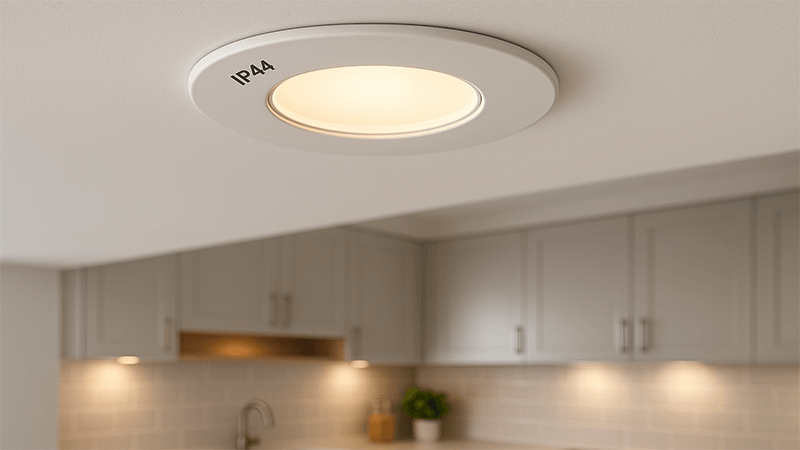
But not all IP44 downlight1s are created equal. As a manufacturer, I've seen countless products, and the small details are what separate a good light from a great one. The difference can mean years of reliable service versus a call-back in six months. Let's break down what you, as a professional, really need to look for when sourcing lights for a kitchen project, so you can choose with confidence.
What are the best LED downlights for a kitchen?
Overwhelmed by kitchen downlight options? Picking the wrong one leads to dim areas and constant replacements. The best choices perfectly balance brightness, color, and essential protection for kitchen environments.
The best LED downlights for a kitchen are IP44-rated, have a high Color Rendering Index (CRI > 90), and a die-cast aluminum2 body. This combination ensures protection from moisture, shows true food colors, and provides excellent heat management for a longer lifespan in a warm kitchen.
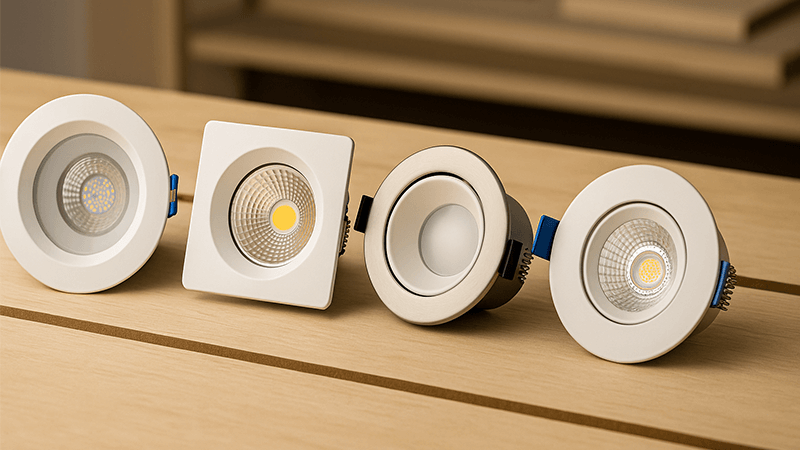
When I help my clients, like Shaz, a purchasing manager from the UAE, select downlights for large residential projects, we don't just look at the price. We focus on the core specifications that guarantee performance. A kitchen is a tough place for electronics. It's hot, it's humid, and the lights are used daily. This is why material and design are critical. A plastic-bodied downlight might save a few dollars upfront, but it can't dissipate heat as effectively as an aluminum one. When a downlight is sealed for IP44 protection, that trapped heat becomes its worst enemy. This is the paradox of protected lighting: the better the seal, the harder it is to cool the LED chip. A well-designed downlight uses the aluminum body as a heat sink, often with fins, to pull heat away from the sensitive electronics. This ensures the light maintains its brightness and color quality for its entire lifespan. For a kitchen, choosing a light with a CRI above 90 is also non-negotiable. It makes food look fresh and appealing, which is essential for a space centered around cooking and eating.
Key Features for Kitchen Downlights
| Feature | Why It Matters in a Kitchen | My Recommendation |
|---|---|---|
| IP Rating | Protects against steam and splashes from cooking and cleaning. | Minimum IP44 for all areas, IP65 over sinks. |
| Body Material | Manages heat, which is crucial for longevity in a sealed unit. | Die-cast Aluminum for superior heat dissipation3. |
| CRI (Color Rendering Index) | Renders the color of food and surfaces accurately. | CRI > 90 for vibrant, natural colors. |
| Lens/Diffuser | Controls glare and distributes light evenly. | Frosted or opal diffuser for soft, comfortable light. |
What type of ceiling light is best for a kitchen?
Choosing the right type of lighting can make or break a kitchen design. Bad choices create shadows and dark corners, making the space feel smaller and less functional for cooking tasks.
Recessed LED downlights are often the best ceiling light for a kitchen. They provide clean, uniform illumination without taking up visual space. Supplementing them with task lighting4 like under-cabinet strips and a decorative pendant over an island creates a perfectly layered and functional lighting scheme5.
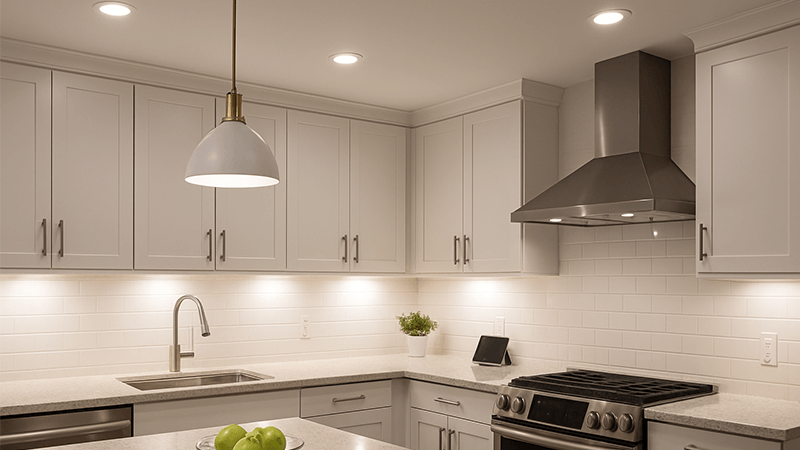
There isn't one single "best" light; the best solution is a layered approach. I always advise my clients to think of kitchen lighting in three layers: Ambient, Task, and Accent. Recessed downlights are the workhorse for your ambient layer. They create the base level of light for the entire room. When you place them correctly, you get even, shadow-free illumination across the floor and countertops. But you can't stop there. The next layer is task lighting. This is crucial. Think of LED strips6 under the upper cabinets. This light shines directly onto your prep areas, eliminating the shadows your body creates when you're standing under the downlights. For a kitchen island or dining table, a decorative pendant or two can serve as both task lighting and an accent piece, adding personality to the space. The key is to control these layers separately. This allows you to go from bright, full-on light for cooking to a soft, ambient glow for relaxing in the evening. This flexibility is what transforms a kitchen from just a workspace into the true heart of the home.
The Three Layers of Kitchen Lighting
| Lighting Layer | Purpose | Common Light Fixture Types |
|---|---|---|
| Ambient Lighting | Provides overall, general illumination for the entire room. | Recessed LED Downlights, Flush Mounts |
| Task Lighting | Delivers focused light for specific activities like chopping. | Under-Cabinet LED Strips, Pendants over Islands |
| Accent Lighting | Highlights architectural features or decor. | Spotlights, In-Cabinet Pucks, Pendants |
What LED lights are best for kitchens?
Not all LEDs are suitable for a kitchen's unique demands. Using the wrong type can result in poor color quality, making food look unappetizing, and early failures due to heat and humidity.
The best LED lights for kitchens have a high CRI (90+), a CCT between 3000K-4000K, and are enclosed in an IP44-rated fixture. These specifications ensure food looks natural, the ambiance is welcoming yet bright, and the light is protected from steam and moisture.
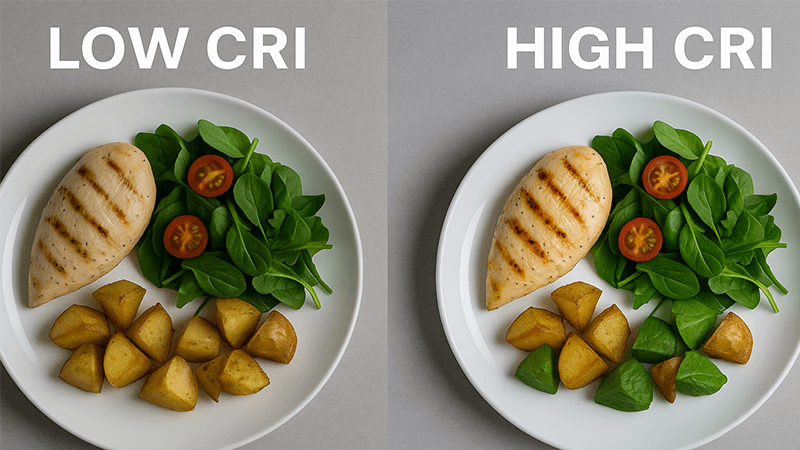
Let's get into the specifics of the LED itself. As someone who has built a business on quality lighting, I can tell you that the LED chip and its driver are the heart of the fixture. In a kitchen, you need more than just brightness. You need quality. The first thing to look for is a high Color Rendering Index (CRI)7. A light with a CRI below 80 can make fresh red meat look brownish and green vegetables appear dull. In a kitchen, where you judge food by its color, this is unacceptable. I always recommend a CRI of 90 or higher. The second factor is Correlated Color Temperature (CCT), measured in Kelvin (K). For kitchens, a range of 3000K (Warm White) to 4000K (Cool White) is ideal. 3000K creates a cozy, inviting atmosphere, while 4000K provides a cleaner, more energetic light that's great for food prep. Some clients even opt for tunable-white downlights to switch between the two. Finally, let’s talk about something many overlook: the seal. A quality IP44 downlight depends almost entirely on its silicone gasket. I’ve seen factories use cheap materials that dry out and crack in a year, rendering the IP rating useless. A good seal, often made from high-grade silicone, is what truly protects the sensitive LED chip and driver from the steam of a boiling pot of pasta.
What is the best brightness for LED lights in a kitchen?
Lighting a kitchen incorrectly can be dangerous. Too dim, and you risk accidents during food prep. Too bright, and it creates harsh glare, making the space uncomfortable to be in.
The best brightness is achieved through a layered approach. Aim for 30-40 foot-candles (300-400 lux) for general ambient lighting8 and increase to 70-80 foot-candles (700-800 lux) over task areas like countertops and sinks. Using dimmers9 provides essential flexibility.
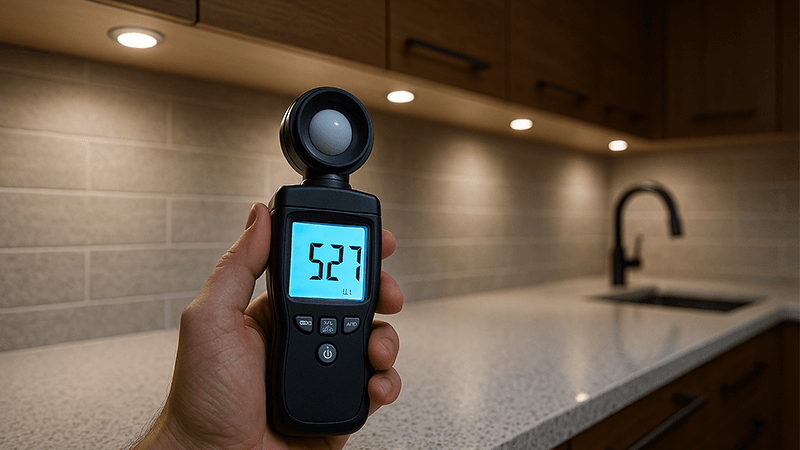
Brightness isn't just about the lumen output of a single bulb; it's about the amount of light that reaches a surface, which we measure in lux or foot-candles. A common mistake is to install a few very high-lumen downlights, thinking it will be bright enough. This often just creates pools of intense light and dark spots in between. The right way is to use more, lower-lumen downlights spaced correctly to create an even blanket of ambient light. A good rule of thumb for general kitchen lighting is about 300-400 lux on your surfaces. However, for your task areas—the countertops where you'll be using knives—you need more. Here, you should target 700-800 lux. This is where under-cabinet lighting becomes so important. It adds that extra punch of light exactly where you need it most. Dimmers are your best friend here. They allow you to have powerful, bright light when you're cooking and then dim everything down for a relaxed dinner. Some high-end IP44 downlights even include a "breather valve10." When a light is turned off, it cools, creating negative pressure that can suck in moist air. This tiny valve equalizes the pressure without compromising the seal, preventing long-term moisture damage—it's a small feature that makes a huge difference in reliability.
Conclusion
Choosing the right IP44 LED downlight for a kitchen comes down to balancing protection, heat management, and light quality. Focus on aluminum bodies, high CRI, and a layered lighting11 design.
Understanding IP44 downlights can help you choose the right lighting for your kitchen, ensuring safety and durability. ↩
Die-cast aluminum offers superior heat management, ensuring reliable performance in kitchen lighting. ↩
Effective heat dissipation is vital for the longevity and performance of LED downlights in humid environments. ↩
Task lighting enhances visibility for specific activities, improving safety and efficiency in the kitchen. ↩
A well-planned lighting scheme enhances functionality and aesthetics, making your kitchen more enjoyable. ↩
LED strips provide focused task lighting, eliminating shadows and improving visibility in work areas. ↩
A high CRI is essential for accurate color representation in kitchens, making food look fresh and appealing. ↩
Ambient lighting provides overall illumination, creating a welcoming atmosphere in your kitchen. ↩
Dimmers allow you to adjust lighting levels, creating the perfect atmosphere for cooking or dining. ↩
A breather valve helps prevent moisture damage, extending the life of your kitchen lighting. ↩
Layered lighting creates depth and functionality, transforming your kitchen into a versatile space. ↩