Having trouble finding lighting that offers the right balance of cost and quality? Choosing cheap fixtures often leads to high maintenance costs1 and unhappy clients, hurting your reputation and bottom line in the long run.
COB (Chip on Board) LED downlights are a genuinely cost-effective choice because they offer a lower total cost of ownership. For B2B buyers, this means reduced energy use, less maintenance, and superior reliability, which ensures project quality and protects long-term profitability beyond the initial purchase price.
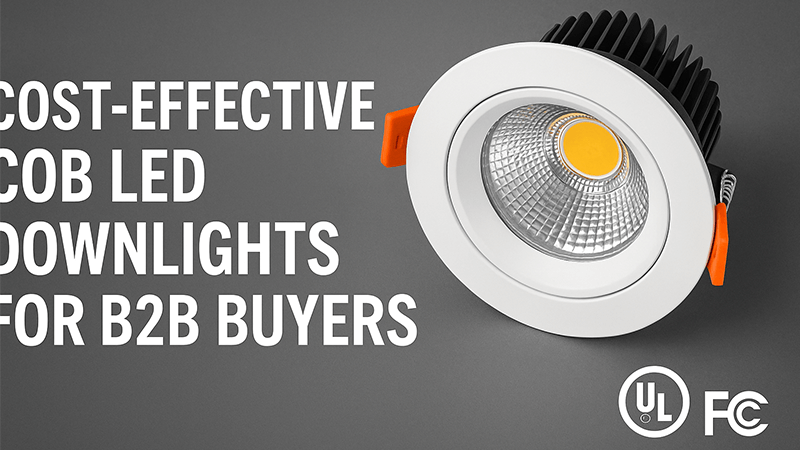
You might be thinking, "Cost-effective" usually just means "cheap." But as a purchasing professional, you know that the true cost of a product goes far beyond its price tag. When I started my career in an LED factory, I saw firsthand how different components could dramatically change a light's performance2 and lifespan. The initial savings from a cheaper light were often wiped out by maintenance calls and replacement costs just a year or two down the line. That's why for a B2B buyer, "cost-effective" is about a smart investment. It’s about finding a solution that delivers quality, reliability3, and long-term value4. Let's break down why COB LED technology is a smart investment for your business.
What is the difference between COB LED and DOB LED?
Confused by lighting acronyms like COB and DOB? Choosing the wrong one can seriously impact your project's performance and budget, leading to problems you didn't plan for.
COB (Chip on Board) uses a separate, high-quality driver to power a single module of integrated LED chips. DOB (Driver on Board) puts simpler driver components directly onto the same circuit board. COB provides better performance and heat control, while DOB is a cheaper, all-in-one solution.
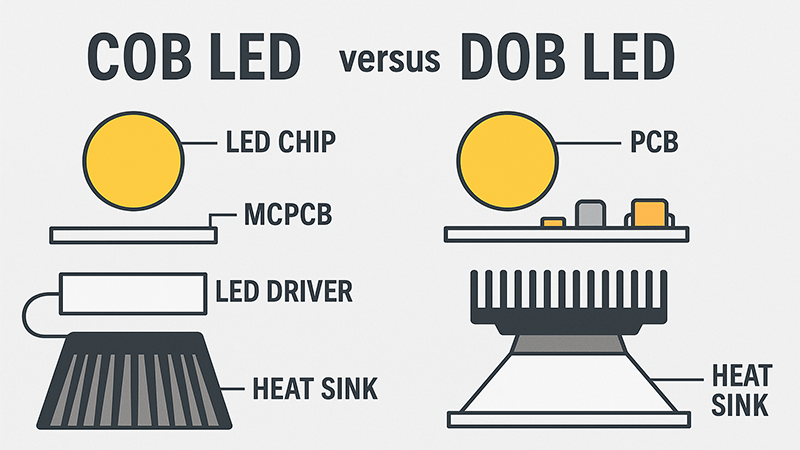
When you get down to the technical details, the choice between COB and DOB becomes very clear for professional projects. The main difference is how they handle the driver, which is the heart of any LED fixture. DOB's integrated design seems simple, but it has a major weakness: heat. The driver components5 generate heat right next to the LEDs, which also generate heat. This combined heat is difficult to manage and can cause the light to fail much faster. The components used in DOB are often lower quality to keep costs down, further reducing reliability.
COB technology takes a more robust approach. By using an external, isolated driver, we can use higher-quality electronic components that are more stable and efficient. This separation also means the heat from the driver doesn't affect the LED chip, and vice-versa. This superior thermal management6 is why COB lights last longer and maintain their brightness. For a B2B buyer like Shaz, who manages large-scale projects, reliability is everything. Choosing COB means fewer callbacks, happier clients, and a more dependable final installation.
| Feature | COB (Chip on Board) | DOB (Driver on Board) |
|---|---|---|
| Driver | External, isolated driver | Driver components integrated on the LED board |
| Heat Management | Excellent; heat sources are separate | Poor; heat from driver and LEDs is combined |
| Lifespan | Longer (30,000-50,000+ hours) | Shorter (often under 15,000 hours) |
| Performance | Stable, efficient, no flicker | Prone to flicker, less efficient |
| Cost | Higher initial cost | Lower initial cost |
| Best For | Commercial projects, high-quality applications | Low-budget, short-term residential use7 |
What are the most efficient LEDs?
Need lighting that saves the most energy and money? High electricity bills can eat into your project's profits and make your solution less attractive to the end client.
The most efficient LEDs are those with the highest lumens per watt8 (lm/W). Currently, high-quality COB and SMD LEDs9 from reputable brands lead the market. However, true fixture efficiency depends on the entire system, including the driver, optics, and especially the heatsink's performance.
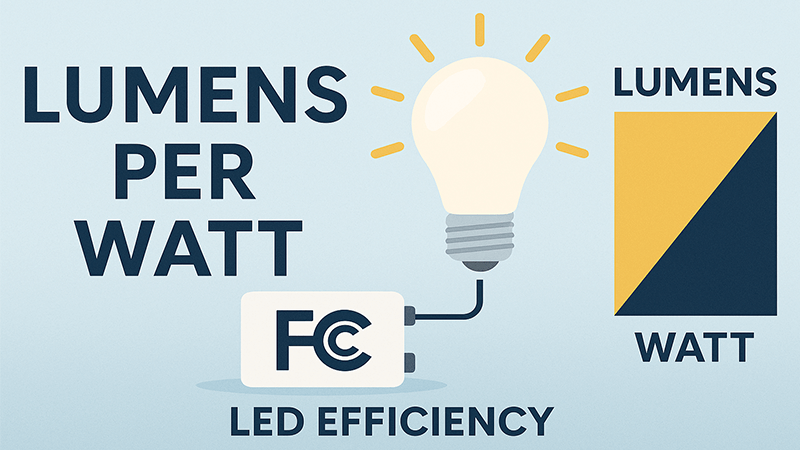
Efficiency is one of the most important metrics in lighting, but it's more than just a number on a spec sheet. It's a measure of how much light you get for every watt of electricity you pay for. A higher lumens-per-watt (lm/W) rating means a lower electricity bill. In my experience, COB LEDs are fantastic performers here. Because all the chips are packed into a small area, it's easier to design a highly effective reflector or lens to direct the light exactly where it's needed. This means less wasted light and energy.
More importantly, efficiency isn't static. All LEDs become less efficient as they heat up. This is where the superior thermal management of COB lights becomes a huge advantage. A well-designed COB downlight with a good heatsink pulls heat away from the LED chip effectively. This keeps the chip running cooler, so it maintains its high efficiency and brightness over its entire lifespan. I remember working on a large hotel project. The client was focused on TCO. We showed them how our COB downlights, while costing slightly more upfront than a cheaper alternative, would save them tens of thousands of dollars in electricity over five years due to their high, stable efficiency. That's the kind of long-term value that wins projects.
Are more expensive LED lights better?
Wondering if paying more for an LED light is actually worth it? Choosing cheap options can feel like a win, but it often leads to early failures and costly replacements.
Not always, but a higher price often correlates with better components, design, and manufacturing quality. More expensive professional-grade lights10 typically use superior LED chips, drivers, and heatsinks, resulting in better performance, a longer lifespan, and greater reliability—all crucial factors for B2B projects.
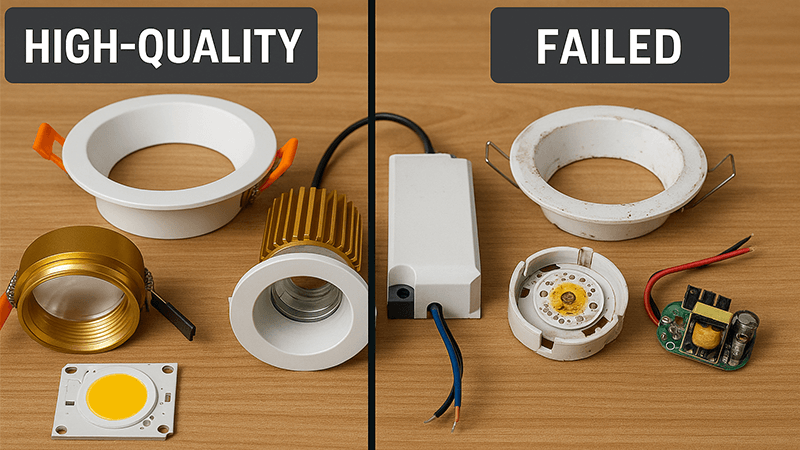
Price is a direct reflection of what's inside the light. As a manufacturer, I know exactly where costs can be cut, and it's almost always in the three most critical components: the LED chip, the driver, and the heatsink. A low-cost light might use an unbranded, low-grade LED chip that will lose its brightness quickly and have inconsistent color. It will use a cheap, non-isolated driver with poor quality capacitors that are destined to fail, causing flicker or total burnout. And it will use a thin, undersized aluminum heatsink that simply can't handle the heat, leading to a drastically shortened lifespan for the entire fixture.
A more expensive, professional-grade fixture is priced higher for a reason. We invest in chips from leading brands like Cree or Citizen, which guarantee high performance and color consistency. We use high-quality isolated drivers with long-life components to ensure stable, flicker-free operation for years. We design and build substantial aluminum heatsinks that are tested to ensure the light stays cool and reliable. For a purchasing manager like Shaz, paying more for this quality isn't an expense; it's insurance. It's the assurance that the lights installed in a project will perform as promised, protecting both the contractor's reputation and the client's investment. This is the core of smart procurement.
What is the most cost-effective light bulb?
Searching for the absolute best value in lighting for your projects? You need a solution that delivers great performance without draining your budget on running costs or replacements.
For professional commercial applications, the COB LED downlight is the most cost-effective choice11. While the initial purchase price is higher than some alternatives, its superior energy efficiency, long lifespan, and low maintenance needs deliver the lowest total cost of ownership over the project's lifetime.
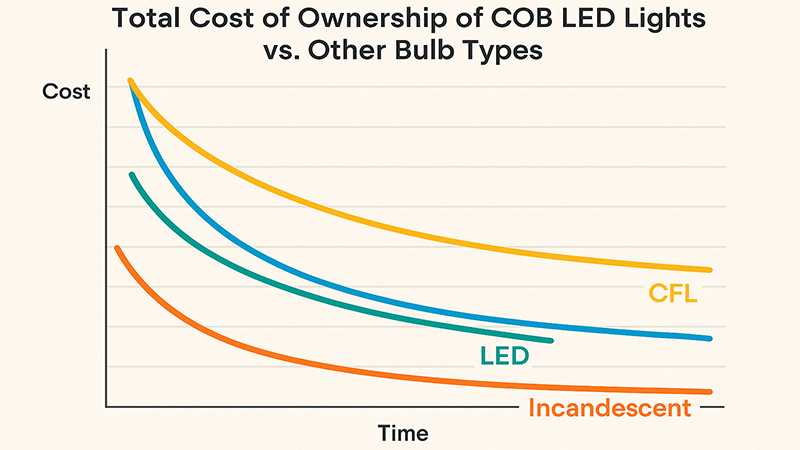
When we talk about "cost-effective" in the B2B world, we have to look past the sticker price. We need to calculate the Total Cost of Ownership (TCO). This includes the initial purchase price12, the cost of electricity to run the light over its lifetime, and the cost of replacing it. Let's think about a real-world scenario, like outfitting a new retail store. You could use cheaper DOB downlights, but you’d likely have to replace a significant percentage of them within two or three years. That means buying new lights and paying for labor to install them, all while the store's lighting looks inconsistent.
Now, consider using high-quality COB LED downlights. You pay more upfront. But they use less electricity every single hour they are on, saving money on the energy bill from day one. More importantly, with a lifespan of 50,000 hours, they can run 12 hours a day, 7 days a week, for over 11 years before needing replacement. There are almost no maintenance or replacement costs for a decade. When you add up the savings on electricity and replacement, the COB LED downlight is overwhelmingly the cheaper option in the long run. For a B2B buyer, choosing the option with the lowest TCO is the most financially sound decision. It demonstrates a deep understanding of long-term value.
Conclusion
COB LED downlights are the smart choice for B2B buyers13 because they offer the lowest total cost of ownership, ensuring long-term project reliability, energy savings, and superior client satisfaction.
Discover why low upfront costs can lead to higher long-term maintenance expenses. ↩
Understand the metrics that determine the performance of LED lights. ↩
Explore the key elements that ensure the reliability of LED lighting solutions. ↩
Understand the importance of long-term value when selecting lighting solutions. ↩
Learn about the various driver components and their impact on LED performance. ↩
Learn how thermal management plays a crucial role in LED performance. ↩
Discover suitable lighting solutions for temporary residential applications. ↩
Discover how lumens per watt affects energy efficiency and lighting effectiveness. ↩
Explore the differences between SMD and COB LEDs for better lighting choices. ↩
Explore why investing in professional-grade lights can enhance project outcomes. ↩
Find out why COB LED downlights are considered the best value for B2B buyers. ↩
Understand the implications of initial costs on long-term lighting investments. ↩
Learn about the key considerations for B2B buyers when selecting lighting. ↩