COB LED downlight performance can be difficult to compare when suppliers emphasize wattage, lumen output, or price without explaining the intended application. This creates uncertainty for buyers, because a downlight that looks bright in a sample room may produce glare, dark gaps, or inconsistent color in a finished project. I recommend evaluating the complete lighting outcome instead.
COB LED downlight performance should be compared by matching the luminaire’s beam angle, lumen output, color quality, thermal design, driver, mounting conditions, and production consistency to the lighting task. A higher-wattage or lower-priced downlight is not automatically the better option. Buyers should assess the complete luminaire, verify test documents, and confirm that the supplier can reproduce the approved configuration across bulk orders.
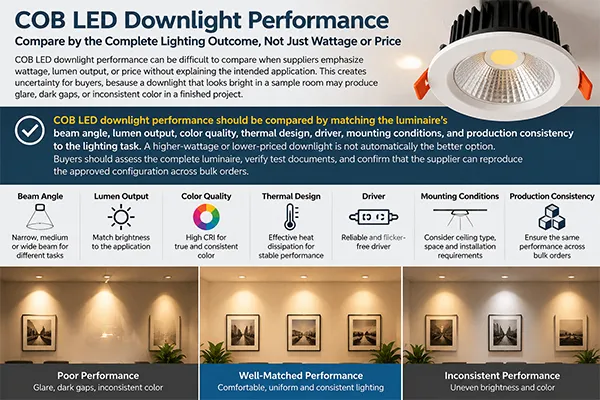
In my work with downlight configurations, I often see buyers begin with one question: “Which model is brighter?” That question is understandable, but it is rarely enough. The better question is whether the downlight can create the required illuminance, visual comfort, coverage, and appearance in the actual installation.
How Should COB LED Downlight Performance Be Compared for the Lighting Task?
Buyers often compare two downlights with the same wattage and assume they will light a space in the same way. That assumption can lead to poor spacing plans, glare complaints, or insufficient brightness on work surfaces. I find that the lighting task must come before the product comparison.
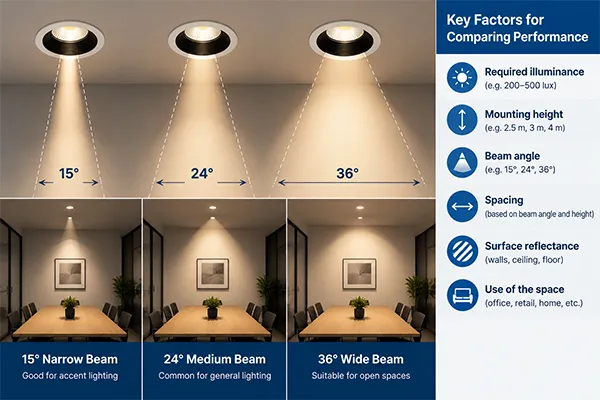
To compare COB LED downlight performance for a lighting task, buyers should consider required illuminance, mounting height, beam angle, spacing, surface reflectance, and the use of the space1. The right model is the one that delivers suitable brightness and uniformity where people need it, rather than the model with the highest headline lumen claim.
Start With the Space, Not the Wattage
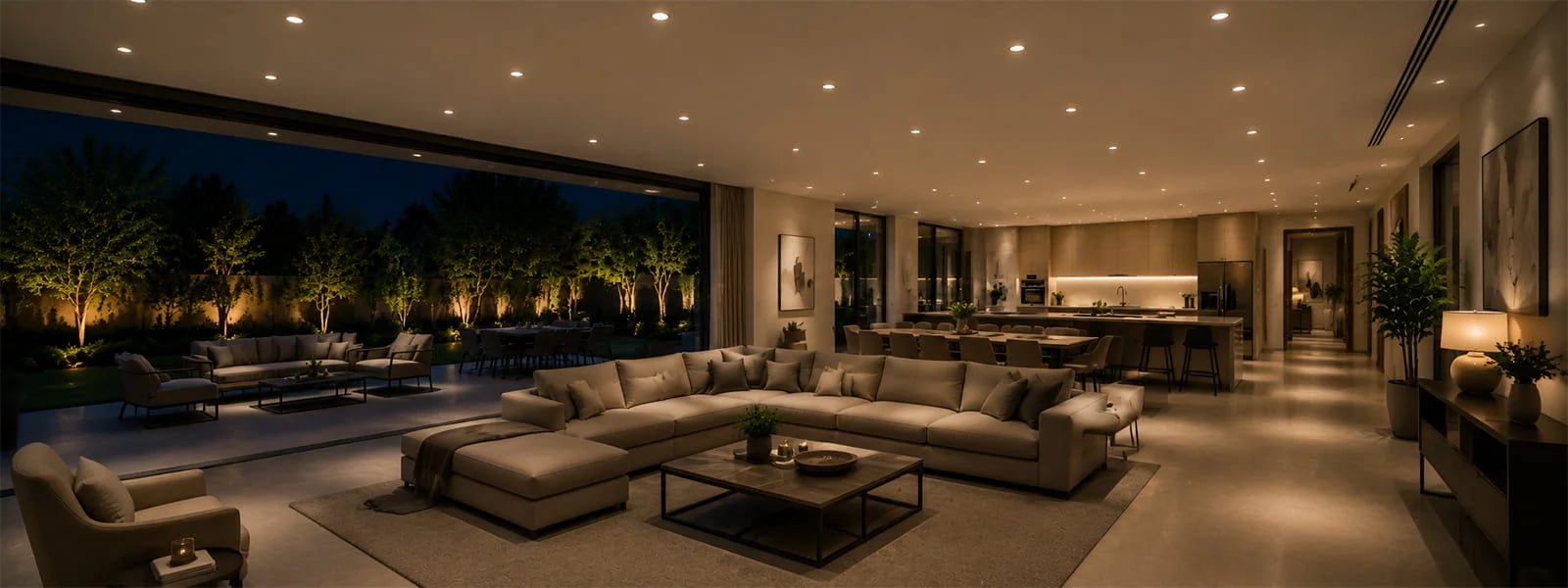
A retail display area, hotel corridor, office, kitchen, and residential living room all need different lighting outcomes. A narrow-beam downlight can create a strong visual focus on merchandise or artwork. However, that same beam may create bright spots and dark areas if it is used for general lighting.
I usually encourage buyers to define the following before requesting a quotation:
- Application type: Retail, hospitality, office, residential, corridor, lobby, or exterior covered area.
- Mounting height: A ceiling height of 2.7 meters requires a different approach from a 5-meter commercial ceiling.
- Lighting purpose: General illumination, accent lighting, wall washing, task lighting, or decorative atmosphere.
- Target illuminance: The project team should determine target lux levels according to local standards, task requirements, and professional lighting calculations.
- Surface colors and finishes: Dark ceilings, dark floors, and low-reflectance walls absorb more light than light-colored surfaces.2
- Spacing plan: The distance between fixtures affects uniformity as much as individual fixture output.
Why Beam Angle Changes the Result
Beam angle has a major effect on perceived brightness. A narrow 15° or 24° beam concentrates light into a smaller area.3 A 36° beam often suits general commercial lighting and focused retail lighting. A wider 60° beam can provide broader coverage, depending on ceiling height and fixture spacing.
| Beam Angle | Typical Lighting Effect | Common Evaluation Use |
|---|---|---|
| 15°–24° | Tight, concentrated beam | Accent lighting, merchandise, art, feature walls |
| 30°–40° | Balanced focus and coverage | Retail, hospitality, residential focal zones |
| 50°–60° | Broad general coverage | Corridors, open areas, general ambient lighting |
| 60°+ | Wide distribution with lower center intensity | Low ceilings, soft ambient layouts, broad spacing plans |
A downlight with lower nominal lumens can sometimes appear brighter at the target surface than a higher-lumen model with a wider beam.4 This is why I do not recommend ranking models by lumen output alone.
I have seen customers compare two samples at close range and select the visually brighter option. Later, they may discover that the selected beam is too narrow for the planned fixture spacing. A simple lighting layout review can prevent that mismatch.
For larger or technically demanding projects, I recommend that buyers work with a qualified lighting designer or engineer. Photometric files, installation details, and project calculations should be reviewed under the actual application conditions.
Does COB LED Downlight Performance Depend on More Than the COB Light Source?
Some buyers treat “COB” as a guarantee of premium quality. Others assume that all COB downlights will produce the same concentrated light effect. In my experience, both assumptions can create procurement risk because COB is only one part of the luminaire.
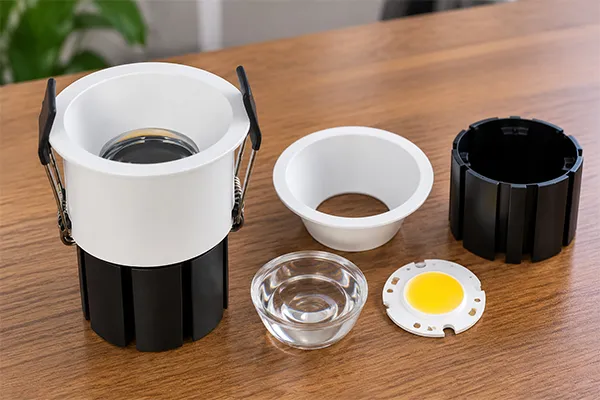
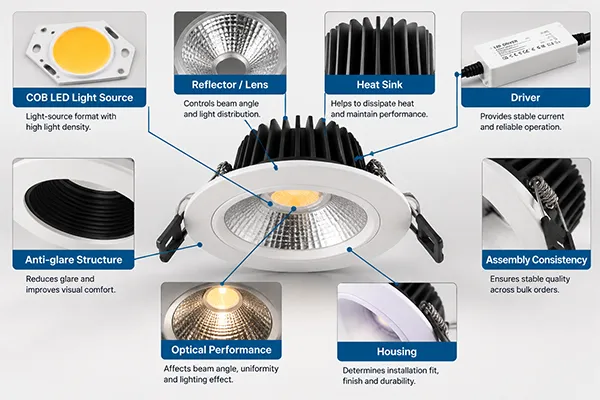
COB LED downlight performance depends on the complete luminaire system, including the LED source, reflector or lens, heat sink, driver, housing, anti-glare structure, and assembly consistency. COB describes a light-source format, but it does not independently confirm optical quality, reliability, color consistency, or suitability for a specific project.
Evaluate the Complete Luminaire
A COB LED package places multiple LED chips on a compact substrate.5 This format can support a concentrated emitting surface and can be used in many downlight designs. However, the final lighting result depends heavily on the optical system around that source.
For example, reflector geometry affects beam control, cut-off angle, center intensity, and visual comfort. A poorly matched reflector can create uneven light, visible glare, or unwanted spill light. Likewise, a lens can change beam distribution and light transmission.
When I review a proposed downlight configuration, I look beyond the LED label and examine the system as a whole.
| Component | What Buyers Should Evaluate | Why It Matters |
|---|---|---|
| LED source | Brand, binning approach, color temperature options, stated electrical conditions | Influences light output, color quality, and repeatability |
| Reflector or lens | Beam angle, material, finish, anti-glare structure | Determines distribution, visual comfort, and appearance |
| Heat sink | Material, fin design, thermal path, fixture size | Helps manage operating temperature |
| LED driver | Input range, dimming compatibility, power factor, protection features | Affects stability, dimming behavior, and service risk |
| Housing and trim | Finish, cutout size, IP rating where applicable, installation method | Affects fit, appearance, and application suitability |
| Assembly process | Wiring, soldering, driver placement, mechanical fit | Influences consistency between units and batches |
Thermal Management Affects More Than Lifetime
Heat management is often discussed only in relation to LED lifetime. I think buyers should view it more broadly. Excess heat can influence lumen maintenance, color shift, driver stress, and the stability of performance over time.6
A compact downlight body may look attractive, but reduced space can make thermal design more demanding. The final operating temperature depends on several conditions:
- Fixture wattage and drive current
- Heat-sink material and surface area
- Ceiling cavity ventilation
- Insulation around the fixture
- Ambient temperature
- Installation orientation
- Driver location and design
A catalog lifetime figure should always be reviewed with its test conditions.7 Buyers should ask what ambient temperature, drive current, operating hours, and lumen-maintenance standard were used. I do not advise treating a general lifetime claim as a prediction for every ceiling or installation environment.
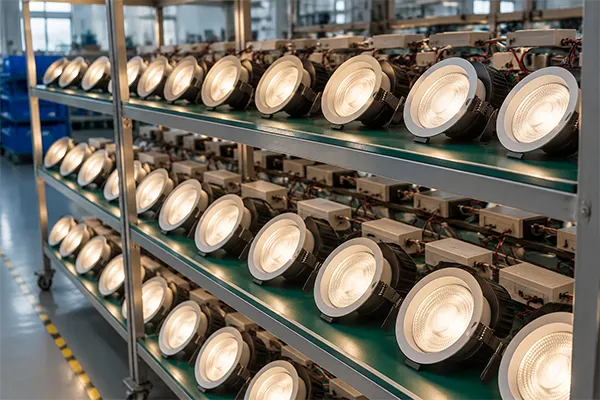
At Upward Lighting, we conduct aging checks before shipment as part of our normal quality process. In our case, products undergo a 100% aging test lasting approximately 4 to 8 hours. I present this as one quality-control practice buyers can evaluate, not as a universal guarantee of field performance. Long-term results still depend on application conditions, installation quality, and component selection.
Why Do CRI, Color Consistency, and Beam Control Matter in COB LED Downlight Performance?
A downlight can meet a basic brightness requirement and still make a space feel disappointing. Poor color rendering can make merchandise look dull. Inconsistent color temperature can make a ceiling look patchy. Excess glare can make a bright room feel uncomfortable. These issues are often noticed after installation, when changes become costly.
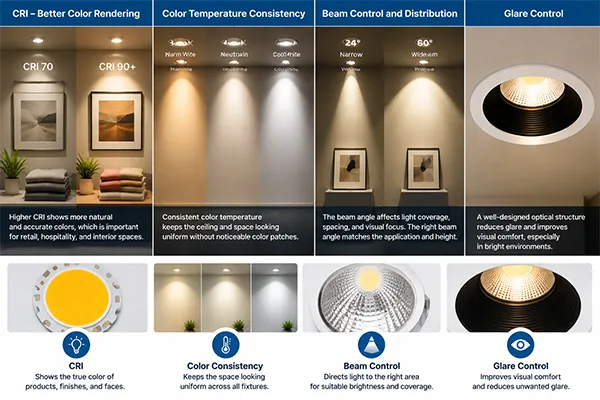
COB LED downlight performance should include CRI, color temperature consistency, beam distribution, and glare control because these factors shape how people see products, finishes, faces, and interiors. Buyers should specify these requirements early, then verify that samples, documentation, and production configurations match the approved selection.
CRI Is a Functional Requirement
Color Rendering Index, or CRI, indicates how faithfully a light source renders colors compared with a reference source under defined conditions.8 It is useful, but buyers should not treat it as the only color-quality metric.
For many general commercial or residential applications, CRI 80 may be considered acceptable depending on local expectations and project needs. Retail, hospitality, beauty, food, gallery, and premium interior projects may require higher color-rendering performance. The appropriate requirement depends on what people need to see.
For example:
- A clothing retailer may need colors to appear natural and differentiated.
- A grocery or food display may need lighting that supports fresh-looking presentation.
- A hotel lobby may need warm, consistent light that supports the intended atmosphere.
- An office may prioritize visual comfort and consistent general illumination.
- A residential project may focus on skin tones, furniture finishes, and flexibility between warm and neutral color temperatures.
I recommend that buyers request the target CRI specification in writing and ask which test method or documentation supports the claim. If a project has demanding color requirements, the buyer should also evaluate an actual sample in an environment that resembles the intended installation.
Color Temperature Must Be Consistent Across the Ceiling
A project may specify 3000K, 4000K, or another color temperature. However, a nominal color temperature alone does not guarantee that all fixtures will look identical after installation. Differences in LED bins, production lots, component changes, and process control can produce visible variation.9
For this reason, I encourage buyers to ask suppliers practical questions:
- How is color temperature controlled between batches?
- Can the supplier maintain the approved configuration for repeat orders?
- Are substitute LED sources allowed without written approval?
- Can the supplier provide pre-production samples for large or sensitive projects?
- Are production records linked to order specifications?
Glare Control Is Part of Quality Perception
A high-output downlight may create discomfort if the light-emitting surface is too visible from normal viewing angles. Deep recessed designs, dark reflectors, honeycomb accessories, baffles, and appropriate beam angles can help manage glare in some configurations.10
However, every anti-glare choice involves trade-offs. A deeper optical structure may change fixture depth, output, cost, and installation requirements. I recommend that buyers compare glare control alongside lumen output rather than assuming that the brightest sample is automatically the most suitable.
How Can Buyers Verify COB LED Downlight Performance Across Bulk Orders?
A working sample is useful, but a sample alone does not prove that a supplier can deliver the same configuration consistently in bulk. This becomes especially important for importers, distributors, contractors, and lighting brands that need repeatable product quality across multiple orders.
To verify COB LED downlight performance in bulk supply, buyers should confirm product specifications, sample approval procedures, component controls, aging practices, outgoing inspection methods, packaging standards, and documentation. The goal is to reduce variation risk between the approved sample and production batches, not to rely on verbal promises or one-time sample results.
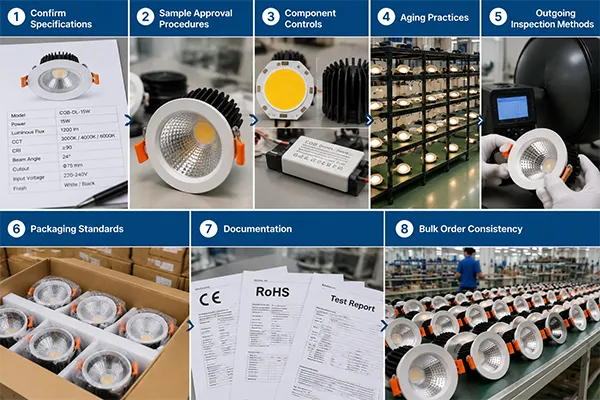
Turn the Product Specification Into a Controlled Document
A clear specification sheet gives both buyer and supplier a shared reference. Without this document, small changes can happen over time. A supplier may interpret “same model” differently if the order does not specify the LED source, driver, beam angle, finish, and other critical details.
I recommend including the following in the approved product specification:
| Specification Area | Details to Confirm |
|---|---|
| Product model | Internal model number, trim style, cutout size, dimensions |
| Electrical data | Wattage, input voltage, driver type, dimming requirements |
| Optical data | Beam angle, reflector finish, lens type, stated lumen output |
| Color requirements | CCT, CRI target, color-consistency requirement if applicable |
| Mechanical details | Housing color, trim finish, IP rating, installation method |
| Compliance documents | CE, RoHS, and market-specific documents required by the buyer |
| Packaging | Inner box, outer carton, labels, barcode, branding requirements |
| Inspection | Sampling plan, aging requirements, outgoing inspection expectations |
Ask About the Factory Process
In selection discussions, I regularly receive questions about whether a supplier performs aging tests and outgoing inspection. These are valid questions, but buyers should also ask how those checks fit into the full production process.
A practical supplier evaluation can include:
- Incoming material checks for key components
- Confirmation of order-specific configuration before production
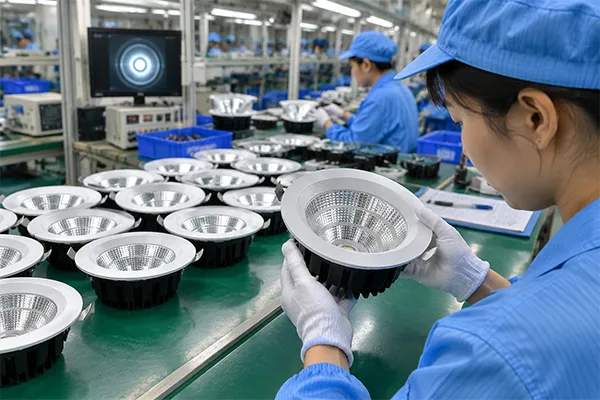
- In-process assembly inspection
- Functional testing and aging procedures
- Visual inspection of finish, labeling, and mechanical fit
- Packing inspection and carton verification
- Retention of production records where applicable
- Procedure for handling nonconforming products
At Upward Lighting, our team supports OEM and ODM customization for parameters such as color temperature, wattage, beam angle, CRI, and housing finish. We also support small-batch orders where feasible. For buyers, this flexibility is valuable only when the approved configuration is documented and controlled.
Verify Certifications Rather Than Assuming Compliance
Certification requirements vary by market, product type, and application.11 Buyers should request current documents and verify that they apply to the actual model and intended destination market.
Our products may be supplied with documents such as CE and RoHS, depending on the product configuration and market requirements. However, I always recommend that buyers verify certification scope, report validity, labeling requirements, and local regulations before placing an order or importing products. A qualified compliance professional can help with application-specific decisions.
The most reliable procurement process is not based on a single claim. It combines approved samples, clear technical documents, supplier communication, inspection expectations, and verification of compliance requirements.
Frequently Asked Questions
Is a COB downlight better than an SMD downlight?
I do not consider COB inherently better than SMD. Each light-source format can be used in suitable luminaire designs. Buyers should compare the complete fixture, including optics, thermal design, driver, beam distribution, color quality, installation conditions, and supplier consistency.
What is the most important specification when comparing COB downlights?
I believe the most important specification depends on the lighting task. Buyers should begin with required illuminance, beam angle, mounting height, spacing, glare control, color temperature, and CRI. Wattage and lumens are useful, but they do not independently predict the final lighting result.
What CRI should I choose for a COB LED downlight?
I recommend selecting CRI based on the application. General spaces may use one target, while retail, hospitality, food, beauty, or premium interiors may require stronger color rendering. Buyers should define the project requirement and verify the supplier’s supporting technical documentation.
How can I reduce color inconsistency between downlight batches?
I recommend approving a written specification that identifies color temperature, CRI, LED configuration, and acceptable substitutions. Buyers should ask about binning, batch control, pre-production samples, and repeat-order procedures. Visual sample approval is especially useful for color-sensitive projects.
Does an aging test guarantee long downlight life?
No. An aging test can help identify some early functional issues before shipment, but it does not guarantee field performance in every installation.12 Long-term results depend on thermal conditions, driver quality, installation method, ambient temperature, operating hours, and maintenance practices.
Conclusion
The best COB LED downlight performance comparison does not begin with the highest wattage, brightest sample, or lowest unit price. I recommend that buyers compare beam angle, mounting height, optical control, CRI, color consistency, thermal design, driver quality, and bulk-production controls. A clear specification and verified documentation can reduce avoidable project and supply risks. If you are sourcing customized COB downlights for a project, distribution program, or private-label range, I invite you to contact Upward Lighting for configuration support, sample discussion, and quotation review.
"Understanding LM-79 Reports", https://betterbuildingssolutioncenter.energy.gov/sites/default/files/attachments/understanding_lm79_reports.pdf. Lighting calculations commonly account for target illuminance, luminaire photometry and mounting geometry, spacing, room-surface reflectances, and the visual task when determining the appropriate lighting arrangement. Evidence role: general_support; source type: institution. Supports: Lighting-design guidance identifying illuminance targets, luminaire distribution, mounting geometry, spacing, and surface reflectance as relevant inputs to indoor lighting calculations.. ↩
"ZEB Technologies: Building Envelope & Architectural ...", https://www.energy.gov/cmei/buildings/zeb-technologies-building-envelope-architectural-considerations. A surface with lower reflectance returns less incident light to the room and absorbs a greater proportion than a higher-reflectance surface, which can affect interior illuminance and luminance distributions. Evidence role: mechanism; source type: education. Supports: The relationship between a surface's reflectance and the proportion of incident light it reflects or absorbs.. ↩
"CALiPER Application Summary Report 20: LED PAR38 Lamps", https://www1.eere.energy.gov/buildings/publications/pdfs/ssl/caliper_20_summary.pdf. Beam angle characterizes the angular spread of a luminaire’s light distribution; at the same mounting distance, a narrower distribution covers a smaller area and produces greater concentration of light near the beam center. Evidence role: mechanism; source type: institution. Supports: How beam angle describes the angular spread of a luminaire's luminous intensity distribution and affects the area illuminated at a given distance.. ↩
"Chapter 11 - Street Lighting", https://www.intrans.iastate.edu/wp-content/uploads/sites/15/2020/03/Chapter_11.pdf. Total luminous flux alone does not determine illuminance at a target plane: the luminaire’s intensity distribution, distance, and aiming determine how much of that flux reaches a particular surface. Evidence role: mechanism; source type: education. Supports: The distinction between total luminous flux and illuminance, and the effect of angular distribution on illuminance at a specified point or plane.. ↩
"LED HEADLIGHTS", https://chemistry.beloit.edu/classes/Chem117/pdf/light/hella_automotive.pdf. Chip-on-board LED packaging is generally described as mounting multiple LED dies directly on a common substrate or board to form a compact emitting assembly. Evidence role: definition; source type: paper. Supports: The definition and packaging architecture of chip-on-board LEDs, including multiple LED dies mounted on a common substrate or board.. ↩
"LED Luminaire Reliability: Impact of Color Shift", https://www.energy.gov/sites/prod/files/2017/04/f34/lsrc_colorshift_apr2017.pdf. Elevated operating temperatures are recognized as a major stressor in LED luminaires, affecting LED light-output maintenance and chromaticity behavior and potentially reducing the reliability of temperature-sensitive electronic components such as drivers. Evidence role: mechanism; source type: research. Supports: Research or technical guidance showing that LED and driver operating temperatures influence light output maintenance, chromaticity behavior, and component reliability.. ↩
"LED Luminaire Reliability: Impact of Color Shift", https://www.energy.gov/sites/prod/files/2017/04/f34/lsrc_colorshift_apr2017.pdf. LED lumen-maintenance projections are based on measurements made under specified drive-current and case-temperature conditions and, where applicable, standardized extrapolation methods; consequently, a rated-life figure must be interpreted in relation to its stated test basis. Evidence role: historical_context; source type: institution. Supports: The role of LM-80 measurements and TM-21 extrapolation in reporting LED lumen-maintenance projections and the dependence of such projections on specified test conditions.. Scope note: Such test results characterize the tested LED package or luminaire conditions and do not by themselves predict performance in every installed thermal environment. ↩
"Purchasing Energy-Efficient Light Bulbs", https://www.energy.gov/cmei/femp/purchasing-energy-efficient-light-bulbs. The general color-rendering index is a standardized measure comparing the color appearance of specified test samples under a test light source with their appearance under an appropriate reference illuminant. Evidence role: definition; source type: institution. Supports: The standardized definition of the general color-rendering index and its comparison of color samples under a test source and reference illuminant.. Scope note: CRI summarizes fidelity for a prescribed set of samples and is not a complete measure of every aspect of color preference or gamut. ↩
"Color Stability of LEDs: Understanding the Basics", https://www1.eere.energy.gov/buildings/publications/pdfs/ssl/royer_stability_lightfair2014.pdf. LED color consistency is affected by chromaticity binning and manufacturing variation; differences in the chromaticity of LEDs used in luminaires can be perceptible when fixtures are viewed together. Evidence role: mechanism; source type: research. Supports: Evidence that LED chromaticity bins and manufacturing variation can contribute to color differences between LED products or production batches.. Scope note: Whether a difference is noticeable depends on the magnitude of the chromaticity difference, viewing conditions, adaptation, and the application. ↩
"Lighting in Senior Care Centers: Comparing Tunable LED ...", https://www.energy.gov/sites/default/files/2022-06/ssl-2022-wisconsin-care-centers-report-2.pdf. Direct-glare control commonly relies on limiting the visibility and luminance of the light source through shielding, cutoff geometry, and appropriate luminous-intensity distribution. Evidence role: mechanism; source type: education. Supports: Lighting-design principles explaining how shielding, cutoff, source luminance, and luminaire distribution influence direct glare.. Scope note: The glare outcome remains dependent on observer position, background luminance, mounting geometry, and the specific application. ↩
"Certificates of Compliance", https://www.federalregister.gov/documents/2025/01/08/2024-30826/certificates-of-compliance. Product-conformity obligations are determined by the legislation applicable to the product and the market in which it is placed; electrical lighting products may fall within different regulatory scopes depending on their characteristics and intended use. Evidence role: general_support; source type: government. Supports: Official regulatory guidance showing that conformity obligations and applicable rules depend on the product's legal category, market placement, and scope of relevant legislation.. Scope note: The applicable requirements must be confirmed for the specific product, destination jurisdiction, and current regulatory text. ↩
"Towards Understanding Early Failures Behavior during Device Burn ...", https://tsapps.nist.gov/publication/get_pdf.cfm?pub_id=920388. Burn-in and environmental screening are used to expose some early-life defects before deployment, but they do not establish that every unit will meet a particular service life under all field temperatures, loads, installation conditions, and usage patterns. Evidence role: mechanism; source type: research. Supports: Reliability-engineering evidence that burn-in or screening is intended to reveal certain early-life defects, while field reliability also depends on operating conditions and failure mechanisms not captured by the screen.. Scope note: The effectiveness of an aging screen depends on its duration, stresses, test coverage, and the failure mechanisms relevant to the product. ↩