LED downlight market trends can be difficult to interpret when buyers face competing demands for lower prices, faster installation, better visual comfort, and more customization. A fashionable feature may look attractive in a catalog, yet create unnecessary cost or supply risk. I recommend evaluating every trend against the intended space, installation method, target channel, compliance needs, and long-term procurement plan.
LED downlight market trends matter when they improve performance for a specific application, customer segment, and price band. Global buyers should not treat higher wattage, slim bodies, anti-glare optics, selectable color temperatures, or smart controls as automatic upgrades. Instead, they should confirm the lighting task, verify destination-market requirements, assess supplier consistency, and choose specifications that can be supplied reliably over time.
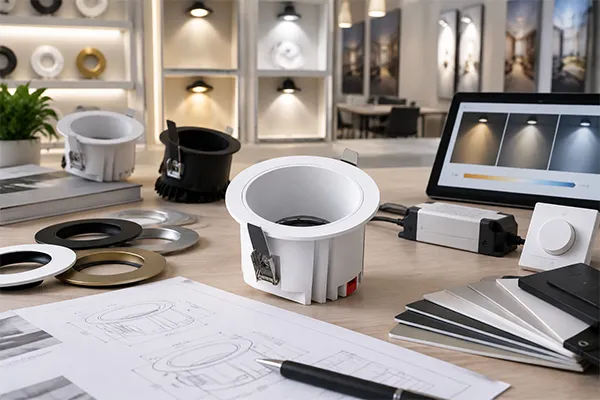
In our conversations with importers, contractors, and lighting brands, I often see the same issue: buyers begin with a popular product style before defining where it will be used. The strongest purchasing decisions usually start with the lighting task, then move to specifications, supplier evaluation, and SKU planning.
How Should Buyers Evaluate LED Downlight Market Trends by Application?
Many buyers see a high-demand downlight design and assume it belongs in every product range. That approach can create mismatched stock, customer complaints, and difficult price comparisons. I believe the first question should always be simple: where will this LED downlight be installed, and what must it do in that space?
Buyers should evaluate LED downlight market trends by matching each feature to the installation environment and lighting task. Ceiling depth, room size, ceiling material, ambient temperature, glare expectations, maintenance access, and local installation practices all affect the correct choice of wattage, lumen output, beam angle, trim style, and driver configuration.1
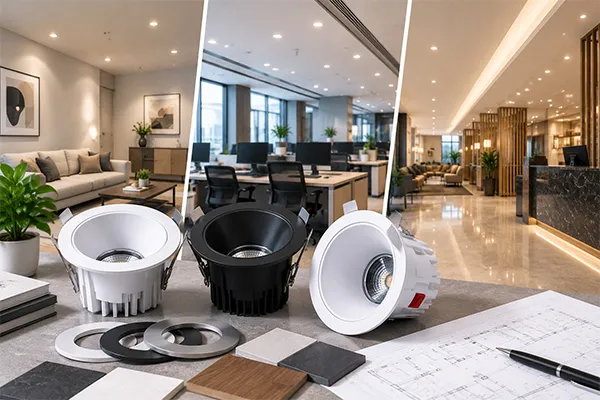
Start With the Space, Not the Catalog
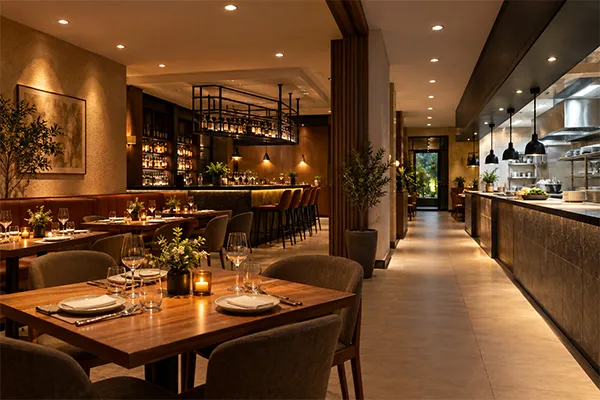
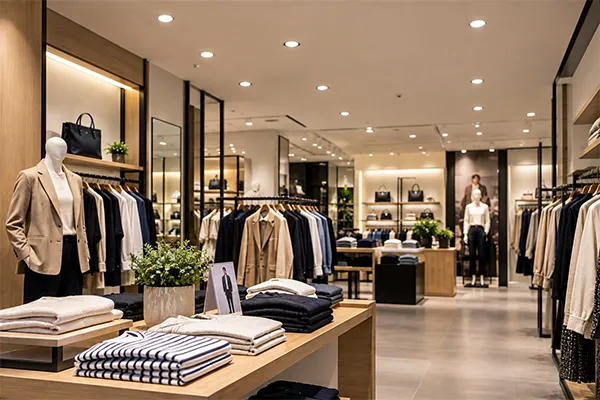
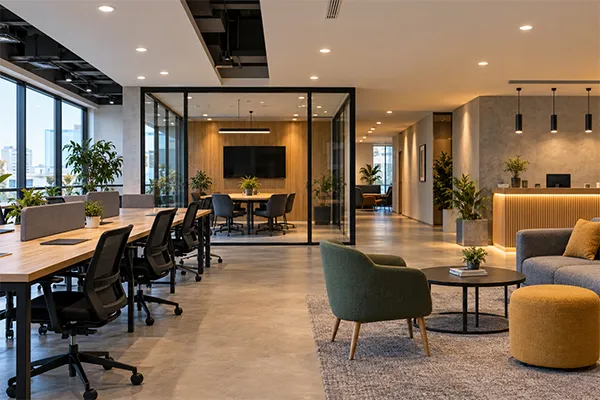
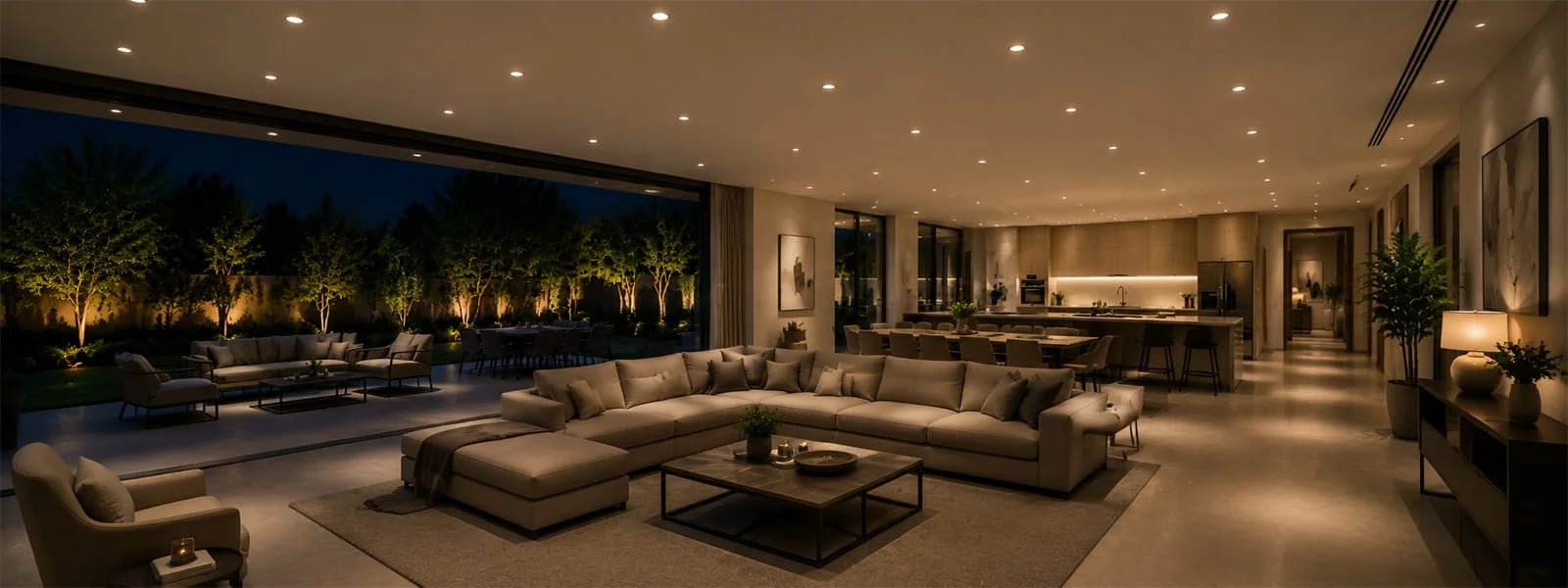
A downlight used in a residential corridor has different needs from one used in a retail display area, hotel lobby, office, bathroom, or restaurant. A product that performs well in one setting may be poorly suited to another.
When I receive an OEM or project inquiry, I usually want to clarify several practical details before discussing a final quotation:
- What is the space type? Residential, retail, office, hospitality, education, healthcare, or outdoor covered area?
- What is the mounting condition? Is the ceiling concrete, gypsum board, metal, or another material?
- How much ceiling depth is available? This affects whether an ultra-slim recessed downlight is practical.
- What is the lighting purpose? General illumination, accent lighting, wall washing, task lighting, or ambience?
- What visual comfort level is required? A lobby, office, and luxury retail environment may need stronger glare control than a utility room.
- What is the maintenance plan? Buyers should consider driver replacement, access above the ceiling, and expected operating hours.
Match Specifications to the Lighting Task
The table below shows why a specification should be considered in context rather than treated as a universal trend.
| Application | Typical Buyer Priority | Specification Questions to Ask |
|---|---|---|
| Residential apartments | Value, easy installation, comfortable light | Is selectable CCT useful? Is a standard beam angle sufficient? |
| Hotels and hospitality | Appearance, comfort, finish consistency | Is deep anti-glare design needed? Does the trim finish match the interior? |
| Retail stores | Product emphasis, visual impact | Does the beam angle suit the display layout? Is high CRI necessary for merchandise? |
| Offices | Uniformity, visual comfort, operating efficiency | Is glare control appropriate for work areas? What lumen package fits the ceiling layout? |
| Corridors and common areas | Reliability, maintenance, cost control | Is high output needed, or will it cause excessive brightness? |
| Building-material distribution | Broad sell-through and simple stock management | Which sizes and wattages are familiar to local installers? |
I have seen buyers request the highest lumen output because it seems more competitive on paper. However, more lumens are not always better. Excessive output can create discomfort, increase energy use, and force a project to use fewer fixtures than its original layout requires.2 The correct output should support the lighting design, mounting height, spacing, and visual expectations.
I treat product trends as useful starting points, not as specification instructions. The installation environment should decide whether a trend adds value.
For application-specific calculations, photometric review, electrical design, and compliance decisions, I recommend working with a qualified lighting designer, engineer, or local professional.
Which LED Downlight Market Trends Deserve the Most Attention?
The market often highlights ultra-slim downlights, deep anti-glare styles, higher lumen packages, tunable color options, and smart control compatibility. These are real demand signals in many buyer conversations. Still, I do not view any one of them as the “best” LED downlight trend for every market.
The most relevant LED downlight market trends are ultra-slim installation formats, visual-comfort optics, flexible CCT and wattage options, improved color rendering, and control-ready products. Buyers should adopt these features only when the target application, local customer preference, installation practice, and target price support them.
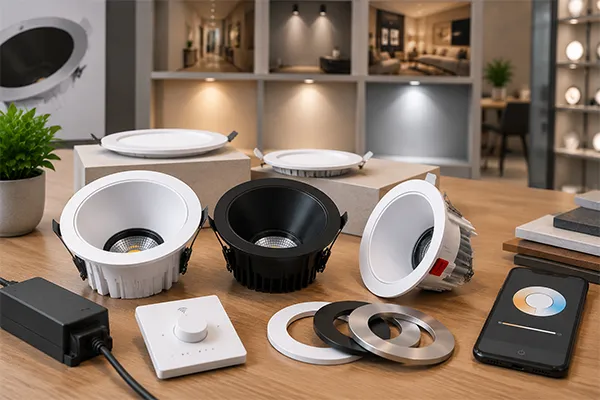
Ultra-Slim Designs: Installation Convenience With Limits
Ultra-slim recessed downlights can help where ceiling voids are limited.3 They may also appeal to renovation projects and channels that prioritize easy installation. However, the thinner housing changes the design constraints around heat management, driver placement, spring strength, and serviceability.4
I advise buyers to ask:
- What is the actual cutout size and total installation depth?
- How is heat managed in the chosen body structure?
- Is the driver external, integrated, or separately replaceable?
- What ceiling thickness can the spring clips accommodate?
- Are there restrictions on insulation contact or enclosed installation for the intended project?
A slim appearance alone does not confirm long-term suitability. Buyers should request dimensional drawings, installation instructions, and samples for practical fitting checks.
Deep Anti-Glare Downlights: A Comfort Feature, Not a Universal Requirement
Deep recessed light sources and anti-glare structures are often requested for hospitality, premium residential, office, and retail projects. They can reduce the direct view of the light source and create a more controlled visual impression.5
Yet anti-glare construction may increase housing depth, product weight, component cost, and optical complexity. In a price-sensitive wholesale channel, a standard recessed design may offer a better commercial fit. The buyer should consider whether end users will recognize and pay for the visual-comfort benefit.
Selectable CCT and Wattage: Flexibility Versus SKU Clarity
Selectable CCT and wattage options can reduce inventory pressure by allowing one product to address multiple common requirements.6 For example, a distributor may prefer a downlight with several color temperature settings for mixed residential demand.
However, flexibility can also create confusion when installers do not set the product correctly, when labeling is unclear, or when the channel expects a fixed specification. I recommend that buyers consider:
- Whether installers understand the switch settings.
- Whether local customers ask for fixed or selectable CCT.
- Whether product labels clearly show the available settings.
- Whether the final setting can be checked before installation.
- Whether the channel benefits from fewer SKUs or prefers simple fixed products.
The trend is valuable when it simplifies purchasing and installation. It is less valuable when it makes the range harder to explain or control.
How Can Buyers Turn LED Downlight Market Trends Into a Practical Product Range?
A common procurement problem is overbuilding a range. Buyers may add every available wattage, CCT, bezel color, beam angle, and control option because each feature appears useful individually. The result can be slow-moving inventory, difficult forecasting, and inconsistent customer communication.
Buyers can convert LED downlight market trends into a practical range by defining a customer segment first, then selecting a limited specification mix that meets that segment’s most frequent needs. A clear core range, supported by controlled OEM/ODM options, is usually easier to stock, price, market, and replenish than an unrestricted SKU list.
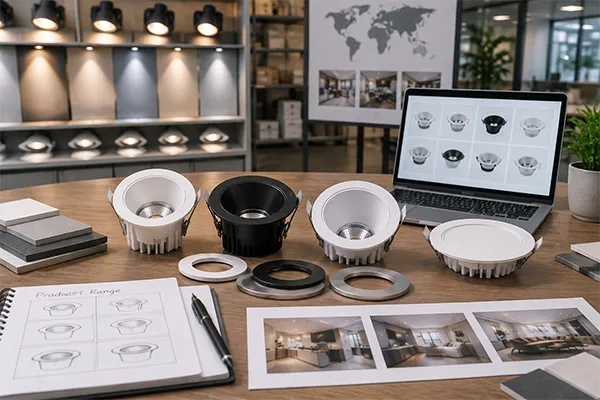
Build a Core Range Around the Sales Channel
I find that the right product range depends heavily on how the buyer sells. A project contractor may need defined specifications for a tender. A wholesaler may need high-volume standard models. A local lighting brand may need a recognizable appearance and customized packaging. An importer may want a balanced range that can serve several customers without excessive stock risk.
Here is a simple planning framework I use when discussing new product development.
| Channel Type | Core Range Strategy | Controlled Customization |
|---|---|---|
| Wholesaler | Fast-moving sizes, standard finishes, familiar wattages | Selectable CCT, private labels, carton design |
| Project contractor | Application-specific lumen packages and cutouts | Beam angle, CRI, driver requirements, finish |
| Lighting brand | Distinctive product identity and consistent visual quality | Housing design, trim colors, branding, packaging |
| Electrical distributor | Easy-to-explain, reliable mainstream models | Small number of CCT and wattage options |
| Online or retail seller | Simple selection, clear labeling, attractive presentation | Packaging, fixed product bundles, finish choices |
Avoid Unnecessary SKU Complexity
A large SKU range can look impressive in a catalog, but it can create hidden cost. Every additional variation may require separate components, labels, packaging, inspection standards, inventory planning, and replenishment control.
For example, a buyer may ask for:
- 3 wattage options
- 3 CCT options
- 4 bezel colors
- 3 beam angles
- 2 driver types
That combination can create 216 possible configurations7 before considering cutout size, packaging, or control functions. Not every configuration needs to be stocked.
I suggest separating products into two groups:
- Core stock items: The configurations with predictable recurring demand.
- Project or OEM/ODM items: Configurations produced against defined orders, samples, minimum quantities, and delivery schedules.
This structure allows buyers to respond to trend-driven requests without turning every option into permanent inventory.
Use Customization With a Commercial Purpose
At Upward Lighting, we can discuss customization of color temperature, wattage, beam angle, CRI, and surface finish. I see these options as tools for achieving a defined market position, not as features to add without a reason.
A black trim may suit a modern hospitality collection. A higher CRI option may matter when a retail customer wants more accurate product presentation. A specific beam angle may support a particular ceiling layout. Each choice should connect to a sales opportunity, a project brief, or a brand strategy.
What Supplier Checks Matter Beyond LED Downlight Market Trends?
A datasheet and a unit price are important, but they do not show the full procurement picture. Buyers may select a trend product based on appearance or headline specifications, then later face delivery variation, inconsistent trim colors, unclear documentation, or difficulty repeating the same configuration.
Buyers should assess LED downlight market trends through supplier capability as well as product features. They should verify production consistency, thermal and driver design information, aging-test procedures, sample quality, documentation relevance, delivery capacity, configuration control, and communication responsiveness before committing to a long-term sourcing plan.
Review Product Construction, Not Only Headline Specifications
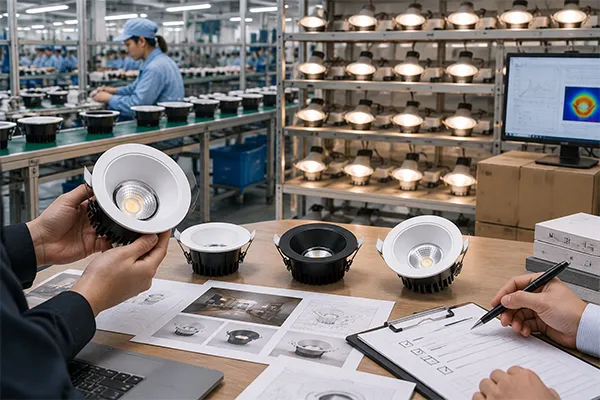
Two downlights may list similar wattage, lumen output, CCT, and CRI values. Their practical differences may appear in the housing material, heat dissipation design, LED selection, optical structure, driver design, wiring, spring clips, and assembly consistency.8
I recommend that buyers request and compare:
- Product drawings with dimensions and cutout requirements
- Housing and heat-sink material details
- Driver input range and output information
- Available CCT, CRI, beam angle, and finish options
- Installation instructions
- Product labels and packaging artwork
- Sample units from the proposed production configuration
- Applicable test reports and certification documents
Buyers should also examine the sample physically. They can check trim finish consistency, spring tension, wiring quality, connector fit, driver labeling, and ease of installation. For larger orders, a pre-production sample or approved golden sample can help both parties control expectations.
Treat Aging Tests as a Process Check
In our factory operations, every product undergoes a 100% aging test of approximately 4 to 8 hours before shipment. I view this as a manufacturing quality-control practice intended to identify certain early failures and confirm basic operation before dispatch.
However, buyers should understand the limits of any factory process. An aging test is not independent laboratory validation, and it cannot guarantee performance in every installation condition or over every service life.9 The buyer should ask how the process is documented, what checks occur after aging, and how nonconforming units are handled.
Verify Certifications for the Destination Market
CE and RoHS documentation may be relevant for many buyers and markets.10 At Upward Lighting, we can provide CE and RoHS-related product documentation for applicable product lines. Still, I do not advise buyers to assume that CE or RoHS alone guarantees compliance everywhere.
Market-entry requirements can vary by destination, product category, electrical system, installation environment, labeling rules, and customer contract.11 Buyers should verify the current requirements with qualified local compliance professionals, test laboratories, certification bodies, or authorities in the destination market.
Evaluate Total Procurement Risk
Low price does not automatically mean poor quality. A competitively priced supplier may have efficient sourcing, stable production planning, or a product design suited to high-volume manufacturing. At the same time, a low quotation should be reviewed carefully if it lacks a clear specification basis.
I encourage buyers to compare total procurement risk:
| Evaluation Area | Questions for Buyers |
|---|---|
| Price basis | Does the price match the agreed driver, LED, finish, packaging, and certification scope? |
| Delivery | Can the supplier explain lead time, production capacity, and seasonal constraints? |
| Repeatability | Can the same approved configuration be supplied again in six or twelve months? |
| Quality control | Are aging, inspection, and traceability practices explained clearly? |
| Communication | Does the supplier answer technical and commercial questions quickly and accurately? |
| Customization | Can the supplier manage OEM/ODM changes without losing configuration control? |
I have learned from repeated overseas inquiries that fast communication matters most when requirements change. A supplier should not only provide a quick quotation. The supplier should also ask enough questions to avoid quoting the wrong product.
How Can Buyers Reduce Long-Term Risk When Following LED Downlight Market Trends?
Trend-led purchasing can create a short-term advantage, especially when a new style fits local design preferences or fills a clear gap in a distributor’s range. The risk appears when buyers commit to untested specifications, unclear documentation, or a supplier that cannot sustain the product after the first order.
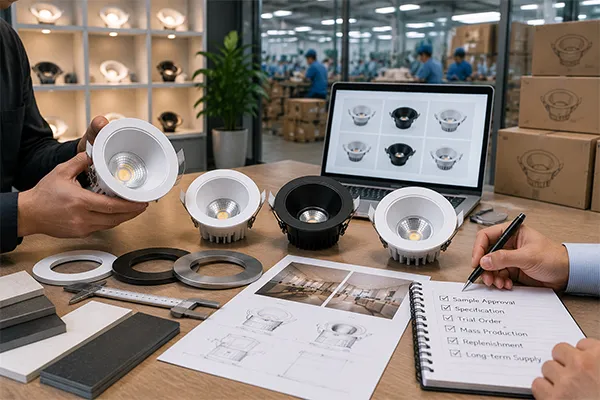
Buyers can reduce long-term risk by validating samples, documenting approved specifications, planning replenishment requirements, and selecting suppliers that can maintain configuration consistency. Trend products should be introduced in stages, beginning with a focused trial order or project-approved sample before broad inventory expansion.12
Use a Staged Sourcing Process
I recommend a staged approach rather than moving directly from a catalog image to a large purchase order.
- Define the application and sales channel. Identify where and how the downlight will be used.
- Agree on the specification. Confirm cutout, wattage, lumen target, CCT, CRI, beam angle, finish, driver, and packaging.
- Review documentation. Check drawings, labels, installation instructions, and relevant certification documents.
- Evaluate samples. Test fit, appearance, operation, and installation practicality in the intended setting.
- Approve a reference sample. Keep an agreed sample or detailed approval record for future production comparison.
- Start with a controlled order. Use a trial order, project order, or limited stock launch where appropriate.
- Review field feedback. Gather input from installers, sales teams, and end customers before expanding the range.
Plan for Repeat Orders Early
A trend product can become a dependable seller only if the buyer can replenish it consistently. I recommend asking suppliers about component availability, standard lead times, product revision control, minimum order quantities, and how they handle material substitutions.
A buyer should also document important details that are sometimes missed in a purchase order:
- Trim color reference or finish sample
- Color temperature tolerance expectations
- Required product marking
- Carton artwork and inner-box requirements
- Driver brand or agreed driver performance parameters
- Inspection standard and acceptable quality level
- Spare-unit or after-sales policy
- Shipping marks and pallet requirements
This level of detail may feel formal for a small order, but it becomes valuable when a product line grows. It also protects both buyer and supplier from misunderstandings.
Frequently Asked Questions
What are the most important LED downlight market trends for buyers?
The most discussed LED downlight market trends include ultra-slim bodies, deep anti-glare designs, selectable CCT and wattage, higher CRI options, decorative finishes, and control-ready products. I recommend evaluating each feature according to the intended space, customer expectations, installation method, and target selling price.
Are ultra-slim LED downlights always better for modern projects?
Ultra-slim LED downlights can be useful when ceiling depth is limited or renovation installation is important. They are not automatically better for every project. Buyers should review thermal design, driver arrangement, installation depth, ceiling compatibility, and maintenance access before choosing a slim format.
Should a buyer choose selectable CCT LED downlights?
Selectable CCT downlights can help wholesalers and distributors reduce stock complexity when customers request different color temperatures. However, fixed-CCT products may be simpler for some projects and channels. Buyers should consider installer familiarity, labeling clarity, local preference, and the risk of incorrect switch settings.
How should buyers verify LED downlight certifications?
Buyers should request relevant certification documents and confirm that they apply to the proposed product configuration and destination market. CE and RoHS may be relevant documents for many markets, but requirements vary. I recommend confirming current local rules with qualified compliance professionals or recognized testing organizations.
What quality checks should buyers ask an LED downlight supplier about?
Buyers should ask about incoming material checks, assembly controls, aging-test procedures, final inspection, sample approval, product traceability, packaging checks, and handling of nonconforming products. They should also inspect samples and confirm that the final purchase order matches the approved product configuration.
Conclusion
LED downlight market trends are most useful when buyers treat them as commercial and technical signals rather than universal product rules. I recommend starting with the intended space, installation conditions, target customer, and price band. Then, buyers can select only the features that create real value, build a manageable SKU range, and assess supplier capability beyond the datasheet. If you are sourcing, customizing, or planning a downlight range for your market, we at Upward Lighting can help you review practical OEM/ODM options, samples, and production requirements for your application.
"[PDF] LED Performance Under Tough Conditions - Department of Energy", https://www.energy.gov/sites/prod/files/2016/01/f28/dec2015_DOE_GATEWAY_roundup_0.pdf. Lighting-design guidance recognizes that luminaire output, distribution, glare control, mounting geometry, and environmental conditions must be evaluated in relation to the intended visual task and installation. Evidence role: general_support; source type: institution. Supports: Lighting-design guidance explaining that application geometry, task, glare, mounting conditions, and thermal environment inform luminaire selection.. Scope note: Such guidance supports the selection principle but does not prescribe one correct downlight configuration for every project. ↩
"ZEB Technologies: Lighting & Daylighting - Department of Energy", https://www.energy.gov/cmei/buildings/zeb-technologies-lighting-daylighting. Lighting research and energy guidance indicate that excessive luminance or poorly controlled illumination can contribute to discomfort glare, and that lighting beyond task needs increases electrical energy use. Evidence role: mechanism; source type: research. Supports: Research or authoritative guidance showing that excessive luminance and poorly controlled lighting can produce glare or visual discomfort, while unnecessary lighting load increases energy consumption.. Scope note: Whether a project uses fewer fixtures depends on its photometric layout, controls, spacing, and applicable design criteria. ↩
"[PDF] Measure Guideline: Air Sealing Attics in Multifamily Buildings", https://www1.eere.energy.gov/buildings/publications/pdfs/building_america/measure_guide_air_sealing_attics.pdf. Recessed-lighting installation guidance notes that these luminaires require clearance within the ceiling cavity; shallow-profile designs can therefore be relevant where available void depth is restricted. Evidence role: general_support; source type: government. Supports: Installation guidance explaining that recessed luminaires require space above the ceiling and that shallow-profile products address limited cavity depth.. Scope note: Required clearance and permissible installation conditions remain product-specific and must follow the luminaire instructions and applicable electrical code. ↩
"[PDF] DOE Solid-State Lighting CALiPER Program 2009 Roundtable", https://www1.eere.energy.gov/buildings/publications/pdfs/ssl/2009_caliper_roundtableproceedings.pdf. LED-luminaire engineering literature identifies thermal-path design and the placement of electronic drivers as important reliability considerations, particularly where compact form factors limit available volume and heat dissipation area. Evidence role: mechanism; source type: paper. Supports: Engineering literature describing the importance of thermal paths, driver placement, and mechanical design in compact LED luminaires.. Scope note: The effects on spring retention and serviceability depend on the individual luminaire construction and installation system. ↩
"Visual comfort is designed long before a space ...", https://www.facebook.com/LafitLightings/posts/visual-comfort-is-designed-long-before-a-space-is-experiencedthe-difference-betw/1432745368876874/. Lighting research describes source shielding and recessing as optical measures that can reduce direct visibility of bright light-emitting surfaces and thereby help manage discomfort glare. Evidence role: mechanism; source type: research. Supports: Lighting research explaining that shielding, source recessing, and luminaire geometry can reduce direct source visibility and influence discomfort glare.. Scope note: Actual glare performance requires photometric evaluation in the installed geometry; a deep appearance alone does not establish a specific glare rating. ↩
"The Effect of Product Variety and Inventory Levels on Retail ...", https://www.hbs.edu/faculty/Pages/item.aspx?num=37388. Operations-management research finds that component commonality and configurable product designs can reduce inventory variety when a common product replaces multiple separately stocked variants. Evidence role: general_support; source type: paper. Supports: Operations-management research showing that product commonality and configurable offerings can reduce inventory variety when they substitute for otherwise separate variants.. Scope note: Inventory savings are conditional on customer demand, channel practices, local specifications, and whether the selectable product genuinely replaces fixed-SKU demand. ↩
"Rule of product", https://en.wikipedia.org/wiki/Rule_of_product. Under the multiplication principle, independent choices are counted by multiplying the number of options at each stage; 3 × 3 × 4 × 3 × 2 equals 216. Evidence role: definition; source type: education. Supports: The multiplication principle used to count independent product-option combinations.. Scope note: This count applies only if all listed options are compatible and independently available in every combination. ↩
"[PDF] THE ECONOMIC BENEFITS OF NIST'S ROLE IN THE MARKET ...", https://www.nist.gov/document/economic-benefits-nists-role-market-transition-solid-state-lighting-technology. Technical guidance on LED luminaires treats optical components, thermal management, drivers, electrical connections, and mechanical construction as interacting parts of system performance and reliability. Evidence role: mechanism; source type: government. Supports: Technical guidance showing that LED luminaire performance and reliability depend on the integrated optical, thermal, electrical, and mechanical system, not solely on nominal output specifications.. Scope note: Similar published headline values do not by themselves prove that any particular two products differ in quality or service life. ↩
"[PDF] Lumen and Chromaticity Maintenance Behavior of Light-Emitting ...", https://www.energy.gov/sites/prod/files/2020/07/f76/rti_lm-80-white-leds_mar2020.pdf. LED reliability literature distinguishes short-duration production screening or burn-in from independent qualification and long-term performance assessment, because service conditions and degradation mechanisms vary over time. Evidence role: mechanism; source type: research. Supports: Reliability literature distinguishing production screening or burn-in from independent qualification and long-term lifetime assessment.. Scope note: The specific value of a factory aging test depends on its duration, load conditions, sampling or coverage, failure criteria, and documented follow-up inspection. ↩
"RoHS Directive - Environment - European Commission", https://environment.ec.europa.eu/topics/waste-and-recycling/rohs-directive_en. European Union guidance explains that CE marking indicates conformity with applicable Union harmonisation legislation, while the RoHS framework restricts specified hazardous substances in electrical and electronic equipment within its scope. Evidence role: historical_context; source type: government. Supports: Official EU information on CE marking requirements and the RoHS restrictions applicable to electrical and electronic equipment, including relevant lighting products.. Scope note: Applicability depends on the product, intended market placement, and all relevant legal requirements; CE marking and RoHS documentation are not interchangeable evidence of compliance. ↩
"China - Standards for Trade - International Trade Administration", https://www.trade.gov/country-commercial-guides/china-standards-trade. International conformity-assessment guidance notes that market access may depend on jurisdiction-specific technical regulations, applicable standards, testing or certification procedures, and marking or labeling obligations. Evidence role: general_support; source type: institution. Supports: International trade and conformity-assessment guidance explaining that technical regulations, standards, labeling, and certification requirements differ by market and product scope.. Scope note: This general principle does not identify the complete legal requirements for a particular downlight, destination, or contractual project. ↩
"Vendor Qualification Process: Steps & Checklist", https://casrai.org/guides/vendor-qualification-process. Supplier-quality practices commonly use sample or first-article approval and controlled initial production to verify conformance before broader purchasing or deployment. Evidence role: general_support; source type: institution. Supports: Quality-assurance and procurement practices supporting supplier qualification, sample or first-article approval, and controlled initial production before wider deployment.. Scope note: A trial order reduces, but does not eliminate, commercial, field-performance, or supply-continuity risk. ↩