An effective LED downlight product development strategy can fail before the first sample is made if the product team starts with a copied competitor model or an isolated specification list. That approach often creates avoidable conflicts around cost, performance, installation, and market fit. I recommend starting with the product’s real job first.
A successful LED downlight product development strategy starts by defining the intended application, installation environment, target buyer, target market, and price band. Only then should a team select wattage, lumen output, beam angle, CCT, CRI, housing style, and other specifications. This order helps buyers develop a sellable, feasible, and commercially sustainable downlight instead of simply pursuing the highest specifications at the lowest price.
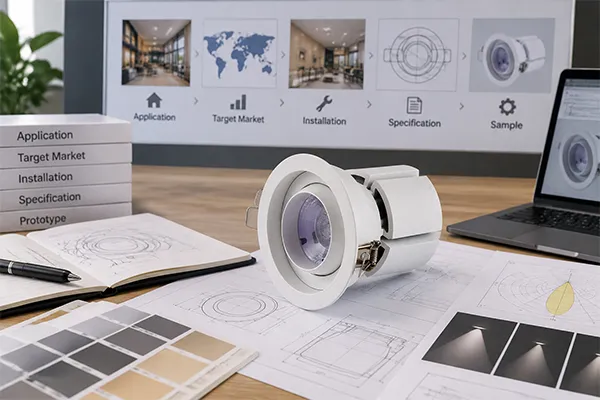
In my work with OEM and ODM customers, I often see that a vague request becomes clear only after a few practical questions. A downlight is not just a lighting product. It is a combination of application needs, installation limits, visual expectations, commercial targets, and supply-chain decisions.
Why Should an LED Downlight Product Development Strategy Begin With the Application?
Many product teams begin with a desired wattage, a reference photo, or a competitor sample. That can create problems later because the same product may not suit the intended ceiling, customer segment, or local price level. The application must guide the development process.
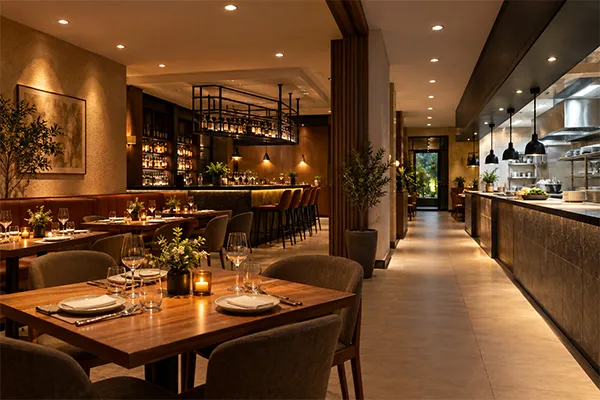
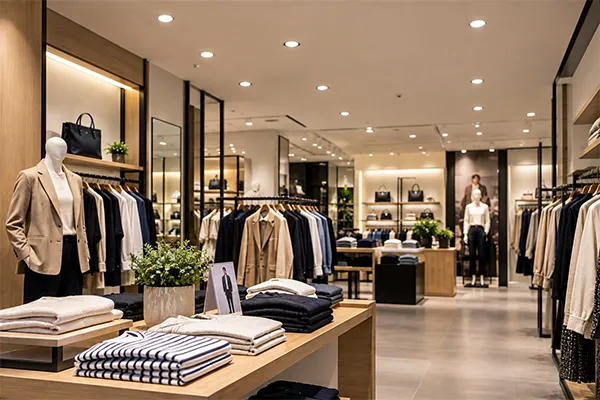
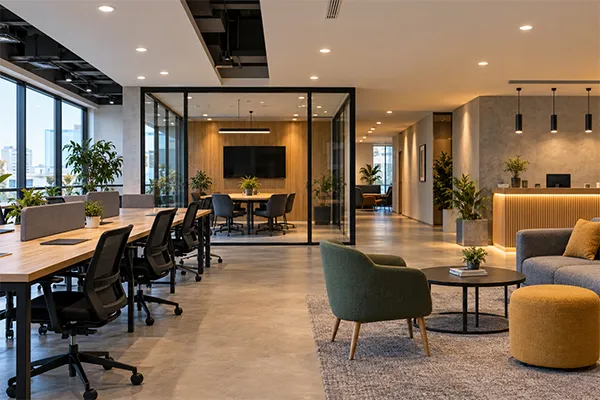
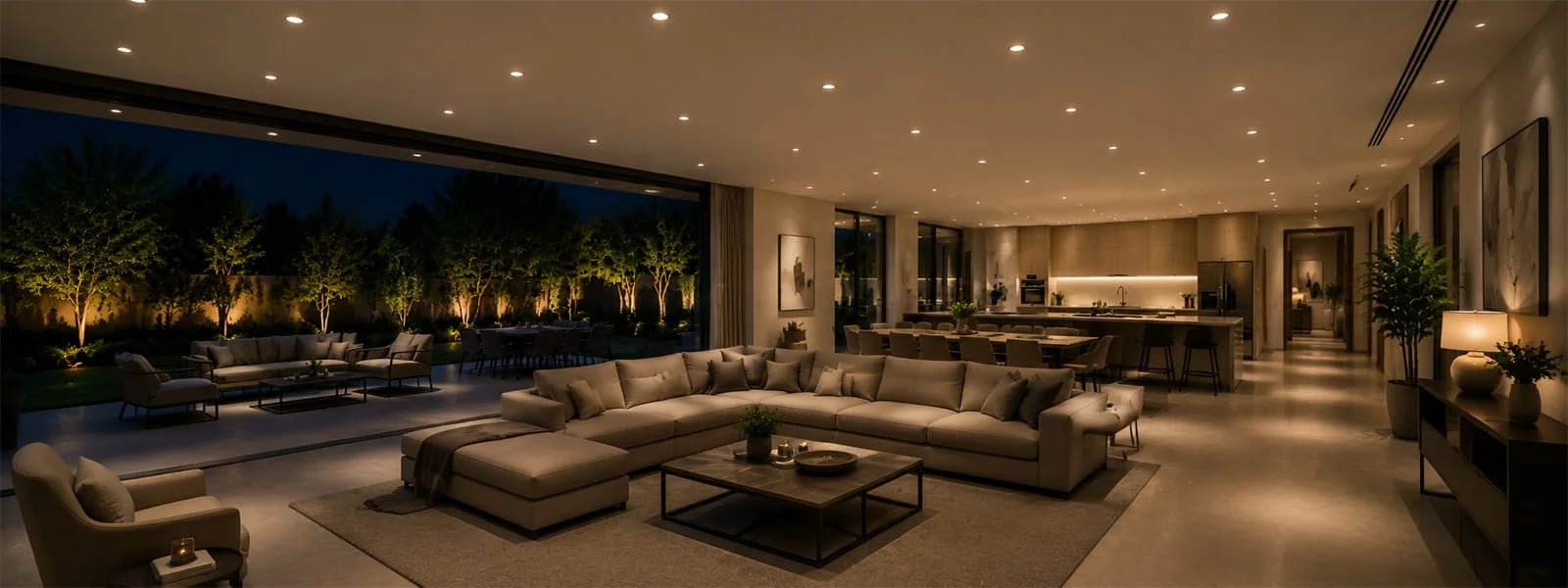
An LED downlight product development strategy should begin with the intended application because the application affects nearly every later decision. Residential rooms, hotels, retail stores, offices, corridors, and outdoor covered areas may require different light distribution, glare control, installation methods, finishes, reliability expectations, and price structures.1
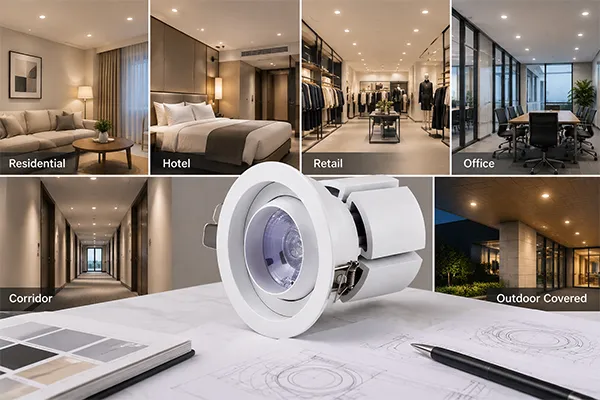
Define the Product’s Job Before Its Specifications
I usually encourage customers to answer a basic question: What job must this downlight perform?
That question sounds simple, but it prevents many costly mistakes. For example, a buyer may initially ask for a “high-lumen recessed LED downlight.” After discussing the project, we may learn that the product is intended for hotel corridors with low ceilings. In that setting, visual comfort, beam control, appearance, and installation depth may matter more than maximizing lumen output2.
A useful product brief should cover the following points:
- Application: Residential, hospitality, retail, office, supermarket, corridor, showroom, or another setting
- Installation type: Recessed, surface-mounted, trimless, adjustable, or modular
- Ceiling conditions: Ceiling thickness, cutout size, ceiling void depth, insulation conditions, and access for maintenance
- Target buyer: Contractor, distributor, local lighting brand, wholesaler, retailer, or project owner
- Target market: Country or region, channel structure, expected regulations, and customer preferences
- Price position: Entry-level, mid-market, project-focused, or premium architectural product
- Commercial limitations: Target cost, order quantity, packaging needs, expected lead time, and required customization level
Product Development Is Not Only Engineering
A practical LED downlight development plan needs input from product, purchasing, sales, quality, and operations teams. Each team sees a different risk.
| Team | Main Question |
|---|---|
| Product management | Will this product fit the brand and target customer? |
| Purchasing | Can the specification be sourced at a sustainable cost? |
| Technical team | Is the design feasible for the installation and performance target? |
| Sales team | Can the product be explained and sold clearly? |
| Quality team | Which incoming, assembly, aging, and final checks are needed? |
| Operations team | Can the product be produced consistently at the required volume? |
I have seen projects become much smoother when buyers share their use case early. A customer once sent us only a photo of a trimless downlight and requested “same design, better price.” After further discussion, the customer clarified that the product was for a distributor’s mid-range residential line. The real priority was not copying every visual detail. The priority was obtaining a clean appearance, common cutout sizes, dependable packaging, and a cost structure that supported local distribution margins.
That clarity gave the project a much more realistic direction.
How Should You Balance Wattage, Lumen Output, and Visual Comfort?
Buyers often ask for higher wattage and higher lumen output because those figures are easy to compare on a quotation. However, those figures alone do not define whether a downlight is appropriate for a project. Higher output may introduce thermal, optical, cost, and comfort trade-offs.
Wattage and lumen output should be selected as part of a balanced LED downlight product development strategy. Buyers should consider the room function, mounting height, beam angle, spacing, glare expectations, thermal design, energy target, and price level instead of assuming that the highest output is always the best choice.
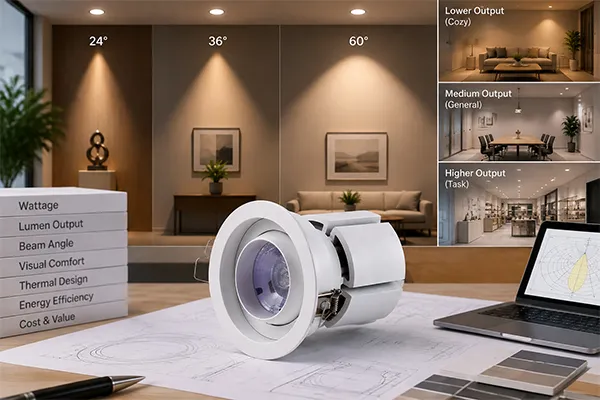
Higher Numbers Are Not Automatically Better
A downlight’s performance is not a single number. A product with more wattage may produce more light, but it can also require changes in the heat sink, driver, housing dimensions, optical components, and price.
These factors work together:
- Wattage affects energy consumption and the heat that the product must manage.
- Lumen output affects perceived brightness, but the result also depends on room surfaces, ceiling height, and beam distribution.
- Beam angle affects how concentrated or spread out the light appears.
- Glare control affects user comfort, especially in hospitality, retail, and residential spaces.
- Thermal design affects whether components can operate within the intended product design conditions.
- Cost changes when LED components, drivers, heat sinks, optics, and housing materials change.
For example, a narrow beam may create a stronger accent effect on merchandise or artwork. A wider beam may better support general lighting across a larger area. Neither is universally superior. The right choice depends on the lighting layout and the desired visual effect.
Ask Better Performance Questions
Instead of asking only, “What is your highest-lumen downlight?” I recommend asking questions such as:
- What is the mounting height?
- What is the expected spacing between fixtures?
- Is the product for general illumination, task lighting, or accent lighting?
- Does the end user prioritize visual comfort or maximum brightness?
- Does the project need a fixed-output model or several wattage options?
- Is the target market sensitive to energy consumption?
- What is the acceptable unit-cost range?
A good LED downlight product development strategy treats wattage and lumens as design inputs, not as standalone proof of quality.
Consider the Commercial Position
A product manager should also think about how the specification supports the product line. A value-focused distributor may need a simple, reliable range with a small number of high-volume SKUs. A lighting brand may need more CCT, finish, beam-angle, or dimming choices to differentiate its catalog.
The wider the range, the greater the planning burden can become. More variants may mean more materials, labeling requirements, sample approvals, inventory complexity, and minimum order quantity considerations.3 I do not view that as a reason to avoid product differentiation. I view it as a reason to develop the range deliberately.
Any application-specific photometric, thermal, electrical, or installation decision should be reviewed by qualified professionals using verified product documents and project requirements.
Which Customization Decisions Matter Most in an LED Downlight Product Development Strategy?
Customization can help a lighting brand create a more distinctive and better-targeted product. However, customization is not a list of separate switches that can always be changed without consequences. Each adjustment can affect sampling, sourcing, cost, production planning, and consistency.
The most important customization decisions in an LED downlight product development strategy are those that support the target application and commercial position. Common choices include CCT, wattage, beam angle, CRI, housing finish, cutout size, trim style, driver type, packaging, and branding, but buyers should assess the combined effect on feasibility, MOQ, cost, sample time, and delivery.
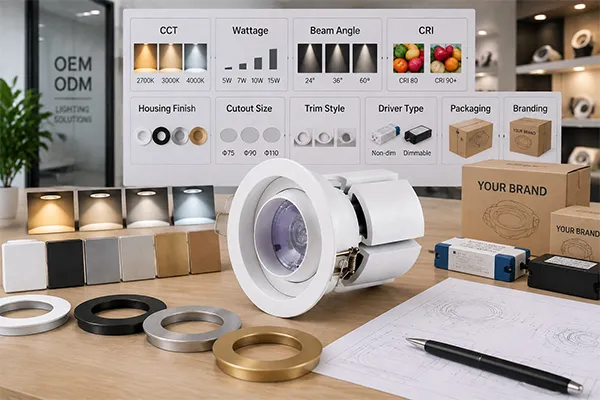
Coordinate Specifications Instead of Selecting Them Separately
At Upward Lighting, we regularly discuss customized parameters with brands, importers, contractors, and channel buyers. I have found that the most productive conversations happen when customers explain the priorities behind the specifications.
For example, a request for a black-finish adjustable downlight may sound simple. Yet the full development discussion may include:
- Whether the black finish applies to the trim only or the complete visible housing
- Which surface treatment is appropriate for the intended appearance
- Whether the selected finish affects material sourcing or lead time
- Whether the beam angle suits the product’s adjustable function
- Whether the desired CCT and CRI align with the target application
- Whether the planned volume supports a dedicated customized configuration
- Whether branded packaging is needed for retail or distribution
Typical Customization Trade-Offs
| Customization Area | Potential Benefit | Development Consideration |
|---|---|---|
| CCT selection | Supports local preferences and room atmosphere | May increase SKU complexity or component planning |
| Wattage option | Allows product range segmentation | May affect heat sink, driver, and cost structure |
| Beam angle | Supports general or accent lighting needs | Requires optical evaluation and application matching |
| [Higher CRI request | May support color-sensitive applications](https://electricianu.com/color-rendering-index-cri-in-lighting/?srsltid=AU7gw4WDD2UUs3PYvz6ssd0UjwasIssQ5DkumTitDKM0vu8DOqKgHGVY)%%%FOOTNOTE_REF_4%%% | Can affect component selection and pricing |
| Housing finish | Improves brand appearance and interior matching | May involve finish samples and MOQ considerations |
| Cutout size | Supports installation compatibility | Can affect mechanical design and tooling feasibility |
| Branded packaging | Strengthens channel presentation | Requires artwork approval, carton planning, and volume review |
Samples Are a Decision Tool
A sample is not only a sales item. It is a tool for checking whether the buyer and manufacturer understand the product in the same way.
I often suggest that customers review samples against a written approval checklist. That checklist may include appearance, dimensions, cutout compatibility, finish, labeling, packaging, requested configuration, and basic operating expectations. The exact tests and acceptance criteria should match the project and be agreed upon before production.
At our facility, products undergo a 100% aging process before shipment, typically lasting between 4 and 8 hours according to the product process5. Buyers should still define their own inspection requirements and verify relevant documents for their target market. A factory aging process does not replace application-specific evaluation, third-party testing, or project approval where those steps are needed.6
What Information Should Buyers Prepare Before Requesting a Downlight Quotation?
A vague inquiry can produce a vague quotation. Buyers sometimes send a photo and ask for a price, but a photo does not reveal the intended material configuration, driver requirement, output target, packaging standard, or commercial conditions. Clear input improves both speed and accuracy.
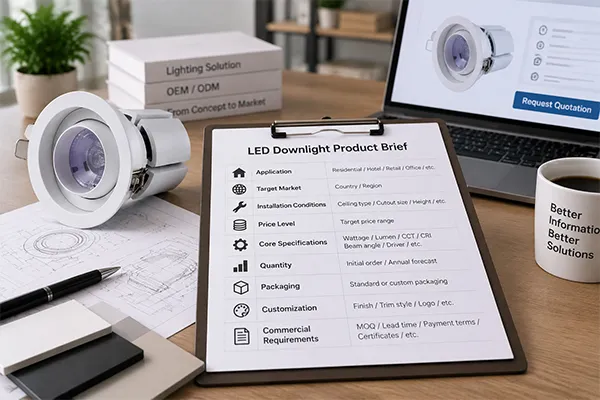
Buyers should prepare a structured product brief before requesting an LED downlight quotation. The brief should identify the target application, market, installation conditions, desired price level, core specifications, annual or initial quantity, packaging needs, customization requests, and non-negotiable commercial requirements.
Build a Better Request for Quotation
A strong request for quotation, or RFQ, does not need to be complicated. It needs to remove uncertainty. The following template can help product managers and purchasing teams compare suppliers more fairly.
| Product Brief Item | What to Provide |
|---|---|
| Product type | Recessed, surface, trimless, fixed, adjustable, or modular downlight |
| Target application | Residential, hotel, retail, office, corridor, or other use |
| Target market | Country or region where the product will be sold or installed |
| Installation details | Cutout, ceiling thickness, depth limitations, mounting conditions |
| Performance target | Preferred wattage range, output range, CCT, CRI, and beam angle |
| Appearance | Trim style, finish color, housing shape, branded design needs |
| Driver requirement | On/off, dimming type, external or integrated driver, if applicable |
| Commercial target | Expected order quantity, target price band, launch date, packaging |
| Documentation needs | Requested test reports, declarations, labels, or certification documents to verify |
| Approval process | Sample quantity, inspection criteria, and final production approval method |
Ask Suppliers Questions That Reveal Capability
A price comparison is useful, but the lowest price does not always describe the lowest total procurement risk. I recommend asking suppliers practical questions:
- Which details in our request need confirmation before you quote?
- Which product elements are standard and which require customization?
- What will change if we alter wattage, CCT, CRI, beam angle, or finish?
- What sample process do you recommend?
- What MOQ applies to the proposed configuration?
- What lead time assumptions are included in the quotation?
- How will you control the approved configuration during production?
- Which compliance or certification documents can you provide for buyer review?
These questions show whether a supplier is simply responding with a number or actively translating requirements into a workable product plan.
Compare Quotes on a Like-for-Like Basis
I have seen customers receive several quotations that appear comparable but are not actually based on the same product assumptions. One supplier may quote a different driver arrangement, housing material, LED configuration, finish, packaging method, or order quantity.
Before choosing a supplier, compare the following:
- Product dimensions and cutout
- Requested electrical and optical configuration
- Housing and heat-management construction
- Driver details
- Finish and trim specification
- Packaging and labeling
- Sample cost and approval process
- MOQ and payment terms
- Production lead time
- Warranty terms and stated exclusions
- Available quality-control records and documents
This disciplined comparison process supports a more reliable LED downlight product development strategy. It also helps prevent late-stage disputes caused by unclear assumptions.
How Can Buyers Build a Sustainable LED Downlight Product Range?
A single downlight model may solve one immediate requirement, but a sustainable range should make sense for sales, purchasing, inventory, and future development. Too many poorly differentiated SKUs can create unnecessary complexity, while too few may limit market fit.
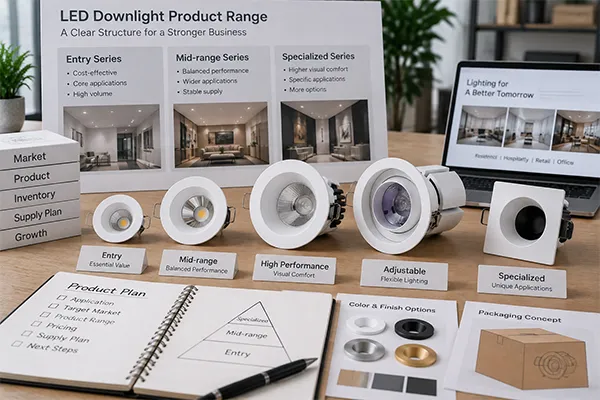
Buyers can build a sustainable LED downlight range by creating a clear product architecture with defined entry, mid-range, and specialized options. Each model should have a distinct customer purpose, specification logic, price position, and supply plan rather than being another variation with no clear commercial role.
Use Product Architecture to Control Complexity
A practical range may share core components where possible while offering meaningful market differences. For example, a brand could develop:
- A core value range for high-volume distribution
- A mid-market range with broader styling and configuration options
- A project range focused on specific installation or commercial requirements
- A specialized range for adjustable, trimless, or architectural applications
The exact structure will differ by market. The goal is not to create the largest catalog. The goal is to create a range that sales teams can explain, distributors can stock, and suppliers can produce consistently.
Review the Range Before Launch
Before approving production, I recommend a cross-functional review. The review should include commercial, technical, and supply considerations.
| Review Area | Key Question |
|---|---|
| Market fit | Does each SKU serve a clear buyer or application? |
| Price ladder | Are differences between models meaningful to customers? |
| Installation | Are dimensions and cutouts practical for the target channel? |
| Sampling | Has the approved sample matched the written product brief? |
| Supply chain | Are components available and suitable for planned volumes? |
| Quality control | Are inspection points and acceptance criteria documented? |
| Documentation | Have relevant market-entry documents been identified for verification? |
| Launch readiness | Are packaging, labels, manuals, and sales information aligned? |
At Upward Lighting, our role in this process is to help customers clarify the relationship between their requested product, their market objective, and practical production conditions. We can discuss OEM and ODM options, including CCT, wattage, beam angle, CRI, and finish colors. However, I always believe that a clear brief is more valuable than an unnecessarily long parameter list.
Frequently Asked Questions
What is the first step in LED downlight product development?
The first step is to define the intended application, target customer, installation conditions, target market, and price band. This information provides the context needed to select appropriate wattage, output, beam angle, appearance, and customization options.
Should I choose the highest wattage LED downlight available?
No. Higher wattage is not automatically better for every application. Buyers should consider mounting height, lighting layout, visual comfort, beam angle, energy expectations, thermal design, and product cost. The correct choice depends on the intended use and product position.
What information should I send to an LED downlight manufacturer?
You should send a product brief with the application, target market, installation details, desired specifications, appearance requirements, expected order quantity, target price range, packaging needs, documentation expectations, and timeline. A competitor sample or photo can help, but it should not replace written requirements.
Can OEM and ODM downlight customization affect MOQ and lead time?
Yes. Changes to CCT, wattage, CRI, beam angle, finish, housing, packaging, or branding may affect component sourcing, sample work, production planning, MOQ, pricing, and delivery. Buyers should discuss these effects before finalizing the product specification.
How should I verify LED downlight certifications for my market?
Buyers should request relevant certificates, declarations, test reports, labels, and supporting documents from suppliers, then verify that they apply to the specific product configuration and destination market. Regulatory and project requirements can vary7, so qualified professional review may be appropriate.
Conclusion
A strong LED downlight product development strategy begins with product purpose, not isolated specifications. When buyers define the application, installation conditions, target customer, price position, and commercial limits first, they can make better decisions about output, optics, CCT, CRI, appearance, and customization. I recommend using a clear product brief, comparing quotations on a like-for-like basis, and approving samples against documented requirements. If you are developing an OEM or ODM downlight range, contact Upward Lighting to discuss a practical quotation and customization plan for your market.
"[PDF] Interior Lighting Campaign - Better Buildings Solution Center", https://betterbuildingssolutioncenter.energy.gov/sites/default/files/attachments/ILC_2015-2019_Results_vf.pdf. Lighting-design guidance recognizes that recommended light levels, distribution, glare control, and environmental requirements depend on the function and conditions of the space. Evidence role: general_support; source type: institution. Supports: That lighting criteria such as illuminance, distribution, glare control, and environmental suitability vary by space type and intended use.. Scope note: Such guidance establishes general application differences but does not prescribe a single downlight specification for every project. ↩
"Analysis of factors affecting visual comfort in hotel lobby - PMC", https://pmc.ncbi.nlm.nih.gov/articles/PMC9851505/. Research and professional lighting guidance identify glare, luminance distribution, fixture geometry, and visual comfort as relevant considerations in the lighting of circulation spaces. Evidence role: general_support; source type: research. Supports: That visual comfort, glare limitation, light distribution, and mounting geometry are material design considerations in circulation-space lighting.. Scope note: The evidence supports the design considerations generally; it does not prove that they outweigh lumen output in every hotel-corridor project. ↩
"A procedure for reducing stock–keeping unit variety by ...", https://www.sciencedirect.com/science/article/pii/S1755581722000232. Operations-management research finds that expanding product variety can increase forecasting, inventory, sourcing, and production-planning complexity, although the commercial effects depend on the supply-chain design. Evidence role: general_support; source type: paper. Supports: That greater product variety can increase inventory, forecasting, sourcing, and production-planning complexity.. Scope note: The evidence does not establish a universal minimum order quantity or cost effect for a particular downlight configuration. ↩
"Color Rendering Index (CRI) in Lighting", https://electricianu.com/color-rendering-index-cri-in-lighting/?srsltid=AU7gw4WDD2UUs3PYvz6ssd0UjwasIssQ5DkumTitDKM0vu8DOqKgHGVY. Color-rendering guidance describes CRI as a measure related to the appearance of test colors under a source relative to a reference illuminant, making color-rendering performance relevant in color-critical viewing tasks. Evidence role: definition; source type: institution. Supports: That color-rendering metrics describe how faithfully colors are rendered under a light source relative to a reference illuminant and are relevant where color judgments are important.. Scope note: CRI has recognized limitations and does not by itself predict preference or fidelity for all colors, materials, and lighting applications. ↩
"The Importance of Aging Testing for LED Lighting Fixtures", https://www.grinsafe.com/news/ensuring-quality-and-reliability-the-importance-of-aging-testing-for-led-lighting-fixtures/. Reliability literature describes burn-in or aging as a screening practice intended to identify some early-life electronic failures before field deployment. Evidence role: general_support; source type: paper. Supports: That burn-in or aging tests are used in electronics and LED-luminaire production to screen for some early-life failures.. Scope note: General evidence on burn-in does not verify this manufacturer's claimed 100% coverage, duration, test conditions, or effectiveness; those facts require factory-specific records. ↩
"Conformity Assessment Basics", https://www.nist.gov/standardsgov/conformity-assessment-basics. Conformity-assessment guidance distinguishes a manufacturer’s internal quality controls from testing, inspection, and certification activities performed to demonstrate conformance with specified requirements. Evidence role: general_support; source type: institution. Supports: That manufacturer quality checks and independent conformity assessment serve different functions, and that testing must be performed against identified requirements.. Scope note: The testing, certification, and approval steps required in a specific project depend on applicable law, contractual requirements, and the product configuration. ↩
"Slovakia - Standards for Trade", https://www.trade.gov/country-commercial-guides/slovakia-standards-trade. Government market-access guidance indicates that electrical products can be subject to jurisdiction-specific safety, electromagnetic-compatibility, energy-efficiency, labeling, and conformity-assessment requirements. Evidence role: general_support; source type: government. Supports: That electrical and lighting products may be subject to jurisdiction-specific safety, electromagnetic-compatibility, energy, labeling, and conformity-assessment obligations.. Scope note: This general support does not determine the requirements for a particular downlight, destination, installation, or procurement contract. ↩