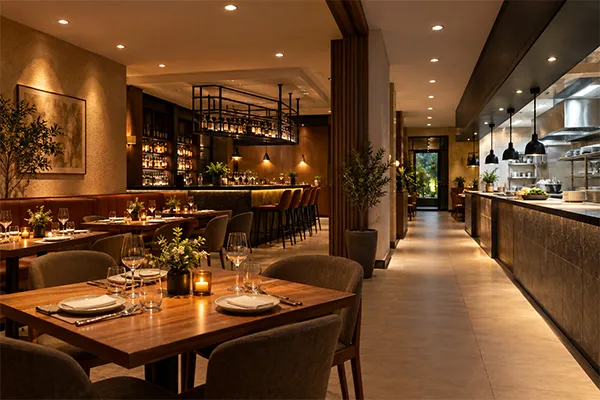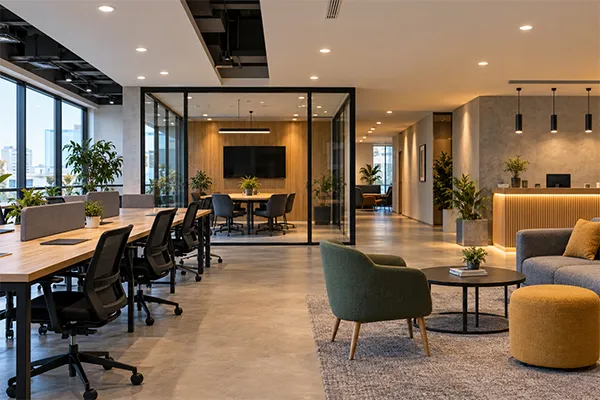
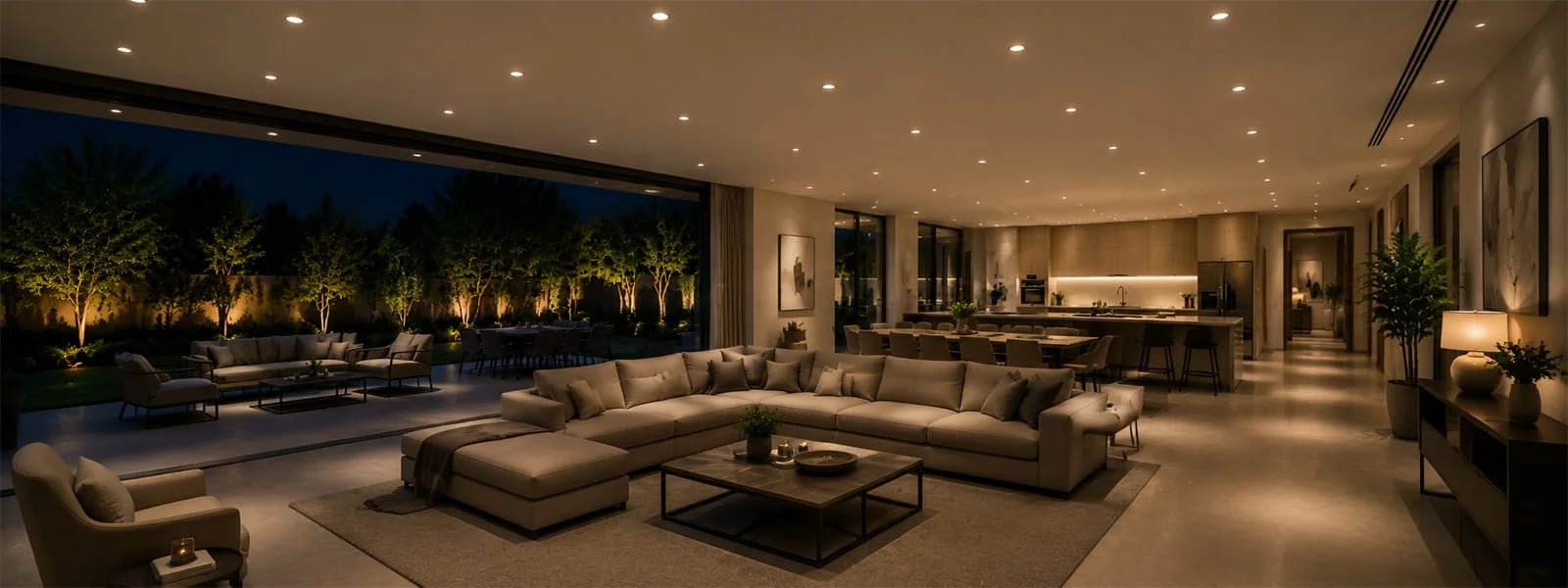
LED downlight requirements for large construction projects often begin with a wattage, cut-out size, and target price. That approach creates problems when suppliers quote different configurations under similar descriptions. I have seen incomplete RFQs lead to unclear comparisons, delayed sample approval, and late-stage changes that affect procurement schedules.
For large construction projects, LED downlight requirements should be written as a complete specification framework, not a basic wattage-and-price request. Buyers should define the intended application, cut-out and ceiling conditions, light distribution, glare expectations, color quality, configuration, documentation, customization scope, sample approval process, and delivery expectations. This makes supplier quotations more comparable and reduces technical, commercial, and scheduling risk.
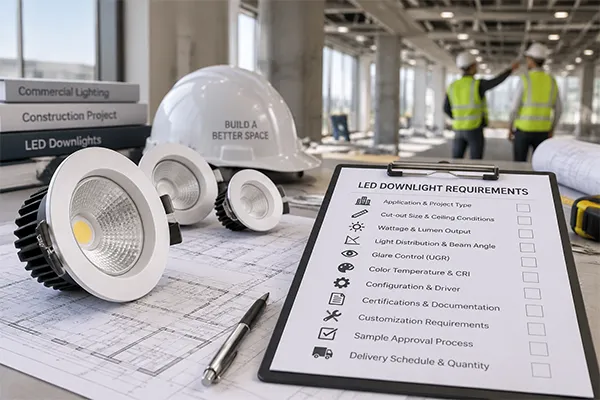
A downlight can look simple in a product catalog, but project procurement is rarely simple. From my manufacturing-side experience, the most productive quotation discussions begin when the buyer can connect lighting intent with installation realities, commercial priorities, and approval requirements.
Why Are Basic LED Downlight Requirements Not Enough for Project Quoting?
When a project RFQ includes only wattage, cut-out size, and quantity, suppliers must make assumptions. Those assumptions can produce different housings, drivers, optics, finishes, and light outputs. I find that a seemingly low unit price may later prove difficult to compare because the actual configuration was never fully aligned.
Basic LED downlight requirements are not enough because wattage and cut-out dimensions do not define the complete product1. Buyers should also confirm lumen output, beam angle, color temperature, CRI, driver type, dimming protocol, trim finish, IP rating, installation method, and required documentation before comparing quotations.
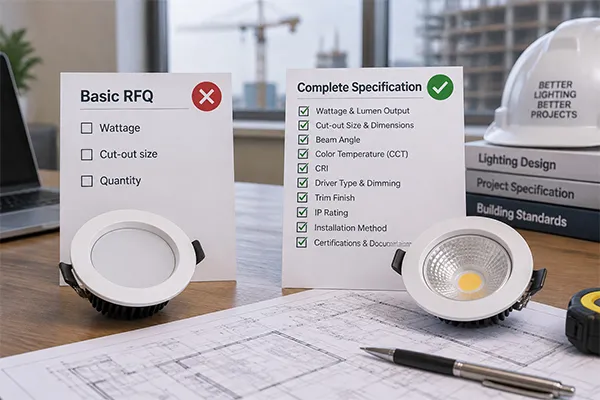
A wattage is not a full performance description
I often receive requests such as “12W, 90 mm cut-out, warm white, best price.” This is a useful starting point, but it does not provide enough detail for a fully comparable project quotation.
For example, two downlights with the same nominal wattage may differ2 in several important ways:
- LED source selection and binning approach
- Actual lumen output and operating conditions
- Driver quality, input range, and power factor
- Dimming compatibility
- Beam angle and reflector or lens design
- Trim material and heat-management construction
- Color temperature and color rendering index
- Surface finish and anti-glare treatment
- IP rating and suitability for the proposed location
- Warranty terms and documentation scope
A buyer should not assume that two suppliers are offering an equivalent product because both quotations state “12W LED downlight.” The products may fit the same ceiling opening while delivering very different optical, electrical, or installation characteristics.
Build a quotation-ready specification sheet
I recommend that project teams prepare a specification sheet before requesting final prices. It does not need to replace a lighting designer’s schedule or an electrical consultant’s documentation. However, it should give suppliers a common baseline.
| Specification item | Why it matters in procurement | Typical clarification needed |
|---|---|---|
| Application area | Influences optical and environmental needs | Office, hotel corridor, lobby, retail, bathroom, exterior soffit |
| Ceiling cut-out | Determines mechanical compatibility | Exact cut-out tolerance and ceiling thickness |
| Wattage | Supports initial product selection | Nominal wattage, permitted range, target power consumption |
| Light output | Helps compare expected output | Required lumens, test condition, acceptable variation |
| Beam angle | Influences spacing and visual effect | Narrow, medium, wide, or project-specific angle |
| CCT | Defines visual appearance | 2700K, 3000K, 4000K, 5000K, or other requirement |
| CRI | Affects color rendering expectations | CRI 80, CRI 90, or a project-defined requirement |
| Driver and control | Affects electrical integration | Non-dimmable, Triac, 0–10V, DALI, or other system |
| Finish | Supports interior design coordination | White, black, silver, custom painted finish |
| Documentation | Supports tender and market review | Datasheets, declarations, test reports, installation instructions |
From my perspective, clear documentation at the RFQ stage usually protects both sides. The buyer can compare offers with less ambiguity, and the manufacturer can quote a configuration that is closer to the product eventually required for approval.
I treat every missing parameter as a clarification point, not as an opportunity to guess. A fast quote is useful, but a quote based on unconfirmed assumptions can create more work later.
How Should LED Downlight Requirements Address Lighting Quality?
A downlight with a high lumen value may still produce an unsuitable installed result. Buyers can face glare, uneven illumination, inconsistent color appearance, or an optical effect that does not match the architectural intention. I believe lighting quality should be discussed early, before a product is selected only for efficiency or price.
LED downlight requirements should address lighting quality through the combined review of lumen output, beam angle, glare control, color temperature, CRI, color consistency, and the intended installation layout. Lumen efficacy alone cannot predict how a completed space will look or feel after installation.3
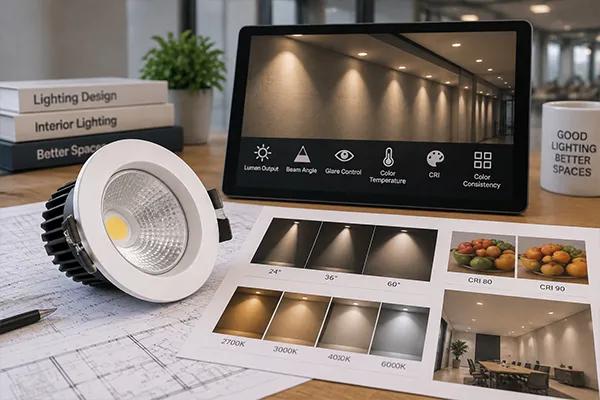
Light distribution affects the finished space
A downlight’s beam angle affects where light falls and how the ceiling plane appears.4 A narrow beam can create stronger accents and greater contrast. A wider beam can support broader ambient illumination. Neither option is universally better.
I advise buyers to connect beam selection with the planned purpose of the space:
- Hotel corridors: Designers may seek visual comfort, orientation, and controlled spacing between fittings.
- Retail environments: Teams may need accent lighting for merchandise alongside general illumination.
- Office areas: The project may require a balance between visual comfort, task needs, and ceiling uniformity.
- Residential common areas: The design may prioritize warmth, softer glare control, and decorative integration.
- Bathrooms or damp locations: Teams must consider both lighting intent and the relevant environmental protection requirements.
The final spacing, mounting height, reflectance of surrounding surfaces, and control strategy also affect the installed result.5 I can clarify product optical options, but I do not treat a manufacturer’s product suggestion as a substitute for a lighting calculation or professional lighting design review.
Color characteristics need more than a “warm white” label
Color temperature is often described in broad terms such as warm white, natural white, or cool white.6 For project purchasing, I suggest that buyers specify the required CCT in Kelvin where possible. This reduces uncertainty between approved samples, production batches, and site expectations.
Color rendering is another relevant point. A higher CRI requirement may affect LED selection, cost, availability, and quotation.7 Buyers should consider the intended visual task. For example, a hospitality, fashion, food, or high-end retail project may have different color-rendering expectations than a utility area.
Color consistency also deserves attention.8 In my sample-confirmation discussions, buyers sometimes approve one sample and later ask how production consistency will be managed. That is a valid question. The procurement team should request the supplier’s stated color consistency approach and define any project-specific requirements before mass production.
Questions to include in the lighting review
Before placing an order, I recommend that the responsible project professionals review these questions:
- What visual effect does the space require: ambient light, accent light, wall washing, or a combination?
- What beam angle aligns with the lighting layout and mounting height?
- Is glare control important for the viewing direction and ceiling arrangement?
- What CCT supports the interior design concept and adjacent lighting products?
- What CRI is required for the intended application?
- Does the project need a defined color consistency expectation across zones or batches?
- Has a qualified lighting designer or consultant reviewed the final layout where needed?
This process helps procurement teams move from a product description to an application-based specification.
When Should LED Downlight Requirements Include OEM/ODM Customization?
Late customization requests can disrupt a project schedule. A buyer may approve a standard sample, then request a different beam angle, black trim, higher CRI, or special dimming driver shortly before production. I have seen this communication pattern often, and each change requires a new feasibility review rather than an automatic adjustment.
LED downlight requirements should include OEM/ODM customization at the RFQ and sample stage whenever possible. Changes to wattage, beam angle, CCT, CRI, finish, driver, or packaging can affect feasibility, cost, sample timing, production lead time, and consistency across the ordered batch.
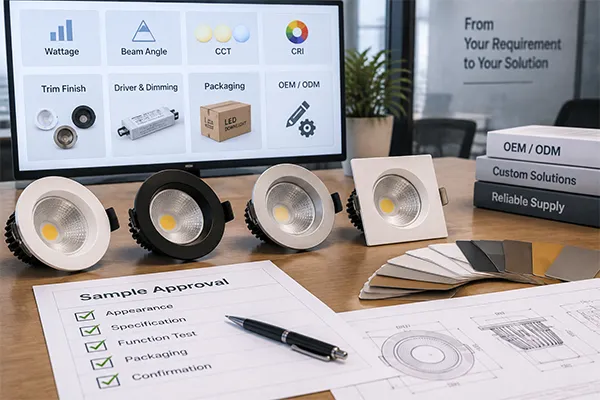
Customization is valuable when it is controlled
For brands, contractors, and distributors, OEM/ODM options can help align a downlight with a project’s technical and commercial needs. At Upward Lighting, I can discuss customization options such as:
- Color temperature
- Wattage
- Beam angle
- CRI
- Surface finish color
- Product marking
- Packaging presentation
- Certain driver and control options, subject to feasibility review
However, I do not present customization as unlimited or consequence-free. A special requirement may involve different materials, sourcing lead times, revised testing, minimum quantity considerations, or new sample confirmation.
For example, a black-finish trim might appear to be a simple cosmetic change. Yet the project team should still confirm the exact finish standard, sample appearance, scratch-resistance expectation, and production-batch consistency. Similarly, a request for a different CCT or high-CRI option may influence component availability, output, cost, and production planning.
Use a staged approval process
I recommend a structured approval route for customized project downlights:
| Stage | Buyer action | Supplier action | Risk reduced |
|---|---|---|---|
| Initial RFQ | Provide application and target parameters | Review feasibility and quote basis | Hidden assumptions |
| Technical clarification | Confirm open items | Provide datasheet and configuration details | Incorrect comparison |
| Sample request | Define approved sample criteria | Produce or arrange sample configuration | Unclear visual expectations |
| Sample approval | Record approved version | Lock key configuration details | Unauthorized changes |
| Pre-production confirmation | Confirm quantity, packaging, documents, schedule | Reconfirm production plan | Delivery and specification drift |
| Production and inspection | Define agreed checks | Apply internal quality process | Unverified batch expectations |
In our own process, products undergo a 100% aging test for 4 to 8 hours before shipment, according to the applicable product process and configuration. I describe this as part of our manufacturing quality-control practice, not as a replacement for the buyer’s own inspection plan, consultant review, or project acceptance criteria.
Samples should represent the approved production target
A sample is useful only when both parties understand what it represents. I encourage buyers to record the sample’s confirmed configuration, including:
- Model number or internal reference
- Wattage and input specification
- CCT and CRI
- Beam angle
- Driver and dimming method
- Trim color and material finish
- Cut-out and external dimensions
- Labeling and packaging requirements
- Required supporting documents
This record becomes especially important when a project has multiple downlight types, multiple room categories, or phased deliveries. It helps the purchasing manager, project manager, and manufacturer refer to the same approved baseline.
How Should Buyers Compare Suppliers Against LED Downlight Requirements?
A low price can be attractive, particularly on high-volume construction projects. Yet I believe a supplier comparison should test whether each supplier can deliver the same confirmed scope. A price comparison loses value when one quote includes a standard driver while another includes dimming, different optical performance, or a different finish.
Buyers should compare suppliers against LED downlight requirements using a like-for-like matrix that covers confirmed configuration, samples, quality-control process, production lead time, packaging, documentation, communication responsiveness, and destination-market requirements. Price should be evaluated only after the scope is aligned.
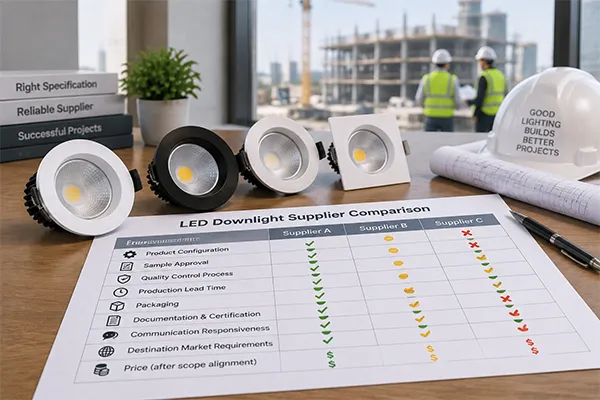
Compare the complete commercial and technical scope
I recommend that purchasing teams use a supplier comparison matrix instead of comparing only unit prices. This is especially helpful when several suppliers respond to the same tender or RFQ.
| Evaluation area | Questions for buyers to ask |
|---|---|
| Product configuration | Is the quoted downlight exactly aligned with the approved specification? |
| Sample process | Can the supplier provide a representative sample and document the approved version? |
| Manufacturing capability | Does the supplier explain its production and quality-control process clearly? |
| Lead time | What is the stated sample time, production time, and shipping readiness date? |
| MOQ flexibility | Can the supplier support project quantities, pilot orders, or small-batch needs where relevant? |
| Customization | Which parameters can be changed, and what are the cost and timing implications? |
| Documentation | Which datasheets, declarations, test reports, instructions, and packing documents are available? |
| Communication | Does the supplier clarify assumptions promptly and provide consistent answers? |
| Packaging | Is packaging suitable for the shipping method and site-handling needs? |
| After-sales process | What is the process for handling documented quality concerns or shortages? |
At Upward Lighting, I work with project customers that may need quick quotations, OEM/ODM discussions, small-batch support, and clear communication around delivery planning. These needs are commercially important, but buyers should still evaluate each supplier against the project’s actual specification and risk profile.
Verify certifications and market documentation separately
Certification language needs careful handling. CE and RoHS documents may be relevant for many buyers and markets, but they do not automatically satisfy every country, tender, building code, consultant requirement, or local authority review.
I recommend that buyers verify:
- The destination country’s applicable market-entry requirements
- The project’s tender documents and consultant specifications
- Whether the documentation applies to the exact proposed model and configuration
- Whether the buyer needs declarations, reports, labels, manuals, or additional records
- Whether a local electrical consultant, compliance reviewer, importer, or authority must assess the documentation
Our products hold CE and RoHS certifications, and I can provide relevant documentation within the confirmed product scope. Still, the importing party and qualified local professionals should verify project-specific and destination-market compliance requirements before order placement.
Delivery risk starts with specification risk
I have learned that many delivery problems begin long before production. An unclear RFQ can trigger repeated technical questions. A late customization request can delay sample approval. An unconfirmed document requirement can hold up shipment preparation.
A practical supplier should help identify open points early. However, the buyer should maintain a documented decision trail. This approach makes it easier to manage substitutions, phased deliveries, packaging changes, and project handover requirements.
Frequently Asked Questions
What are the most important LED downlight requirements for a construction project?
The most important requirements include application area, cut-out size, ceiling condition, wattage, lumen output, beam angle, CCT, CRI, glare expectations, driver type, dimming method, finish, IP rating, documentation, sample approval, and delivery schedule. The final list should reflect the project’s actual design and local requirements.
Should I choose LED downlights by wattage or lumen output?
I recommend that buyers review both, but neither should be used alone. Wattage indicates electrical consumption, while lumen output indicates stated light output.9 Buyers should also assess beam angle, glare control, CCT, CRI, installation height, spacing, and the lighting design to judge suitability.
Can OEM/ODM LED downlights be customized for small project quantities?
Some suppliers can support small-batch orders or selected customization options, but feasibility depends on the requested parameter, material availability, production process, and sample requirements. Buyers should ask about minimum quantities, sample timing, cost impact, and batch-consistency controls before confirming the project specification.
Are CE and RoHS documents enough for every project?
No. CE and RoHS may be relevant documents, but they do not automatically meet every tender, country, building, or project requirement. Buyers should verify destination-market rules and project-specific documentation with qualified local compliance, electrical, or procurement professionals.
Why is sample approval important before mass production?
Sample approval creates a documented reference for the intended configuration, appearance, dimensions, optical parameters, driver, finish, and packaging.10 It reduces the risk that the buyer and supplier interpret the specification differently. Buyers should confirm whether the sample fully represents the planned production configuration.
Conclusion
Large-project procurement works best when LED downlight requirements go beyond wattage, cut-out size, and unit price. I recommend that buyers define lighting intent, optical characteristics, installation conditions, customization scope, sample approval, quality expectations, documentation, and delivery requirements before comparing suppliers. This structured approach supports clearer quotations and fewer late-stage changes. If you are sourcing configurable LED downlights for a project, I invite you to send us your specification sheet or RFQ so we can review the configuration, clarify open points, and provide a more reliable quotation.
"[PDF] CALiPER Application Summary Report 20: LED PAR38 Lamps", https://www1.eere.energy.gov/buildings/publications/pdfs/ssl/caliper_20_summary.pdf. U.S. Department of Energy guidance on LED lighting performance identifies light output, color characteristics, distribution, electrical performance, and fixture design as distinct luminaire considerations, supporting the need for specifications beyond wattage and aperture size. Evidence role: general_support; source type: government. Supports: LED luminaires are characterized by multiple performance attributes, including light output, color quality, distribution, electrical operation, and physical installation characteristics.. Scope note: The guidance describes general LED-lighting evaluation rather than a procurement rule for every downlight project. ↩
"LED Basics - Department of Energy", https://www.energy.gov/cmei/ssl/led-basics. U.S. Department of Energy LED-lighting materials explain that lumen output depends on both input power and luminous efficacy; therefore, equal nominal wattage does not establish equal photometric performance. Evidence role: mechanism; source type: government. Supports: Electrical input power and luminous efficacy jointly determine lumen output, so products drawing similar wattage can produce different amounts of light.. Scope note: Differences in driver quality, optics, and mechanical construction require separate product documentation beyond efficacy data. ↩
"[PDF] Evaluating Different Lighting Conditions from the Patient Perspective", https://www.energy.gov/sites/default/files/2022-03/ssl-dubose-etal-2021-HERD-patient-room-future.pdf. International Commission on Illumination materials on lighting quality recognize glare, luminance distribution, color appearance, and spatial conditions as contributors to the visual environment, indicating that efficacy alone cannot characterize the installed result. Evidence role: general_support; source type: institution. Supports: Visual lighting quality depends on factors such as luminance distribution, glare, color appearance, spatial geometry, and surface reflectance in addition to efficiency.. Scope note: The source provides general lighting-quality principles and does not assess the appearance of a particular project or downlight model. ↩
"[PDF] Application Summary Report 14: - LED Downlight Retrofit Units", https://www1.eere.energy.gov/buildings/publications/pdfs/ssl/caliper_14_summary.pdf. Lighting-engineering teaching materials describe beam angle as a measure of directional light spread and show that luminaire distribution affects illuminance and contrast across surfaces. Evidence role: mechanism; source type: education. Supports: Beam spread and luminaire photometric distribution influence the area illuminated, illuminance patterns, and contrast within an interior space.. Scope note: The precise ceiling appearance also depends on fixture spacing, mounting height, room geometry, and surface reflectance. ↩
"[PDF] Energy impact of human health and wellness lighting ...", https://www.energy.gov/eere/ssl/articles/energy-impact-human-health-and-wellness-lighting-recommendations-office-and. Illuminating Engineering Society lighting-design guidance treats mounting geometry, luminaire spacing, room-surface reflectance, and controls as inputs affecting calculated and experienced lighting conditions. Evidence role: mechanism; source type: institution. Supports: Illuminance and visual conditions are affected by luminaire placement, mounting geometry, room-surface reflectance, and control operation.. Scope note: A project-specific result requires photometric data and a calculation or simulation for the actual room. ↩
"Understanding LED Color-Tunable Products | Department of Energy", https://www.energy.gov/cmei/ssl/understanding-led-color-tunable-products. U.S. Department of Energy lighting guidance defines correlated color temperature (CCT) in kelvin and relates lower and higher CCT values to warmer and cooler perceived white light, respectively. Evidence role: definition; source type: government. Supports: Correlated color temperature is expressed in kelvin and is used to describe whether white light appears relatively warm or cool.. Scope note: CCT describes chromatic appearance and does not by itself establish color-rendering quality or visual preference. ↩
"[PDF] 2019 Solid-State Lighting R&D Opportunities - Department of Energy", https://www.energy.gov/sites/prod/files/2020/01/f70/ssl-rd-opportunities2-jan2020.pdf. Research on LED spectral engineering reports that improving color-rendering performance may require spectral changes that reduce luminous efficacy, supporting the need to evaluate high-CRI requirements as a distinct design parameter. Evidence role: mechanism; source type: paper. Supports: LED spectral designs intended to improve color-rendering metrics can involve trade-offs with luminous efficacy and other performance parameters.. Scope note: The magnitude of any cost, availability, or lead-time effect varies by component market, target CCT, and manufacturer configuration. ↩
"[PDF] Color Stability of LEDs: Understanding the Basics - eere.energy.gov", https://www1.eere.energy.gov/buildings/publications/pdfs/ssl/royer_stability_lightfair2014.pdf. ANSI chromaticity specifications for solid-state lighting provide standardized color bins and tolerances for nominal CCTs, demonstrating that consistency of LED light color is a measurable product requirement. Evidence role: definition; source type: institution. Supports: LED color consistency is commonly specified using chromaticity tolerances and binning concepts, including ANSI chromaticity regions.. Scope note: Meeting a chromaticity tolerance does not alone guarantee that all observers will judge separate luminaires as visually identical in every installation. ↩
"[PDF] Optical metrology for LEDs and solid state lighting", https://tsapps.nist.gov/publication/get_pdf.cfm?pub_id=840989. National Institute of Standards and Technology definitions distinguish the watt as a unit of power from the lumen as the SI-derived unit for luminous flux, supporting their use as separate electrical-input and light-output measures. Evidence role: definition; source type: government. Supports: Watts are units of electrical power, while lumens quantify luminous flux, or visible light output.. Scope note: Reported lumen output should be interpreted with its stated test conditions and does not alone describe light distribution or visual comfort. ↩
"Developing Specifications | Procurement Services", https://procurement.colostate.edu/developing-specifications-2/. ISO 9001 quality-management principles emphasize documented information, control of externally provided products and services, and verification against requirements, supporting the use of an approved sample record as a shared configuration reference. Evidence role: general_support; source type: institution. Supports: Controlled approval records and retained references are quality-management practices used to communicate and verify agreed product requirements.. Scope note: ISO 9001 does not prescribe a specific lighting-sample approval workflow or guarantee that an approved sample fully represents subsequent production. ↩