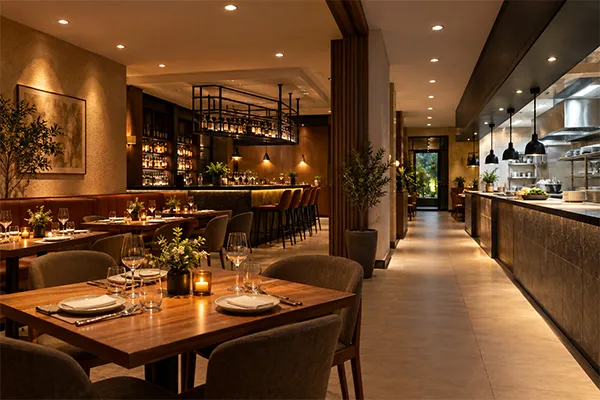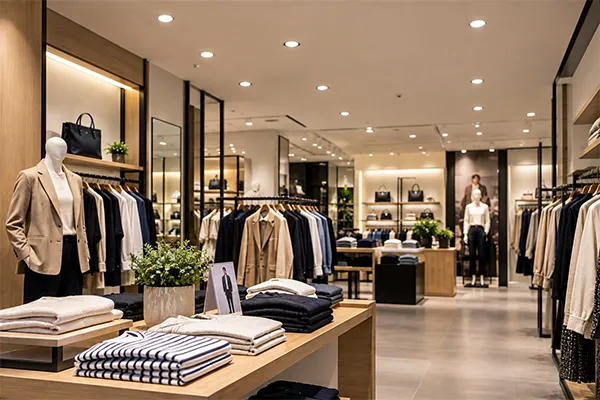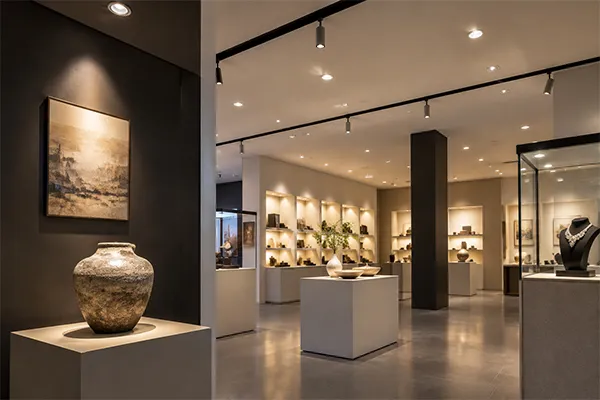
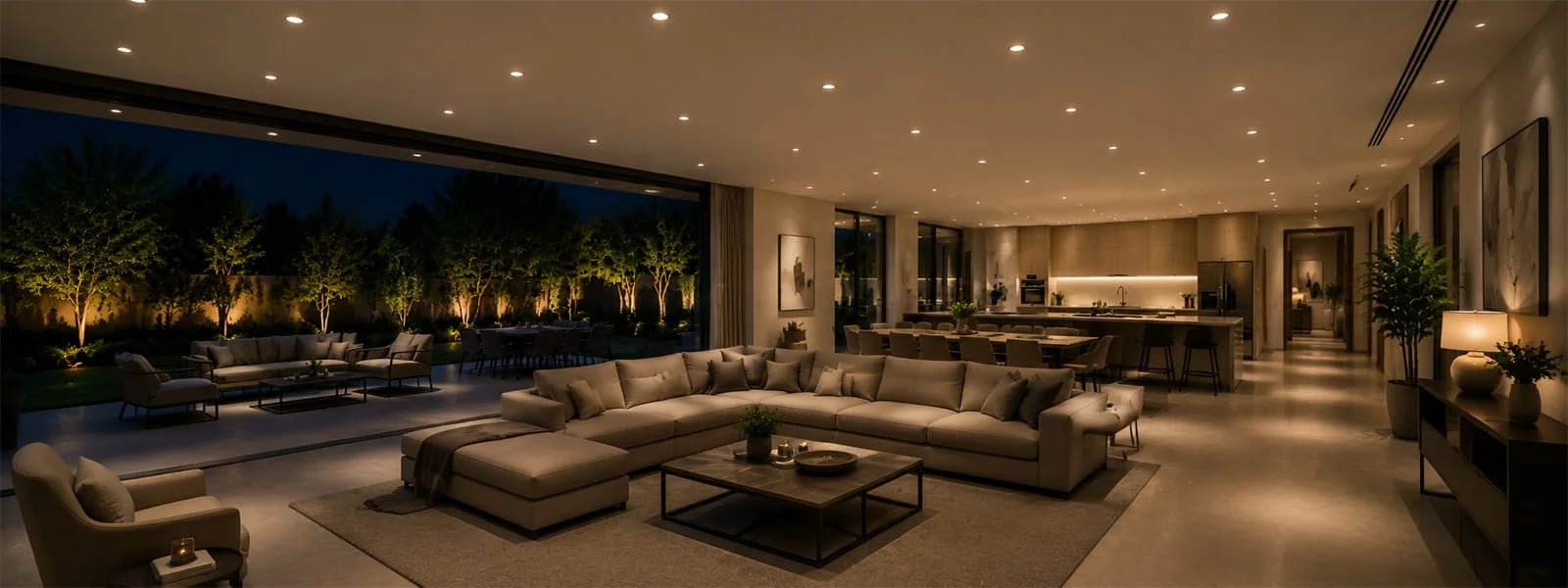
LED downlights for coworking spaces can become a procurement problem when one high-output specification is applied across every area. That approach may create glare, dark patches, or a flat visual atmosphere.1 We recommend starting with each zone’s task, ceiling conditions, and intended visual outcome before comparing wattage, beam angle, CCT, CRI, and finishes.
LED downlights for coworking spaces should be selected by zone function rather than by maximum wattage or lumen output. Focused desks, meeting rooms, corridors, lounges, and reception areas have different visual priorities.2 Buyers should first define the layout, ceiling height, mounting conditions, daylight exposure, and local compliance requirements, then request suitable downlight specifications from qualified suppliers and lighting professionals.
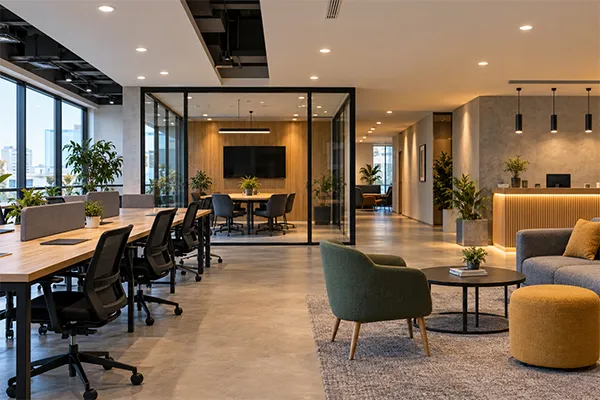
In our recurring OEM and ODM discussions with contractors, importers, and lighting brands, we often see quotation requests that begin with wattage alone. Wattage matters, but it is only one part of the decision. A stronger procurement brief helps suppliers compare the right product options and reduces the risk of ordering a one-size-fits-all solution.
Why Should LED Downlights for Coworking Spaces Be Chosen by Zone?
A coworking project can feel inconsistent when the same downlight is installed in every room without considering how people use the space. Workstations may need controlled, comfortable light, while corridors and informal seating areas may need a different distribution. The solution is to divide the project into functional lighting zones before finalizing specifications.
LED downlights for coworking spaces should be specified according to the function of each zone. Buyers should separate focused work areas, meeting rooms, circulation paths, reception zones, breakout spaces, and support areas. This process helps project teams compare beam angles, brightness distribution, CCT, CRI, and installation formats based on the intended use of each space.
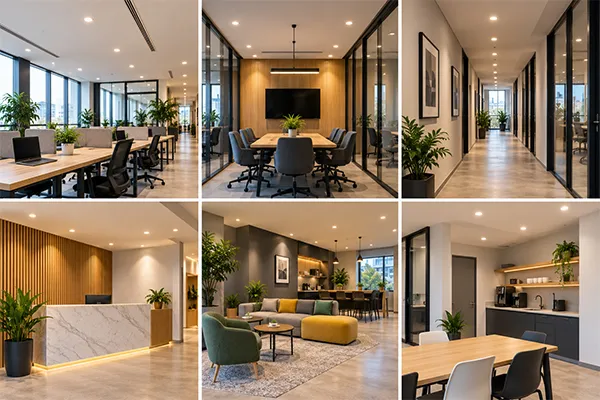
A Coworking Space Contains Multiple Lighting Tasks
Coworking spaces are often described as open offices, but they are rarely one uniform environment. A typical project may include quiet desks, hot-desking zones, enclosed meeting rooms, phone booths, lounge seating, café areas, corridors, washrooms, and reception counters. Each area has different furniture, ceiling conditions, activity patterns, and daylight exposure.
In specification discussions, we often encourage buyers to create a zone schedule before requesting pricing. This does not replace a professional lighting layout. However, it gives the supplier clearer information and gives the project team a better basis for comparing products.
| Coworking zone | Main lighting consideration | Downlight procurement question |
|---|---|---|
| Focused workstations | Visual comfort and even distribution | Is the beam angle appropriate for desk spacing and ceiling height? |
| Meeting rooms | Faces, presentations, flexible use | Does the selected CCT and CRI support the intended atmosphere and visual tasks? |
| Corridors | Wayfinding and continuity | Can spacing and beam distribution avoid noticeable dark intervals? |
| Reception areas | First impression and brand presentation | Does the finish and light distribution match the interior concept? |
| Breakout lounges | Relaxed atmosphere and accents | Is a wide, narrow, or mixed beam approach needed? |
| Phone booths | Close-range task conditions | Will the selected fixture create uncomfortable direct glare? |
A single specification can sometimes work across several zones, especially in simple projects. Still, buyers should not assume that one downlight model, one wattage, and one beam angle will automatically suit every area.
Start With the Intended Experience
We do not claim that a fixture alone determines how occupants feel in a coworking environment. Visual comfort depends on many site-specific factors. These include ceiling height, fixture spacing, room finishes, furniture placement, workstation orientation, windows, daylight controls, and the complete lighting scheme.
However, the procurement team can reduce avoidable problems by asking clear questions:
- What activity happens in this zone?
- What is the ceiling height and ceiling construction?
- Will the downlights be recessed, surface-mounted, trimless, or installed in another format?
- Where are desks, screens, tables, and circulation routes expected to sit?
- Does daylight enter the area at certain times of day?
- Does the design require a uniform appearance, visual accents, or both?
We have found that the quality of a downlight quotation often depends on the quality of the project brief. A supplier can offer more relevant options when the buyer describes the zone, installation conditions, and desired outcome rather than sending only a wattage request.
For local illuminance levels, glare limits, emergency-lighting requirements, and electrical regulations, buyers should verify requirements with the local lighting designer, electrical engineer, or other qualified professional.
How Do Beam Angle and Glare Affect LED Downlights for Coworking Spaces?
A downlight can have an appropriate lumen output and still create an uncomfortable result if its beam distribution does not fit the ceiling height or layout. Narrow beams can produce strong contrasts, while overly wide beams may not provide the intended emphasis. Buyers should compare optical distribution, spacing assumptions, and glare-control features together.
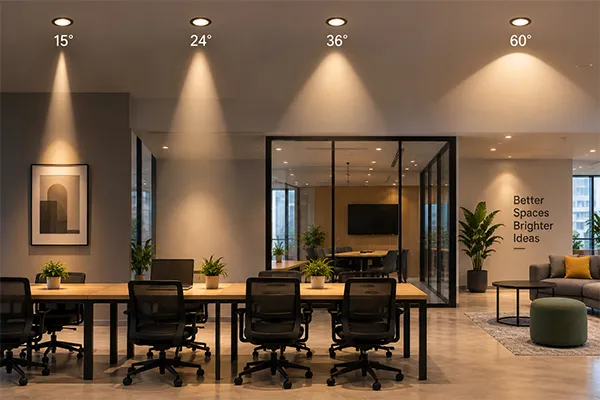
For LED downlights for coworking spaces, beam angle influences where light falls, how evenly it appears across a surface, and whether bright points are noticeable from normal viewing positions. Buyers should evaluate beam angle with ceiling height, fixture spacing, desk layout, reflectance of interior surfaces, and the manufacturer’s photometric documentation where available.
Beam Angle Is Not a Standalone Number
Beam angle is commonly discussed as a simple product parameter. Yet the same beam angle can look very different in two projects. A fixture installed in a higher ceiling has a larger light spread by the time the beam reaches the working plane.3 A lower ceiling can create a more concentrated appearance, especially if fixtures are positioned close to desks or seating.
In manufacturing-side specification conversations, common beam-angle requests may include narrow, medium, and wide distributions. The correct selection depends on the project brief, not on a universal rule.
| Beam distribution type | Typical visual effect | Procurement consideration |
|---|---|---|
| Narrow beam | More concentrated light and stronger visual emphasis | Check for contrast, spacing, and potential glare in close-view areas |
| Medium beam | Balanced spread for many general applications | Review fixture layout and intended uniformity |
| Wide beam | Broader spread and softer transitions between fixtures | Confirm that the output and spacing support the design intent |
The buyer should ask for the available beam-angle options for the selected model. Some LED downlight families offer interchangeable reflectors or multiple optical versions. Others have fixed optics. This difference affects whether a contractor can standardize the housing while varying the light distribution by zone.
Look Beyond Wattage and Nominal Lumens
Higher wattage does not automatically mean better lighting.4 It often means higher power consumption or higher output, but the visible result depends on how that output is distributed. A high-output downlight with unsuitable optics may create bright pools directly below fixtures and leave surrounding areas visually uneven.
We often receive requests such as, “Which wattage is best for a coworking office?” We cannot answer that responsibly without more information. We would normally ask about:
- Ceiling height and ceiling type
- Fixture cutout size or mounting method
- Expected spacing between fixtures
- Room dimensions and furniture layout
- Whether the area is desk-focused, circulation-focused, or hospitality-focused
- Preferred beam angle
- Local electrical and lighting requirements
- Whether dimming or control compatibility is required
Ask About Glare-Control Construction
Glare can be affected by the visible brightness of the light source, reflector depth, trim design, installation position, surface finishes, and viewing direction.5 A deeper anti-glare structure or recessed light source may be relevant in areas where people spend long periods seated and looking around the room.
A buyer can ask the supplier to clarify:
- Whether the model uses a deep reflector or recessed LED position
- Whether different trim colors are available
- Whether black, white, or other reflector finishes are offered
- What photometric files or reports can be supplied
- Whether dimmable driver options are available for the project
These questions do not guarantee on-site visual comfort. They help the project team compare products more carefully before purchase.
Which CCT and CRI Options Work for LED Downlights for Coworking Spaces?
Many buyers focus on selecting one color temperature for an entire project because it creates a consistent product schedule. However, CCT consistency alone does not guarantee a consistent visual experience. Surface colors, daylight, beam angles, fixture positions, and room functions all influence how light appears in a completed space.
LED downlights for coworking spaces can be specified with different CCT and CRI options, but buyers should choose them in relation to the project’s interior design, zone function, daylight conditions, and local professional guidance. A consistent CCT may support a unified visual concept, while different areas may require different priorities for color appearance and atmosphere.
Understand the Difference Between CCT and CRI
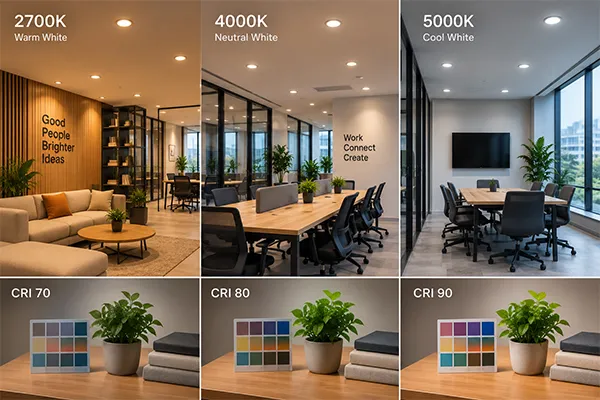
Color temperature, usually expressed in kelvin (K), describes whether light appears warmer or cooler.6 Color rendering index, commonly called CRI, describes how faithfully a light source renders colors compared with a reference source under defined test conditions.7
These two specifications are related to visual impression, but they are not interchangeable.
- CCT affects the apparent warmth or coolness of white light.
- CRI indicates a general color-rendering measure.
- Beam angle affects where the light lands and how surfaces are emphasized.
- Lumen output affects the amount of emitted light, but not necessarily the perceived balance in the room.
- Interior finishes influence how light is reflected and perceived.
For example, a project may use the same CCT in reception and desk areas, yet the reception can still appear different because it has darker walls, decorative finishes, or directional accent lighting. This is why product specification should be reviewed alongside the interior concept.
Build CCT and CRI Into the Procurement Brief
At Upward Lighting, we can discuss customization of parameters such as CCT, wattage, beam angle, CRI, and surface finish colors for OEM/ODM orders. Still, buyers should define the commercial and technical brief before asking for customization.
A practical request might include:
| Specification item | Example of a useful buyer instruction |
|---|---|
| CCT | State the desired CCT or available range required for the project |
| CRI | Identify the minimum project requirement for the relevant zones |
| Wattage | Request adjustable or fixed wattage options based on the design brief |
| Beam angle | Specify preferred distribution or ask for available optical choices |
| Finish | Confirm white, black, custom color, or trimless finish requirements |
| Driver | State dimming protocol, voltage, and control compatibility requirements |
| Quantity | Separate trial-order quantities from full project quantities |
In our experience, a clear specification sheet also helps prevent sample confusion. If a buyer receives samples in different CCTs or beam angles without clear labeling, internal evaluation becomes more difficult. We recommend recording each sample’s model number, wattage, CCT, CRI, beam angle, driver type, and finish.
Verify Application-Specific Requirements
Buyers should not treat a general product specification as proof of suitability for every coworking project. A local professional should evaluate application-specific issues, including lighting calculations, emergency lighting, wiring, dimming compatibility, installation safety, and local building regulations.
Likewise, certifications such as CE and RoHS should be reviewed as relevant product documents for the intended market.8 They should not be interpreted as proof that a downlight will deliver visual comfort in a particular coworking layout.
What Should Buyers Ask Suppliers Before Ordering LED Downlights for Coworking Spaces?
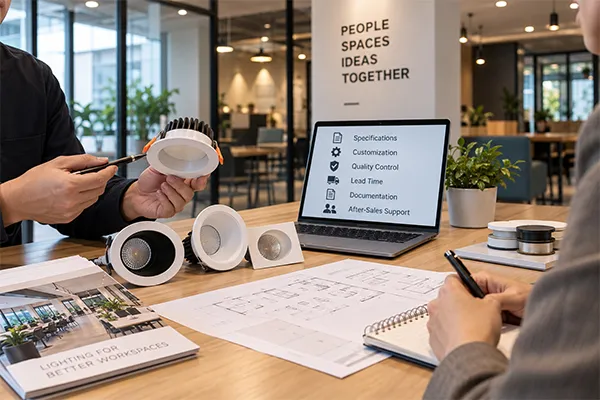
A rushed quotation can create delays when the supplier later needs to confirm cutout size, driver compatibility, color temperature, beam angle, and finish. Buyers can reduce this risk by preparing a structured request for quotation. The right questions also make it easier to compare suppliers on more than unit price.
Before ordering LED downlights for coworking spaces, buyers should provide a zone-based specification, installation details, target quantities, delivery requirements, and document expectations. They should compare suppliers on product consistency, available customization, sample management, quality-control processes, lead time, communication speed, and the ability to support future repeat orders.
Prepare a Better Request for Quotation
The best RFQ gives a supplier enough context to quote accurately without requiring a complete lighting-design package. Even a simple project schedule can improve quotation quality.
We recommend including the following information:
-
Project location and target market
This helps identify voltage, plug, certification, and regulatory-document expectations. -
Zone list and estimated quantities
Separate reception, workstation, meeting-room, corridor, and breakout-area quantities where possible. -
Installation method
Confirm recessed, trimless, surface-mounted, suspended, or other requirements. Include cutout dimensions for recessed products. -
Ceiling details
Share ceiling height, ceiling thickness, accessible void depth, and insulation or ventilation constraints when available. -
Preferred product parameters
Identify wattage range, CCT, CRI, beam angle, trim color, IP rating, and dimming requirements. -
Sample and approval process
Explain whether samples require internal approval, client approval, or third-party testing. -
Commercial expectations
Include target delivery date, order quantity, packaging requirements, labeling needs, and whether future repeat orders are expected.
Compare Manufacturing Quality-Control Information
Procurement teams should ask what checks occur before shipment. At Upward Lighting, every product undergoes a 100% aging test lasting between 4 and 8 hours before shipment. This process is part of our manufacturing quality-control approach and is intended to identify certain early product issues before dispatch.
However, buyers should understand the boundary of this information. An aging test does not prove that a fixture is the right choice for every coworking layout, nor does it replace project commissioning or professional site evaluation.
Useful supplier questions include:
- Is each unit tested before packing?
- What is the stated aging-test duration?
- How are CCT, wattage, and driver versions identified?
- Can the supplier provide product specifications and relevant certification documents?
- How does the supplier control consistency between approved samples and production orders?
- Can the supplier support small-batch orders before a larger rollout?
- What is the process for OEM labels, customized packaging, or custom finishes?
Evaluate Long-Term Supply Capability
For contractors, distributors, and local lighting brands, the first order is often not the only order. A coworking operator may expand to another location, or a contractor may need replacement stock later. Therefore, purchasing teams should evaluate product continuity and communication quality.
A practical supplier evaluation matrix can include:
| Evaluation area | Why it matters |
|---|---|
| Quotation speed and accuracy | Supports project planning and reduces revision cycles |
| Sample consistency | Helps align approved samples with production expectations |
| Customization capability | Supports CCT, wattage, beam-angle, finish, and packaging requirements |
| Small-batch support | Reduces risk during pilot projects or phased installations |
| Documentation availability | Helps buyers review market-entry and project requirements |
| Supply-chain stability | Supports repeat orders and delivery planning |
| Communication responsiveness | Helps resolve specification changes quickly |
We believe that the most reliable procurement relationship begins with clear technical communication. Buyers should select suppliers that ask relevant clarification questions instead of simply confirming every request without reviewing the details.
Frequently Asked Questions
Are higher-wattage LED downlights better for coworking spaces?
Not always. Higher wattage may provide more output, but it can also create excessive brightness or uneven visual distribution if the beam angle, fixture spacing, and ceiling height are unsuitable.9 Buyers should evaluate wattage as part of a complete zone-based specification rather than as the main selection criterion.
Can one downlight model be used throughout a coworking office?
One model may be suitable for several areas, but one specification should not automatically be used everywhere. Different zones may need different beam angles, wattages, CCT options, finishes, or glare-control features. A qualified lighting professional should review the final application-specific layout.
What information should I provide when requesting a downlight quotation?
Buyers should provide quantities, project location, installation type, ceiling height, cutout size, desired wattage, CCT, CRI, beam angle, trim finish, dimming needs, and delivery schedule. A zone list for desks, meeting rooms, corridors, and reception areas can improve quotation accuracy.
Do CE and RoHS documents prove that a downlight is suitable for a coworking project?
No. CE and RoHS documents relate to specific regulatory and market-entry considerations. Buyers should verify the documents for their target market and product configuration. These documents do not prove visual comfort, correct fixture spacing, or suitability for a particular coworking-space layout.10
Why should buyers request samples before a full order?
Samples allow buyers to review physical dimensions, trim finishes, CCT, beam angle, driver configuration, and general product appearance before production.11 Buyers should label and document each approved sample carefully, then confirm that the production order matches the approved specification.
Conclusion
Selecting LED downlights for coworking spaces is not simply a matter of choosing the highest wattage or lumen package. Buyers should begin with zone function, ceiling and installation conditions, furniture layout, daylight exposure, and the intended visual result. Then they can compare beam angle, output, CCT, CRI, driver options, and finishes more effectively. If you are sourcing downlights for a coworking project, we can help you prepare a clearer OEM/ODM specification and quotation request for your target market.
"Solid-State Lighting | Department of Energy", https://www.energy.gov/cmei/ssl/solid-state-lighting. Indoor-lighting guidance recognizes glare control and illuminance uniformity as distinct design considerations, requiring luminaire distribution and placement to be matched to the space and visual task. Evidence role: general_support; source type: institution. Supports: That glare and non-uniform lighting can result when luminaires and their distributions are not matched to the task area and layout.. Scope note: The guidance supports the design principle but does not assess any particular coworking installation. ↩
"(PDF) Lighting of indoor work places", https://www.academia.edu/8359629/Lighting_of_indoor_work_places. Workplace-lighting standards organize recommendations by task and area type, reflecting that offices, meeting spaces, circulation routes, and reception functions have different visual requirements. Evidence role: expert_consensus; source type: institution. Supports: That workplace-lighting guidance differentiates lighting requirements according to the visual task and type of area, including offices and circulation spaces.. Scope note: Specific target values and compliance obligations depend on the applicable local standard and project jurisdiction. ↩
"Equipment Cage Lighting | Cinematic Arts", https://cinematicarts.duke.edu/equipment-cage-lighting. For a fixed beam angle, basic beam geometry shows that the illuminated field becomes wider as the distance between the luminaire and the target plane increases. Evidence role: mechanism; source type: education. Supports: That beam geometry causes the diameter of the illuminated field to increase with distance from the luminaire for a fixed beam angle.. Scope note: Actual on-site distribution also depends on photometry, luminaire shielding, surface reflectances, and nearby luminaires. ↩
"Purchasing Energy-Efficient Light Bulbs", https://www.energy.gov/cmei/femp/purchasing-energy-efficient-light-bulbs. Energy-efficiency guidance distinguishes electrical power in watts from light output in lumens; neither wattage alone nor lumen output alone describes the quality of a lighting design. Evidence role: definition; source type: government. Supports: That watts measure electrical power while lumens measure light output, so wattage alone is not a measure of lighting quality or application suitability.. Scope note: Suitability additionally depends on distribution, glare, controls, and the specific visual task. ↩
"5 Considerations Concerning Lighting Systems | FHWA", https://highways.dot.gov/safety/other/visibility/fhwa-lighting-handbook-august-2012/5-considerations-concerning-lighting. Lighting-science guidance describes discomfort glare as depending on the luminance and apparent size of bright sources, their position in the observer’s field of view, and surrounding luminance conditions. Evidence role: mechanism; source type: institution. Supports: That glare evaluation depends on luminance, source size and position, observer direction, and the surrounding luminance field.. Scope note: Reflector depth and trim details affect glare through these variables, but their effect must be evaluated using the specific luminaire photometry and installation. ↩
"Color temperature", https://en.wikipedia.org/wiki/Color_temperature. Correlated color temperature (CCT), expressed in kelvin, characterizes the chromatic appearance of a white light source, conventionally described as warmer at lower values and cooler at higher values. Evidence role: definition; source type: institution. Supports: That correlated color temperature is expressed in kelvin and describes the chromatic appearance of white light along a warm-to-cool continuum.. Scope note: CCT does not by itself specify color-rendering performance or occupant preference. ↩
"Text-Alternative Version: Understanding and Applying TM-30-15", https://www.energy.gov/cmei/ssl/text-alternative-version-understanding-and-applying-tm-30-15. The general color-rendering index (CRI) is a standardized comparison of how a test light source renders specified color samples relative to a reference illuminant of similar correlated color temperature. Evidence role: definition; source type: research. Supports: That the general color-rendering index is calculated by comparison with a reference illuminant using specified color samples and test conditions.. Scope note: CRI is a limited metric and does not fully predict the rendering of all colors, including saturation preferences and some modern color-quality assessments. ↩
"CE marking – obtaining the certificate, EU requirements - Your Europe", https://europa.eu/youreurope/business/product-rules-compliance/general-product-compliance/ce-marking/index_en.htm. European Commission guidance explains that CE marking indicates conformity with applicable EU requirements, while the RoHS framework restricts certain hazardous substances in electrical and electronic equipment. Evidence role: definition; source type: government. Supports: That CE marking concerns conformity with applicable European Union requirements and RoHS restricts specified hazardous substances in electrical and electronic equipment.. Scope note: The exact directives, technical documentation, and obligations depend on the product category, configuration, and market in which it is placed. ↩
"[PDF] The Impact of Circadian Lighting Design Strategies on Lighting and ...", https://www.energy.gov/sites/default/files/2023-01/ssl-2023_circadian-lighting-design-strategies-office-space.pdf. Indoor-lighting design guidance treats luminaire output, optical distribution, mounting height, and spacing as interdependent variables affecting illuminance uniformity and visual comfort. Evidence role: general_support; source type: institution. Supports: That lighting performance and visual comfort depend on luminaire output together with distribution, mounting geometry, spacing, and task-plane conditions.. Scope note: Whether a particular output is excessive can only be determined from a project-specific calculation, photometric data, and site conditions. ↩
"CE marking and Declaration of Performance and Conformity", https://single-market-economy.ec.europa.eu/sectors/construction/construction-products-regulation-cpr/ce-marking-and-declaration-performance-and-conformity_en. CE conformity assessment and RoHS compliance address defined regulatory requirements for products; they are not assessments of illuminance distribution, glare performance in a specific room, or the adequacy of a project’s fixture layout. Evidence role: general_support; source type: government. Supports: That CE marking addresses conformity with applicable legal requirements rather than application-specific lighting-layout performance, while RoHS addresses substance restrictions.. Scope note: A product may require additional testing or documentation under applicable legislation, and project-specific lighting performance requires separate design evaluation. ↩
"First Article Inspection Requirement Report Generation from ...", https://tsapps.nist.gov/publication/get_pdf.cfm?pub_id=919140. Manufacturing quality-assurance practice uses first-article or pre-production inspection to verify conformance of an initial item to specified characteristics before production acceptance. Evidence role: general_support; source type: government. Supports: That first-article or pre-production inspection is used to verify whether a manufactured item conforms to specified requirements before broader production or acceptance.. Scope note: Sample approval cannot by itself ensure consistency across all production units; ongoing process controls and receiving inspection may still be needed. ↩