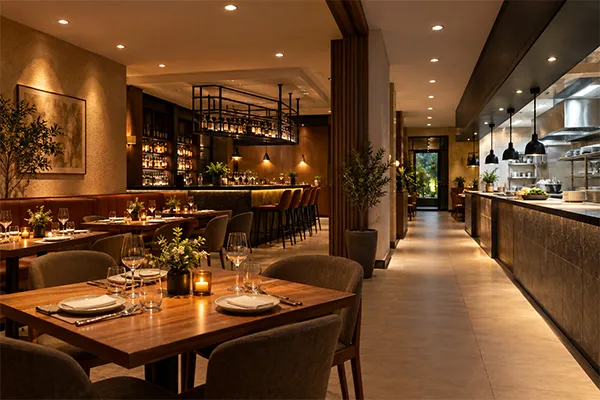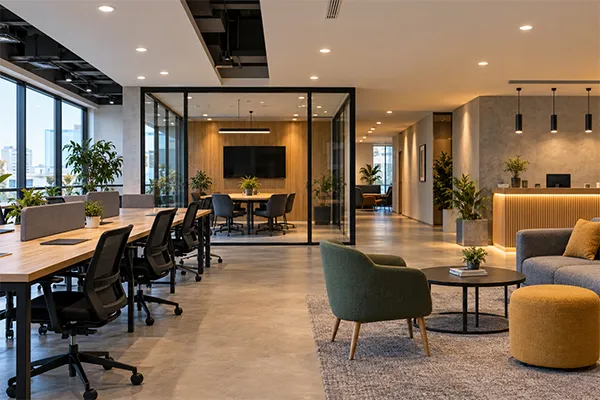
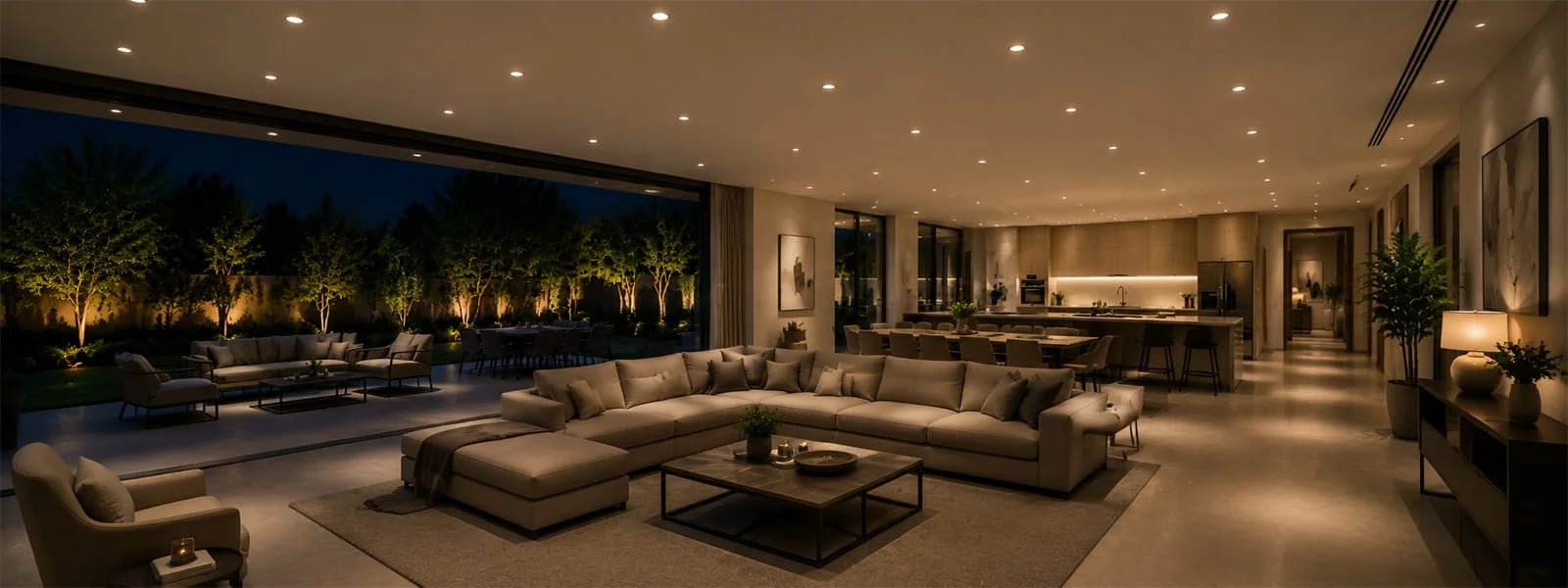
A premium LED downlight vs economy LED downlight decision can become difficult when buyers focus only on the unit price. A lower-cost fitting may look attractive at quotation stage, while a higher-specification option may seem unnecessary. I recommend comparing the application, maintenance exposure, visual expectations, and downstream project risk before choosing either tier.
A premium LED downlight is usually worth the additional cost when a project needs consistent light output, controlled glare, close color matching, dependable batch supply, or expensive maintenance access. An economy LED downlight can be a sensible choice for budget-sensitive, low-risk, and easy-to-maintain spaces. The right decision depends on total installed cost and application requirements—not price, wattage, or certifications alone1.
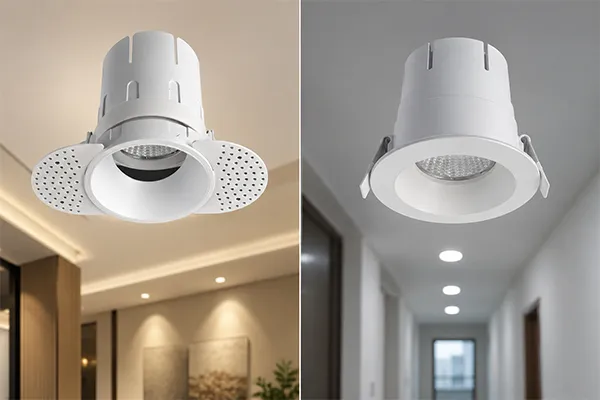
I have seen that the most useful procurement discussions start with the space, not the catalog price. Contractors, distributors, and lighting brands need to consider what happens after installation: handover expectations, visual comfort, replacement access, customer feedback, and the cost of correcting a mismatch2.
How Should Buyers Compare Premium LED Downlight vs Economy LED Downlight?
Many buyers compare two LED downlights by looking at wattage, lumen claims, and unit price. That approach can create problems because those figures do not show how the fitting will perform in a real ceiling, corridor, retail area, or residential project. I encourage buyers to compare the full specification and the cost of risk.
A premium LED downlight vs economy LED downlight comparison should include light quality, optical control, driver specification, housing construction, color consistency, quality-control process, warranty terms, and maintenance consequences. A premium model may justify its price where inconsistent appearance or early replacement would be costly. An economy model may be appropriate where requirements are simpler and access is easy.
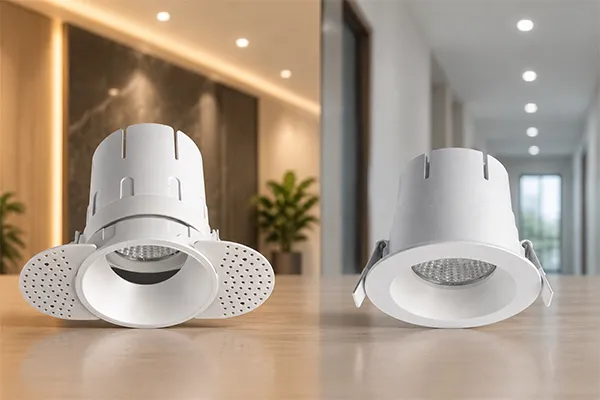
Move Beyond the Unit Price
I do not believe that the most expensive model is automatically the best purchase. I also do not believe that the lowest-priced model is automatically poor value. The key question is whether the savings at purchase stage exceed the potential costs created later.
For example, a downlight installed in a low ceiling of a small utility room is easier to replace than one installed in a hotel lobby, retail ceiling, stairwell, high-end residence, or commercial project completed for handover. In those more demanding environments, a replacement may involve more than the price of one fitting.
The total decision cost can include:
- Initial product price
- Freight and import costs
- Installation labor
- Site access equipment or ceiling work
- Replacement stock management
- Tenant, owner, or customer complaints
- Distributor returns and after-sales handling
- Delays during project handover
- Brand reputation for importers and local lighting brands
I recommend that buyers treat the LED downlight as a system component within the project, not as an isolated commodity item.
A Practical Total-Cost Comparison
| Evaluation factor | Economy LED downlight may suit when | Premium LED downlight may suit when |
|---|---|---|
| Initial budget | The project has tight price limits | The project can support higher upfront specification |
| Replacement access | Fixtures are easy to reach and replace | Ceilings are high, finished, restricted, or costly to reopen |
| Visual requirements | Basic functional lighting is sufficient | Appearance, uniformity, and guest experience matter |
| Operating hours | Use is limited or intermittent | Use is frequent or extended |
| Project risk | Minor variation has limited consequences | Callbacks, handover issues, or brand impact are significant |
| Stocking strategy | Fast-moving, price-led channel products | Curated ranges for quality-sensitive customers |
| Customization | Standard parameters are acceptable | Specific CCT, CRI, beam angle, wattage, or finish is required |
At Upward Lighting, I work with buyers who need different positions in their product range. Some need an accessible price point for broad distribution. Others need a more controlled specification for projects and local brands. Both approaches can be valid when the supplier, specification, and inspection standards match the intended market.
Does Wattage or Lumen Output Settle the LED Downlight Choice?
A claimed wattage or lumen figure can make one LED downlight appear stronger than another. However, those headline numbers do not fully explain how light will look or function in the installed space. I advise buyers to assess output together with beam angle, glare control, color rendering, color temperature, and installation conditions.
Wattage measures electrical power consumption, while lumens describe claimed light output.3 Neither figure alone confirms beam quality, useful illumination on the target surface, visual comfort, or color consistency between fittings.4 Buyers should compare complete technical documents, samples, and application requirements instead of selecting a downlight based on one headline number.
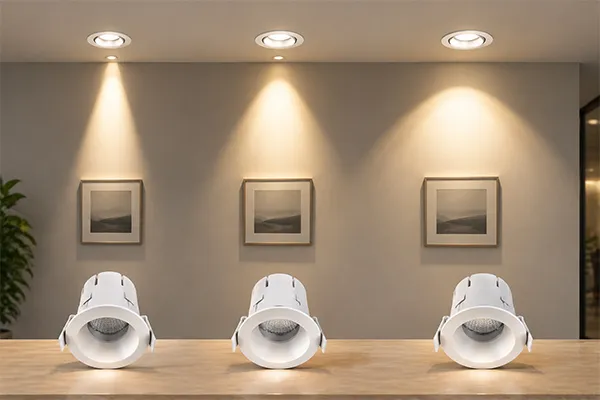
Why Wattage Is Not a Quality Grade
I often see wattage used as a shortcut for performance. A 12 W downlight is not automatically superior to a 9 W model, and a lower-wattage fitting is not automatically insufficient. The required result depends on mounting height, room size, surface reflectance, lighting layout, and the target illuminance level.5
A higher wattage may produce more light, but it may also be unnecessary in a small or reflective space. It can create excessive brightness, stronger glare, or uneven visual balance if the layout is not designed for it. Conversely, a lower-wattage option may be suitable for corridors, decorative zones, or residential rooms when spacing and beam distribution are correct.
The Parameters That Affect Real-World Appearance
When I review an LED downlight specification with a buyer, I suggest looking beyond lumen claims. These factors have a direct influence on the installed result:
- Beam angle: A narrow beam concentrates light, while a wider beam spreads it across a broader area.6 Neither is universally better.
- Glare control: A deeper reflector, recessed light source, or appropriate optical design can help reduce uncomfortable brightness at normal viewing angles.7
- Color temperature (CCT): Warm white, neutral white, and cool white create different visual impressions. The preferred range depends on market expectations and the space.
- Color Rendering Index (CRI): A higher CRI may be useful where merchandise, finishes, food, interior materials, or skin tones must appear more natural.8
- Color consistency: Nearby fittings should present a reasonably consistent appearance. Buyers can ask how suppliers manage LED binning and batch control.9
- Cutout and trim dimensions: Even a well-performing light can create site problems if the ceiling cutout, trim, or driver arrangement does not match the installation plan.
- Driver compatibility: Driver quality and electrical configuration affect installation, dimming requirements, and replacement planning.
Ask for a Comparison That Matches the Project
Instead of asking, “Which downlight has more lumens?”, I recommend asking:
- What illuminance level does the project require?
- What mounting height and fixture spacing will be used?
- Does the area need a narrow, medium, or wide beam?
- Is glare a concern for occupants, shoppers, office staff, or residents?
- Does the project require a specific CCT and CRI?
- Can the supplier provide a sample that reflects the intended order specification?
- Are photometric files, technical sheets, or other supporting documents available for review where needed?
I do not present one model as optically superior without model-specific evidence. I believe buyers should evaluate the actual product, technical documentation, and intended application before making that conclusion.
What Does Premium LED Downlight vs Economy LED Downlight Mean for Quality Control?
Buyers can assume that “premium” means perfect performance or that “economy” means poor reliability. I do not think either assumption is useful. Product tiers usually reflect different design targets, component selections, inspection expectations, and commercial requirements. Those differences should be made specific and verifiable.
In a premium LED downlight vs economy LED downlight review, buyers should ask what is actually different: LED source selection, driver configuration, thermal design, reflector design, housing material, finish, inspection process, and batch-management procedures. Certifications such as CE and RoHS may be relevant market-entry documents, but they do not alone prove optical consistency, long-term suitability, or identical performance across batches.10
Compliance Documents and Product Consistency Are Different Questions
CE and RoHS are important considerations for applicable markets. At Upward Lighting, our products hold CE and RoHS certifications, and I encourage buyers to verify the relevant documents, product scope, and market requirements before import or installation.
However, I would not treat CE or RoHS as a complete quality verdict. These documents do not, by themselves, answer practical questions such as:
- Will all installed fittings show a similar color appearance?
- Does the beam pattern suit the ceiling layout?
- Is the driver suitable for the intended control method?
- Is the trim finish consistent across a large order?
- Does the product match the approved sample?
- Is the selected downlight appropriate for the operating environment?
- Can the supplier maintain the same core specification on repeat orders?
A buyer should evaluate compliance, product construction, optical performance, and supplier process separately. This approach reduces the risk of assuming one document covers every procurement concern.
What We Check Before Shipment
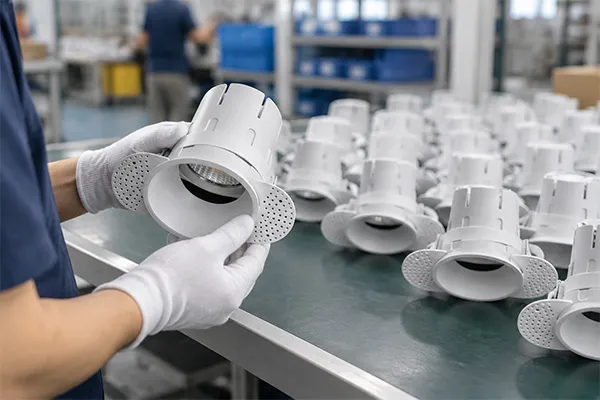
As a manufacturer, I find that transparent process discussions help buyers make more confident decisions. At Upward Lighting, every product undergoes a 100% aging test before shipment, typically lasting between 4 and 8 hours. We also conduct outgoing inspection before shipment.
These production controls are intended to identify obvious issues before goods leave our facility.11 They do not replace application-specific engineering review, independent testing where required, or a buyer’s own incoming inspection plan. I believe it is important to be clear about that distinction.
For a buyer evaluating suppliers, useful questions include:
| Supplier question | Why it matters |
|---|---|
| How long is the aging test? | It shows whether the supplier has a defined pre-shipment process |
| Is every unit aged or only sampled? | It clarifies the scope of the quality-control step |
| What does outgoing inspection cover? | It helps buyers understand checks for appearance, function, labeling, and packing |
| How is sample-to-order consistency managed? | It addresses a common project and channel concern |
| Can the supplier control CCT, CRI, wattage, and beam angle? | It supports project-specific specification |
| Can small batches be supported? | It matters for trial orders, replacements, and phased projects |
| What are the packaging and labeling requirements? | It can reduce import, warehouse, and channel errors |
I recommend that buyers document the approved specification in the purchase order. The document should cover key parameters, dimensions, color temperature, driver requirements, finish, packaging, labels, and any project-specific requirements.
When Is an Economy LED Downlight the Better Buying Decision?
Budget pressure can lead buyers to reject economy products too quickly, especially when a project does not require a high-end optical package or complex customization. A higher-priced downlight can create unnecessary cost if the application is straightforward. I recommend choosing the simplest product tier that responsibly meets the actual need.
An economy LED downlight can be the better decision in low-risk, easily serviced, price-sensitive installations with basic lighting requirements. Buyers should still verify the product specification, supplier controls, applicable compliance documents, sample consistency, and installation fit. “Economy” should describe a commercial position, not an excuse to skip procurement checks.
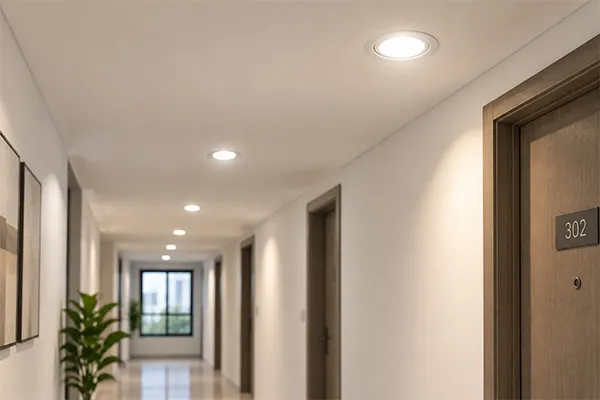
Applications That May Support an Economy Range
An economy model can make commercial sense when the installation has limited consequences if a fitting needs replacement and when the visual expectations are moderate. Examples may include:
- Basic utility areas
- Storage rooms
- Back-of-house spaces
- Temporary or short-duration installations
- Simple residential developments with standard specifications
- Price-sensitive wholesale channels
- Easily accessible low-ceiling areas
- Projects where standard CCT, beam angle, and finish are acceptable
I would still avoid selecting solely from a photo or a short quotation line. An economy model should have a clear product specification and defined inspection process. Buyers should confirm cutout size, driver type, input voltage, CCT, wattage, trim appearance, packing method, and any applicable certification requirements.
When Premium Becomes More Defensible
A premium LED downlight is more defensible when the project has a greater cost of mismatch or failure. The product is not “better” simply because it costs more; it may be better aligned with a demanding application.
I would consider a higher-specification option when the installation is:
- Visually sensitive, such as hospitality, retail, showrooms, premium residences, or branded commercial interiors
- High-use, where lights operate for long periods and maintenance disruption matters
- Difficult to access, such as high ceilings, completed ceilings, or restricted operating areas
- Brand-critical, where a distributor or lighting brand needs stable appearance and repeatable specification
- Custom-designed, requiring specific CRI, beam angle, CCT, trim color, or wattage
- Costly to rework, where labor, access, customer complaints, or handover delays can exceed product savings
In my experience, the best procurement choice often sits between the two extremes. A distributor may stock an economy range for price-led business while keeping a more controlled project range for customers who need stronger optical requirements and customization. This tiered approach gives the sales team a rational way to match products to risk.
Frequently Asked Questions
Is a premium LED downlight always more reliable than an economy model?
No. A premium price does not guarantee universal reliability, and an economy price does not prove a product is unsuitable. I recommend reviewing the actual model, components, inspection process, application conditions, maintenance access, and supplier documentation before deciding which tier fits the project.
Are CE and RoHS enough to confirm LED downlight quality?
No. CE and RoHS can be relevant compliance and environmental documents for applicable markets, but buyers should verify them and review their scope. They do not independently confirm beam quality, color consistency, driver design, batch consistency, or long-term suitability in a specific installation.
Should I choose an LED downlight with the highest lumen output?
Not necessarily. Higher lumen output may be useful in some spaces, but it can also create glare or excess brightness if the beam angle and layout are unsuitable.12 I recommend comparing lumens with mounting height, spacing, target illumination, glare control, and the intended visual effect.
What should I request from an LED downlight supplier before placing an order?
I recommend requesting a technical specification sheet, sample, dimensions and cutout details, CCT and CRI information, beam angle, driver details, relevant compliance documents, quality-control information, packing details, lead time, and confirmation that the production order will match the approved specification.
Can an economy LED downlight work for a commercial project?
Yes. An economy LED downlight can work well in commercial projects with straightforward requirements, accessible maintenance, moderate visual expectations, and tight budgets. Buyers should still validate the fitting through samples, technical documents, and a clear review of installation conditions and project risk.
Conclusion
A premium LED downlight vs economy LED downlight decision should not be reduced to price, wattage, lumen claims, or certification labels. I recommend assessing the total decision cost, including installation labor, access for replacement, visual requirements, color consistency, glare control, project handover risk, and channel returns. Economy models can be sensible for simple, maintainable applications, while premium options may better support demanding or brand-critical spaces. At Upward Lighting, we can help buyers review LED downlight specifications, request samples, and develop OEM/ODM options suited to their market or project needs.
"Take Five: Life Cycle Costs for Acquisition - Department of Energy", https://www.energy.gov/cmei/femp/articles/take-five-life-cycle-costs-acquisition. Life-cycle cost guidance evaluates alternatives using costs incurred over service life, including installation, energy, maintenance, and replacement, rather than relying solely on initial purchase price. Evidence role: general_support; source type: government. Supports: Life-cycle costing accounts for acquisition, operation, maintenance, and replacement costs when comparing lighting alternatives.. Scope note: The guidance supports the decision framework generally and does not determine which specific downlight model is preferable. ↩
"Take Five: Life Cycle Costs for Acquisition - Department of Energy", https://www.energy.gov/cmei/femp/articles/take-five-life-cycle-costs-acquisition. Lighting life-cycle and maintenance analyses recognize that replacement decisions can involve labor, access equipment, service interruption, and associated administrative costs in addition to the price of the replacement luminaire. Evidence role: general_support; source type: research. Supports: Facility lighting life-cycle analyses include labor, access, downtime, and maintenance activity in addition to equipment purchase costs.. Scope note: The size of these costs is site-specific and depends on access conditions, labor rates, operating constraints, and maintenance policy. ↩
"[PDF] Optical metrology for LEDs and solid state lighting", https://tsapps.nist.gov/publication/get_pdf.cfm?pub_id=840989. Authoritative lighting terminology distinguishes electrical power, measured in watts, from luminous flux, measured in lumens. Evidence role: definition; source type: government. Supports: The watt is a unit of power and the lumen is the SI-derived unit used to express luminous flux.. ↩
"[PDF] CALiPER Application Summary Report 20: LED PAR38 Lamps", https://www1.eere.energy.gov/buildings/publications/pdfs/ssl/caliper_20_summary.pdf. Lighting standards treat luminous flux, illuminance distribution, glare, and colour quality as distinct performance attributes, so a wattage or lumen value alone does not characterize installed visual performance. Evidence role: mechanism; source type: institution. Supports: Total luminous flux is only one photometric quantity; illuminance distribution, glare, and colour attributes are assessed through separate measurements and design criteria.. Scope note: This supports the general measurement distinction; actual performance still requires model-specific photometry and an application-specific layout. ↩
"High Bay Lighting Height: A Practical Decision Guide – kongta's blog", https://blogs.bu.edu/kongta/high-bay-lighting-height-decision-guide/. Interior-lighting calculation methods account for luminaire distribution, mounting geometry, room dimensions, surface reflectances, and specified illuminance criteria when predicting lighting results. Evidence role: mechanism; source type: institution. Supports: Interior illuminance calculations and lighting layouts depend on luminaire photometry, mounting geometry, room dimensions, and surface reflectances.. Scope note: The source establishes relevant design variables but does not prescribe a single suitable wattage or layout for every room. ↩
"[PDF] CALiPER Application Summary Report 20: LED PAR38 Lamps", https://www1.eere.energy.gov/buildings/publications/pdfs/ssl/caliper_20_summary.pdf. Beam angle characterizes the angular spread of emitted light; narrower distributions concentrate light over a smaller area, whereas wider distributions cover a broader area at lower intensity per unit area. Evidence role: definition; source type: education. Supports: Beam angle describes the angular spread of a luminaire's emitted light and affects the concentration of illumination.. ↩
"[PDF] What to measure and report in studies of discomfort from glare for ...", https://www.energy.gov/eere/ssl/articles/what-measure-and-report-studies-discomfort-glare-pedestrian-applications. Research and lighting guidance on discomfort glare identify source luminance, viewing direction, shielding, and luminaire optical distribution as factors that influence glare perception; recessing or shielding a source can therefore reduce direct-view brightness. Evidence role: mechanism; source type: paper. Supports: Luminaire shielding geometry, source luminance, viewing angle, and optical distribution affect discomfort glare.. Scope note: Glare performance depends on the complete installation, including observer position, background luminance, spacing, and luminaire photometry. ↩
"Color rendering index", https://en.wikipedia.org/wiki/Color_rendering_index. Color-rendering measures, including the general colour rendering index, are intended to characterize the fidelity with which illuminated object colours are rendered relative to a reference source, making colour quality relevant where material and merchandise appearance matters. Evidence role: definition; source type: institution. Supports: Color-rendering metrics characterize how a light source affects the appearance of object colors relative to a reference illuminant.. Scope note: CRI is not a complete predictor of preference or colour fidelity for every object; supplementary colour-quality metrics may be needed. ↩
"[PDF] SSL LED Manufacturing Roundtable Summary - eere.energy.gov", https://www1.eere.energy.gov/buildings/publications/pdfs/ssl/ssl-led-roundtable-summary_04-12.pdf. LED colour-consistency specifications use chromaticity tolerances and binning to limit variation between light sources, because perceptible differences in chromaticity can occur among nominally similar products. Evidence role: mechanism; source type: institution. Supports: Chromaticity bins and colour-tolerance measures such as SDCM are used to specify and manage color variation among LED light sources.. Scope note: Source-level binning does not by itself guarantee installed colour consistency, which can also be affected by optics, drivers, ageing, and production control. ↩
"CE marking - Wikipedia", https://en.wikipedia.org/wiki/CE_marking. European Commission guidance describes CE marking as a manufacturer declaration of conformity with applicable EU requirements and RoHS as legislation restricting specified hazardous substances; neither framework is, by itself, a general certification of optical uniformity, lifetime in every application, or repeat-batch equivalence. Evidence role: definition; source type: government. Supports: CE marking indicates conformity with applicable EU requirements, while RoHS restricts specified hazardous substances in electrical and electronic equipment.. Scope note: Applicable conformity requirements vary by product and market, and compliance documentation should be assessed for the particular product and intended jurisdiction. ↩
"[PDF] Reliability technology for cardiac pacemakers III: a workshop report", http://nvlpubs.nist.gov/nistpubs/Legacy/SP/nbsspecialpublication400-50.pdf. Reliability literature describes burn-in and screening as pre-deployment procedures that can reveal some early-life or latent electronic defects before products enter service. Evidence role: mechanism; source type: paper. Supports: Burn-in and environmental-stress screening are used to expose certain early-life or latent defects in electronic products before field deployment.. Scope note: Such testing does not demonstrate the reliability of a particular supplier's products or eliminate failures caused by later ageing, installation conditions, or use. ↩
"[PDF] What to measure and report in studies of discomfort from glare for ...", https://www.energy.gov/eere/ssl/articles/what-measure-and-report-studies-discomfort-glare-pedestrian-applications. Lighting guidance evaluates glare through the luminous intensity and luminance distribution of luminaires in their installed geometry, indicating that additional light output can impair visual comfort when distribution and layout are not matched to the space. Evidence role: mechanism; source type: institution. Supports: Glare and visual comfort are affected by luminaire luminance and intensity distribution, viewing geometry, background luminance, and layout.. Scope note: A total-lumen value alone cannot predict glare; a photometric calculation or measurement for the proposed installation is required. ↩