LED downlights are changing commercial lighting decisions because buyers must now balance comfort, performance, control, and procurement risk—not simply choose the highest wattage. A poorly specified downlight can cause glare, uneven ambience, inaccurate product presentation, or costly replacements. I believe the practical solution is task-led selection supported by a reliable, specification-consistent supplier.
The future of commercial lighting with LED downlights is task-led, not feature-led. Buyers should select downlights according to the visual task, ceiling condition, glare tolerance, color quality, control needs, and maintenance plan of each space. Higher output, smart functions, and lower pricing only add value when they support the real application and can be supplied consistently over the project lifecycle.
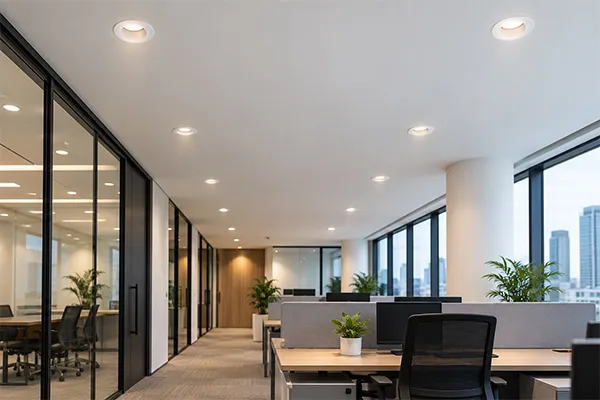
Commercial projects have more choices than ever, but more options can also create more specification mistakes. In my OEM/ODM conversations, I often find that buyers begin with wattage or unit price. The better starting point is a simpler question: what must people see, feel, and do in this space—and what lighting failure is unacceptable?
How Will LED Downlights Change Commercial Lighting Specification?
Commercial LED downlights can seem easy to compare because product sheets usually list wattage, lumens, beam angle, and color temperature. However, buyers can create avoidable project risk when they treat these figures as the full specification. A downlight that looks strong on paper may still create discomfort or an unsuitable atmosphere in the installed environment.
LED downlights will change commercial lighting specification by shifting buyer attention from basic wattage comparisons to application-specific requirements. Future-ready specifications define the visual task, mounting condition, glare limits, beam distribution, color quality, controls, serviceability, and supply continuity before comparing unit prices.
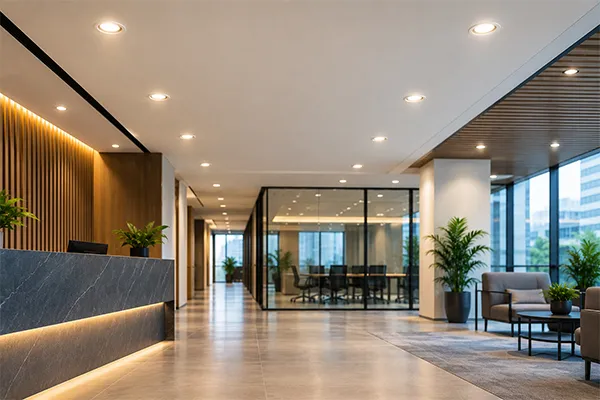
The Specification Must Start With the Space
A commercial downlight is not an isolated product. It becomes part of a complete visual environment that includes ceiling height, ceiling finish, wall colors, daylight, furniture, shelving, reflective surfaces, and the people using the space.
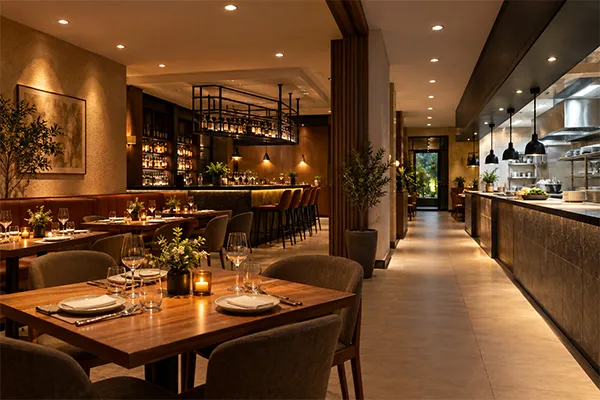
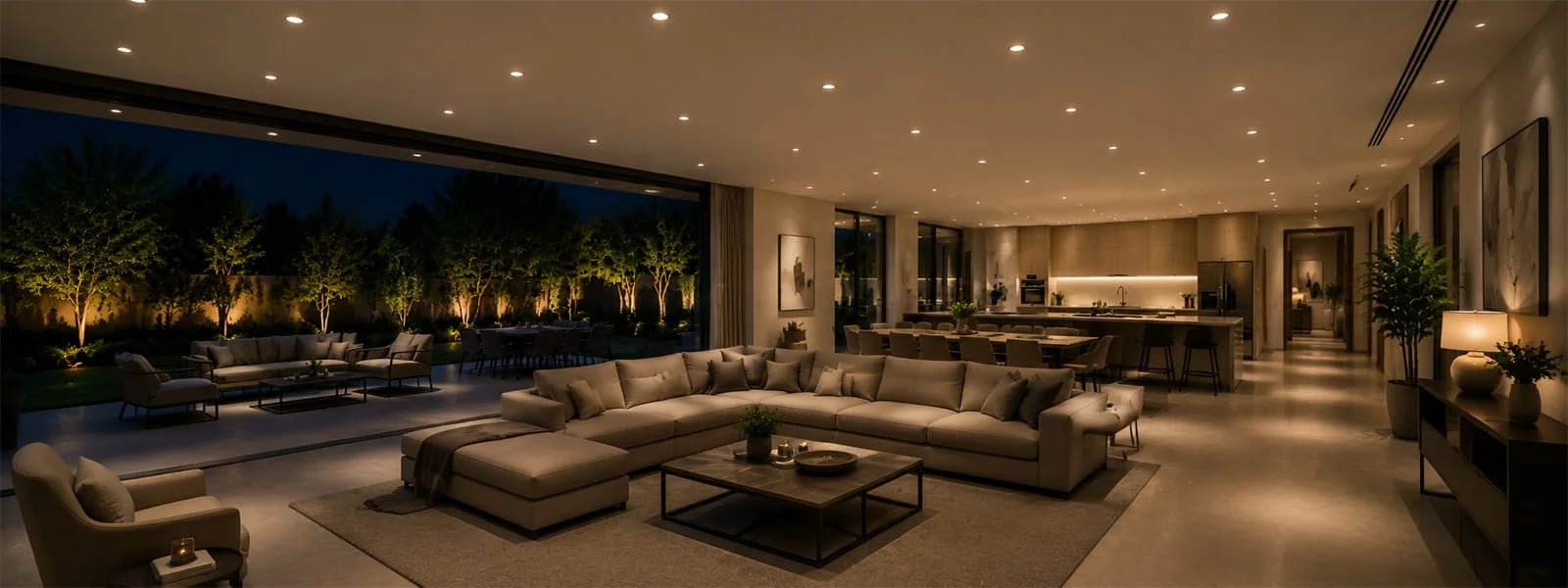
For example, an office corridor may require comfortable orientation and safe movement. A retail display zone may need stronger accent lighting and good color rendering. A hotel lobby may need warm, controlled illumination that supports a relaxed atmosphere. A clinic reception area may require clean visual conditions without harsh glare.
When I discuss a new LED downlight range with a customer, I try to move the conversation away from “What is your highest-lumen model?” I ask questions such as:
- What activity takes place below the fixture?
- What would the end user complain about first?
- Is the ceiling low, medium, or high?
- Will people look directly toward the recessed fixture?
- Is the space designed for long dwell times?
- Does the client need a uniform lighting effect or contrast for visual interest?
- Will the buyer need replacement stock for future maintenance?
These questions do not replace a qualified lighting design or local electrical review. However, they help purchasing teams avoid treating all commercial spaces as interchangeable.
Moving Beyond Wattage as a Shortcut
Wattage remains useful for estimating power consumption and comparing similar product families. Still, wattage alone does not describe how a fixture will perform in a room. Two LED downlights with the same wattage can have different optics, color quality, driver configurations, physical dimensions, and thermal designs.1
Buyers should assess the following factors together:
| Evaluation factor | Why it matters in commercial projects | Buyer question |
|---|---|---|
| Lumen output | Supports the required illumination level | Is the output appropriate for the task and installation height? |
| Beam angle | Affects spread, spacing, and visual uniformity | Does the optic create unwanted bright spots or dark gaps? |
| UGR or glare-related design2 | Influences visual comfort | Will occupants see uncomfortable brightness from normal viewing angles? |
| Color temperature | Shapes the perceived character of the space | Does the selected CCT fit the brand and use of the environment? |
| CRI | Affects color appearance | Does the application require accurate product, material, or skin-tone rendering? |
| Cutout size and trim | Impacts installation and replacement compatibility | Can the fixture fit the ceiling system and existing opening? |
| Driver and dimming method | Determines control compatibility | Does the driver match the planned control infrastructure? |
The future of commercial lighting is therefore less about buying “more” and more about specifying the right level of performance with fewer surprises.
How Should Buyers Select LED Downlights by Visual Task?
Buyers often face pressure to standardize one LED downlight across an entire commercial project. That approach can simplify procurement, but it can also create visual problems when offices, retail areas, reception zones, and hospitality spaces have different needs. A single product is not always a single solution.
Buyers should select LED downlights by identifying the main visual task and the most unacceptable lighting failure in each area. The correct combination of lumen output, beam angle, CCT, CRI, and glare control depends on whether the space supports work, product display, wayfinding, relaxation, or customer interaction.
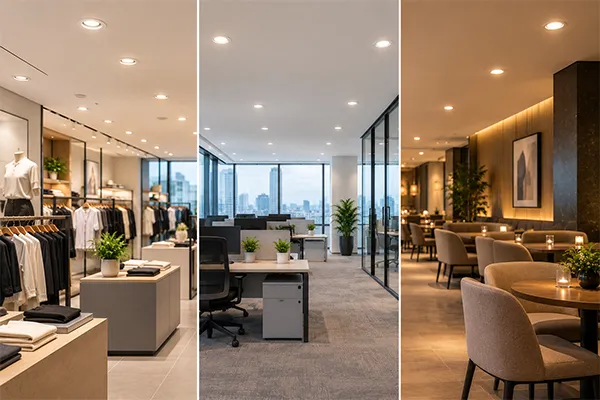
Define the Unacceptable Failure First
This is one of the most useful methods I have seen in commercial LED downlight discussions. Rather than beginning with a product code, define what must not happen after installation.
A buyer may identify the following unacceptable failures:
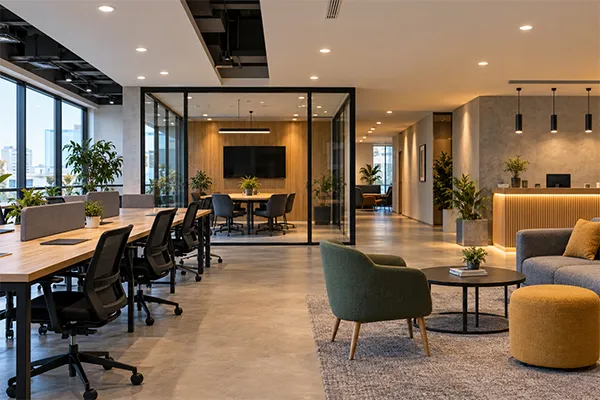
- Office work area: employees experience reflected glare on screens or insufficient task lighting.
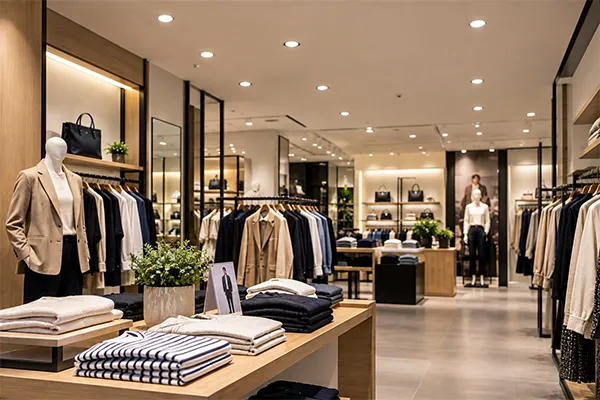
- Retail store: merchandise appears dull or colors look inconsistent.
- Hotel corridor: the corridor feels harsh, dim, or visually uneven.
- Restaurant: the lighting undermines the intended warm and comfortable ambience.
- Reception area: guests see a patchy ceiling pattern or uncomfortable brightness.
- Showroom: key products do not stand out from the background.
Once the failure is clear, it becomes easier to evaluate the downlight specification.
Retail Requires Attention to Product Presentation
Retail buyers often ask for higher lumen packages because they want products to stand out. That goal is understandable, but higher output alone can create glare, harsh reflections, or overly bright surfaces. Beam angle and CRI may be equally important.
For general retail lighting, buyers may compare:
- Narrower beams for focal displays, feature walls, mannequins, or selected merchandise.
- Medium beams for flexible general lighting and moderate ceiling heights.
- Wider beams for more uniform coverage in open circulation areas.
Color rendering can also influence how customers perceive clothing, food, cosmetics, finishes, and branded materials.3 A buyer should request the relevant CRI documentation and compare samples where practical. The right CRI target depends on the products and brand expectations, not on a universal rule.
Offices Need Comfort as Well as Visibility
Commercial office lighting should support work without creating unnecessary discomfort. In office conversations, I find that buyers sometimes focus only on lumen output per fixture. Yet occupants may notice glare before they notice a small difference in brightness.4
A suitable office LED downlight selection may need to consider:
- Ceiling height and workstation spacing
- Computer screen orientation
- Reflective desks, glass partitions, and polished finishes
- The relationship between downlights and linear office lighting
- Dimming needs for meeting rooms or presentation areas
Downlights may work best as part of a layered lighting plan rather than as the only source of illumination.5 A qualified lighting professional should assess layout, local code requirements, and application-specific calculations before final installation.
Hospitality Needs Atmosphere and Consistency
Hospitality environments often benefit from careful CCT selection, beam control, and finish coordination. A warm color temperature may suit a lounge or restaurant, while a different tone may suit a reception desk or service area. The goal is not simply warm versus cool light. The goal is a consistent guest experience across fixtures, rooms, and replacement orders.
For OEM/ODM projects, we commonly discuss customized parameters such as:
- Color temperature
- Wattage
- Beam angle
- CRI
- Surface finish color
- Dimming configuration, where applicable
- Packaging and labeling for private-label programs
The correct combination depends on the buyer’s application brief and evaluation process. I recommend that procurement teams approve clear specifications and retain reference samples before placing large commercial orders.
When Do Smart LED Downlights Add Commercial Value?
Smart controls, dimming, and tunable color temperature can sound like automatic improvements. However, a feature that is valuable in a flexible meeting room may add unnecessary cost and maintenance complexity in a simple corridor. Buyers risk over-specifying commercial LED downlights when they select controls without a defined operating scenario.
Smart LED downlights add commercial value when the control feature solves a real operational need and matches the building’s infrastructure, commissioning capability, and maintenance plan. Dimming, tunable white, and connected controls should be selected for defined use cases rather than included as standard features in every commercial area.
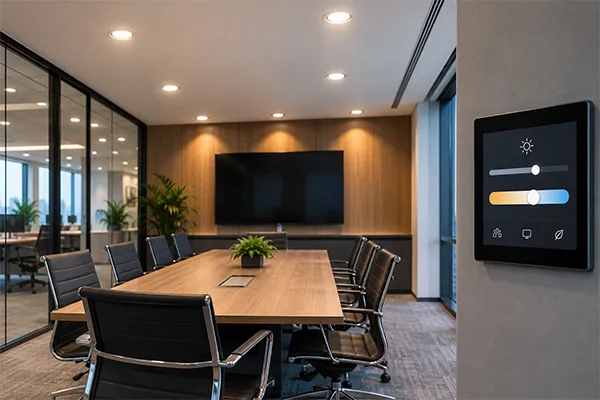
Dimming Should Serve a Clear Scenario
Dimming can support flexibility, comfort, and scene-setting. Still, buyers should confirm that the chosen dimming method works with the planned control system. A mismatch between the LED driver and dimmer can lead to flicker, unstable low-end dimming, limited dimming range, or inconsistent behavior between fixtures.6
Before selecting dimmable LED downlights, buyers should clarify:
- Which control protocol will the building use?
- Is the dimmer or control system already specified?
- Does the area need frequent scene changes?
- Who will commission the controls?
- Who will troubleshoot problems after handover?
- Does the project need standard replacement drivers or special control components?
A small restaurant with multiple service periods may benefit from dimming scenes. A boardroom may need different levels for presentations, video calls, and cleaning. In contrast, a utility area with fixed operating hours may not need advanced control features.
Tunable White Is Not a Universal Requirement
Tunable color temperature can help spaces that serve multiple purposes or operate across long daily schedules. For example, some workplace, education, healthcare, or hospitality concepts may want adjustable CCT for different activities or brand experiences.
However, tunable white requires more than a fixture capable of changing color temperature. It may also require compatible controllers, commissioning, user training, and clear responsibility for future maintenance. Without these elements, the feature can remain unused or become a source of service calls.
I encourage buyers to ask a practical question: Who will actually use this function after the project is complete?
If the answer is unclear, a stable fixed-CCT product may be the more appropriate commercial choice.
Controls Must Be Procured as a System
Commercial LED downlights should be evaluated as part of a system, especially when control requirements are involved. The fixture, driver, wiring method, control device, and installation process must all align.
| Control option | Potential commercial use | Key procurement consideration |
|---|---|---|
| Non-dimmable | Basic corridors, service spaces, simple fit-outs | Lowest complexity, but limited flexibility |
| Phase-cut dimming | Smaller projects using compatible local dimmers | Confirm dimmer-driver compatibility |
| 0–10V dimming | Offices and larger zoned areas | Confirm wiring and commissioning requirements |
| DALI or similar digital control7 | Projects requiring detailed control and zoning | Confirm system design, addressing, and maintenance capability |
| Tunable white | Flexible hospitality, workplace, or experience-led spaces | Confirm controls, scenes, training, and long-term support |
I do not treat smart lighting as a trend checklist. I view it as a procurement decision with operational consequences. The best technology is the technology that the project team can install, commission, understand, and maintain reliably.
How Can Buyers Source LED Downlights With Lower Lifecycle Risk?
A low quotation can attract attention, especially when a project has a tight budget. Yet the cheapest LED downlight is not always the lowest-cost choice over the project lifecycle.8 Buyers can face higher costs if products arrive late, specifications change between batches, documents are incomplete, or replacements are difficult to source.
Buyers can reduce LED downlight lifecycle risk by evaluating suppliers for specification consistency, production controls, documentation, communication, delivery capability, and replacement planning—not only unit price. A reliable supplier relationship helps commercial buyers protect project schedules, private-label ranges, and future maintenance needs.

Evaluate Product Consistency Across Orders
For distributors, contractors, and local lighting brands, the first shipment is only part of the decision. The more important question is whether the supplier can reproduce the approved configuration over repeat orders.
In our own manufacturing discussions at Upward Lighting, customers frequently request customized wattage, CCT, beam angle, CRI, trim color, and private-label details. These requests make clear documentation essential. A buyer should ensure that the approved sample, purchase order, product label, packaging requirements, and technical sheet all point to the same configuration.
A practical supplier evaluation checklist includes:
- Approved product drawings and cutout dimensions
- Confirmed wattage and input requirements
- CCT and CRI requirements
- Beam angle and optical configuration
- Dimming or driver requirements
- Housing and trim finish
- Labeling, logo, barcode, and packaging details
- Required test reports and certification documents
- Agreed lead time and replacement-stock expectations
Review Quality Controls With Realistic Expectations
Manufacturing controls can help buyers assess process discipline, but buyers should avoid treating any single test as an absolute guarantee of field performance. At Upward Lighting, we conduct a 100% aging test for 4 to 8 hours before shipment as part of our production process. This process is intended to identify certain early-stage issues before products leave the factory.
However, on-site performance can also depend on installation quality, electrical conditions, ventilation, usage patterns, control compatibility, and the specific application environment.9 For this reason, I recommend that buyers combine factory information with sample evaluation, document review, and qualified technical assessment for project-specific decisions.
Our products are offered with documents such as CE and RoHS documentation for relevant market requirements. Buyers should always verify the applicability, validity, product scope, and destination-market requirements of any certification documents before purchase or installation.10
A good procurement process does not ask, “Does the supplier have a certificate?” It asks, “Does this document apply to this exact product, this destination market, and this project requirement?”
Protect Delivery and Replacement Planning
Commercial lighting projects may have phased installations, late design changes, and future expansion needs. Therefore, procurement teams should ask how the supplier manages materials, production scheduling, and repeat-order consistency.
I have seen customers benefit from starting with small-batch evaluation orders before committing to a larger program. This approach can help them review appearance, packaging, installation fit, and specification accuracy. It can also improve communication before the project reaches its most time-sensitive stage.
For commercial LED downlights, the supplier relationship should support:
- Fast and accurate quotations
- Clear technical confirmation before production
- Small-batch support where appropriate
- Stable supply for repeat orders
- Reasonable response times for project questions
- Replacement planning for stocked or long-running ranges
A supplier should not merely sell a fixture. The supplier should help the buyer manage specification clarity and supply risk. That distinction becomes increasingly important as brands, distributors, and contractors seek fewer disruptions across their lighting programs.
Frequently Asked Questions
Are higher-lumen LED downlights always better for commercial spaces?
No. Higher lumen output can be useful in some applications, but it can also increase glare, create harsh contrast, or exceed the needs of the space. Buyers should evaluate lumens together with beam angle, mounting height, glare control, ceiling layout, and the actual visual task.
What color temperature should I choose for commercial LED downlights?
The appropriate color temperature depends on the environment and intended atmosphere. Offices, retail spaces, restaurants, hotels, and reception areas may have different needs. Buyers should select CCT based on the brand experience, visual task, adjacent lighting, and sample evaluation rather than using one setting everywhere.
Is a high CRI necessary for every commercial downlight project?
A high CRI can be particularly valuable where product colors, finishes, food, cosmetics, fabrics, or skin tones matter.11 However, the correct CRI specification depends on the application and budget. Buyers should define the desired visual outcome and review product documentation for the selected configuration.
Should commercial buyers choose dimmable LED downlights?
Buyers should choose dimmable LED downlights when dimming supports a real operating need, such as meeting-room scenes, hospitality ambience, or flexible workspace use. They should also confirm compatibility between the fixture driver, dimmer, wiring plan, and control system before placing an order.
What should I verify before selecting an LED downlight supplier?
Buyers should verify technical specifications, cutout size, driver options, control compatibility, production consistency, sample quality, delivery terms, documentation, and after-sales communication. Buyers should also check that certification documents apply to the exact product and destination-market requirements.
Conclusion
The future of commercial lighting with LED downlights is not about selecting the brightest fixture, the most advanced control feature, or the lowest quotation. It is about choosing the right product for the visual task while managing comfort, specification accuracy, supply reliability, and maintenance risk. I recommend that commercial buyers begin with the application, define unacceptable failures, approve clear parameters, and evaluate suppliers beyond price alone. If you are sourcing or customizing a commercial LED downlight range, we at Upward Lighting can support OEM/ODM discussions, small-batch evaluation, and project-focused quotation requirements.
"LED Basics - Department of Energy", https://www.energy.gov/cmei/ssl/led-basics. U.S. Department of Energy guidance describes LED luminaire performance as depending on optical, electrical, color-quality, and thermal design factors in addition to input power. Evidence role: general_support; source type: government. Supports: Authoritative lighting guidance explaining that LED luminaire performance depends on factors beyond input wattage, including light output, optical distribution, color characteristics, drivers, and thermal management.. Scope note: The guidance supports the general principle and does not compare the particular downlight models referenced in the article. ↩
"[PDF] COMFORT VIEW ZONE: MEASURING DISCOMFORT GLARE", https://files.cie.co.at/x051_2025/P1182_ID257MichelVissenberg_OA_with_cover.pdf. International lighting guidance defines the Unified Glare Rating (UGR) as a method for evaluating discomfort glare in indoor lighting environments. Evidence role: definition; source type: institution. Supports: The definition and intended use of the Unified Glare Rating as an indicator for assessing discomfort glare in indoor lighting installations.. Scope note: A UGR value is calculated for a specified installation and observer position; it is not a stand-alone guarantee of occupant comfort. ↩
"LED Basics - Department of Energy", https://www.energy.gov/cmei/ssl/led-basics. Color-appearance research shows that the spectral properties and color-rendering performance of illumination can alter the perceived colors of objects and materials. Evidence role: mechanism; source type: research. Supports: Research or technical guidance showing that a light source's spectral distribution and color-rendering properties affect the perceived color appearance of illuminated objects.. Scope note: The magnitude and commercial significance of the effect vary by product, observer, illuminance, surrounding colors, and the specific light source. ↩
"Publications: Daylighting Systems:Visual Comfort and IEQ", https://bies.lbl.gov/research-areas/daylighting-systemsvisual-comfort. Studies of office lighting report that discomfort glare is associated with reduced visual comfort and occupant satisfaction under some interior lighting conditions. Evidence role: general_support; source type: paper. Supports: Empirical evidence on the relationship between discomfort glare, luminance conditions, and occupant visual comfort in office settings.. Scope note: Such studies generally assess group responses and do not prove that every occupant will notice glare before a given change in brightness. ↩
"Purchasing Energy-Efficient Light Fixtures (Luminaires)", https://www.energy.gov/cmei/femp/purchasing-energy-efficient-light-fixtures-luminaires. Commercial-lighting design guidance recognizes combined ambient and task lighting strategies as a means of addressing varied visual tasks and comfort requirements. Evidence role: general_support; source type: government. Supports: Lighting-design guidance describing the use of ambient, task, and accent lighting in office and commercial spaces to meet differing visual needs.. Scope note: The appropriate role of downlights depends on the room geometry, daylight availability, layout, and project-specific lighting calculations. ↩
"[PDF] LED Dimming: What you need to know - eere.energy.gov", https://www1.eere.energy.gov/buildings/publications/pdfs/ssl/dimming_webcast_12-10-2012.pdf. U.S. Department of Energy technical guidance notes that LED dimming performance depends on driver–control compatibility and that incompatibility can produce flicker or limited dimming behavior. Evidence role: mechanism; source type: government. Supports: Technical guidance that incompatible LED drivers, lamps, and dimming controls can cause flicker, dead travel, limited dimming range, or inconsistent operation.. Scope note: Compatibility must be verified for the specific driver, control, wiring arrangement, and installation rather than inferred from the dimming method alone. ↩
"Digital Addressable Lighting Interface", https://en.wikipedia.org/wiki/Digital_Addressable_Lighting_Interface. The DALI Alliance describes DALI as a standardized digital lighting-control protocol that supports communication and individual addressing of lighting devices. Evidence role: definition; source type: institution. Supports: The role of DALI as a standardized digital protocol for communication, addressing, and control of lighting devices.. Scope note: Protocol capability does not by itself establish that a particular project's devices, commissioning process, or maintenance team will achieve the stated control outcomes. ↩
"Take Five: Life Cycle Costs for Acquisition - Department of Energy", https://www.energy.gov/cmei/femp/articles/take-five-life-cycle-costs-acquisition. Life-cycle-cost guidance treats initial purchase price as only one component of total cost, which can also include energy, maintenance, repair, replacement, and end-of-life costs. Evidence role: general_support; source type: government. Supports: Lifecycle-costing principles showing that acquisition price is only one component of total ownership cost, alongside operating, maintenance, replacement, and disposal costs.. Scope note: A lifecycle comparison requires project-specific assumptions about operating hours, tariffs, failure rates, labor costs, and replacement availability. ↩
"[PDF] Specifying LED in a World of Continuous Change", https://www.energy.gov/sites/prod/files/2014/11/f19/miller-hershman-yorgey-willcock_specifying_detroit2014.pdf. LED reliability literature identifies thermal environment, electrical and driver conditions, installation configuration, and control compatibility as factors that can affect field performance and service life. Evidence role: mechanism; source type: research. Supports: Technical evidence that LED system performance and lifetime are influenced by thermal conditions, electrical operation, installation details, and control-system compatibility.. Scope note: The relative contribution of each factor depends on the particular luminaire design, installation, operating schedule, and environmental conditions. ↩
"CE marking – obtaining the certificate, EU requirements - Your Europe", https://europa.eu/youreurope/business/product-rules-compliance/general-product-compliance/ce-marking/index_en.htm. Official conformity-assessment guidance requires manufacturers and economic operators to establish that documentation and declarations correspond to the applicable product requirements for the market in which the product is placed. Evidence role: general_support; source type: government. Supports: Official conformity-assessment guidance stating that compliance documentation must correspond to the relevant product, applicable legal requirements, and intended market.. Scope note: Specific documentation, certification, and marking obligations differ by jurisdiction, product category, and the legal role of the buyer or installer. ↩
"LED Basics - Department of Energy", https://www.energy.gov/cmei/ssl/led-basics. Color-rendering guidance explains that the spectral properties of a light source influence the appearance of colored objects, making color quality relevant where visual evaluation of materials or skin tones is important. Evidence role: general_support; source type: institution. Supports: Color-science guidance explaining that color-rendering metrics characterize how illumination affects the appearance of colored objects and materials.. Scope note: CRI is an imperfect summary metric and should not be treated as the sole predictor of color preference or fidelity for every object category. ↩