LED downlights can look similar on a quotation sheet, yet the wrong specification can create uneven lighting, difficult installation, compliance delays, or inventory that does not suit the intended market. I help buyers avoid that problem by defining the application, installation, market, and supply requirements before comparing a wattage or unit price.
The right LED downlight begins with a clear customer brief, not a wattage or price comparison. Buyers should first define the space, mounting height, visual task, desired atmosphere, installation limits, target country, and purchasing plan. These details allow a supplier to recommend a workable configuration for beam angle, color temperature, CRI, driver, cut-out, finish, certification documents, samples, MOQ, and delivery conditions.
I have seen many inquiries begin with a short message such as, “Please quote your 12W downlight.” That is a useful starting point, but it is rarely enough for a reliable recommendation. A downlight is part of a complete ceiling, electrical, visual, and procurement system. The questions below help buyers turn an initial request into a specification that can be installed, sold, and reordered with less risk.
What Should LED Downlights Do in the Intended Space?
A buyer may know that a project needs recessed lighting, but a generic product request can hide important differences between a hotel corridor, a retail shelf, a kitchen, and a residential living room. If the lighting task is unclear, a product may look acceptable in a sample room but disappoint after full installation.
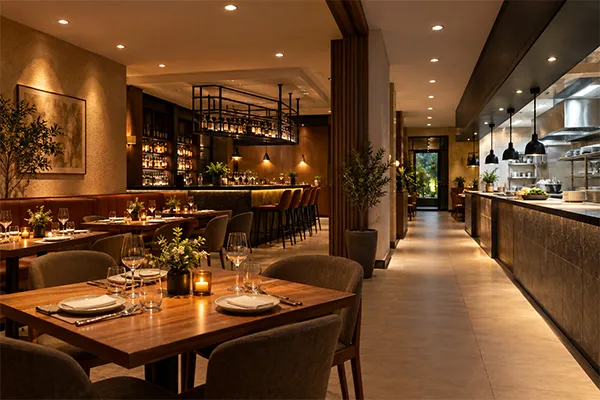
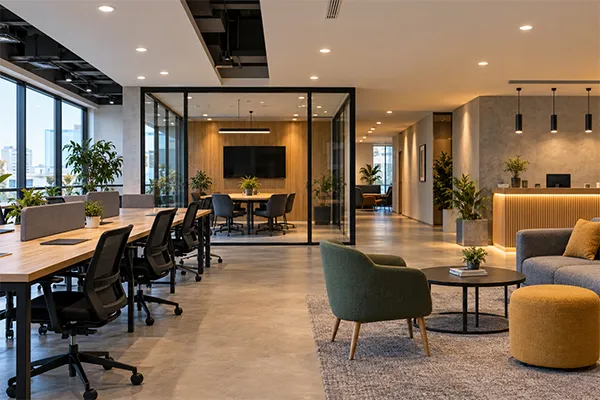
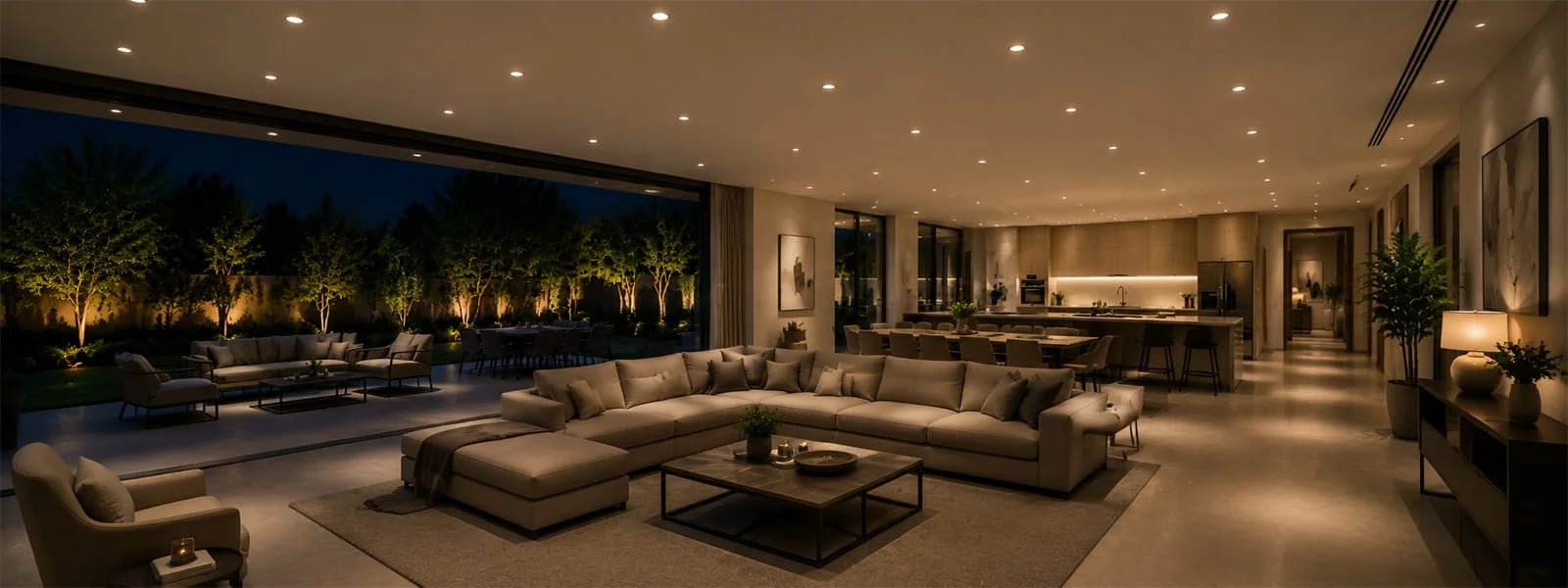
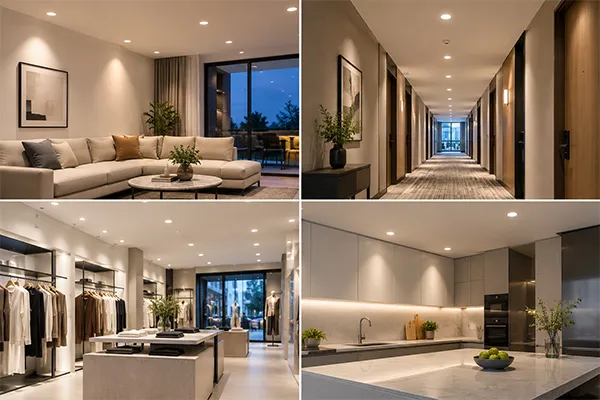
LED downlights should be selected according to the space, mounting height, visual task, and desired lighting effect.1 A buyer should identify whether the fixture provides general illumination, accent lighting, wall washing, circulation lighting, or task support. This application context guides the appropriate lumen package, beam distribution, glare control, color quality, and physical format.
Start With the Lighting Task, Not the Product Code
When I receive an inquiry asking for “a good downlight,” I usually ask what the customer needs the light to achieve. That question changes the conversation from product comparison to application planning.
For example, a low ceiling in a small apartment may need a different approach from a high-ceilinged showroom. A retail buyer may want focused light to support merchandise presentation. A contractor may need uniform circulation lighting in a corridor. A distributor may require a flexible configuration that suits several common local applications without creating too many stock-keeping units.
I do not treat one wattage or one lumen output as suitable for every situation. The useful starting details include:
- Room type: residential, retail, office, hotel, restaurant, corridor, showroom, or public area.
- Mounting height: floor-to-ceiling height and expected distance from the fitting to the working plane.
- Lighting purpose: ambient, task, accent, display, wall wash, or pathway lighting.
- Ceiling layout: spacing between fixtures, ceiling grid, obstacles, and access points.
- Interior materials: light or dark finishes, reflective surfaces, timber, stone, fabric, or merchandise.
- Desired visual mood: warm and relaxed, neutral and practical, or crisp and contemporary.
- Existing lighting: whether the project is new construction, refurbishment, or a replacement program.
I have often found that buyers already know the answer to most of these questions. They simply have not placed the information into the initial inquiry. Once they do, the quotation discussion becomes faster and more accurate.
Consider the Whole Lighting Effect
A downlight does not work alone. Spacing, ceiling color, wall reflectance, furniture, daylight, and nearby fixtures all influence the final appearance.2 Two fixtures with similar nominal wattage can create different visual results if they have different optics, driver behavior, trim designs, or light distributions.3
For project work, I recommend that the contractor or project team review a lighting layout with a qualified lighting professional when application-specific calculations, glare assessment, emergency-lighting coordination, or regulatory interpretation are required. As a manufacturer, I can help clarify configurable product options and provide relevant product information for review. I do not replace a project lighting designer, electrical engineer, or local approval authority.
Questions to Add to an Initial Inquiry
| Buyer question | Why it matters to the downlight selection |
|---|---|
| What is the room and lighting purpose? | It defines whether the fitting needs broad ambient light or a narrower accent effect. |
| What is the ceiling height? | It influences spacing, distribution, perceived brightness, and glare risk. |
| What is the ceiling material? | It affects installation method, heat conditions, cut-out tolerances, and appearance. |
| Is the project new or a replacement? | Replacement work may be constrained by existing cut-outs, wiring, and recess depth. |
| Is there a lighting layout? | A layout helps the buyer and supplier discuss quantities and configuration more clearly. |
The first requirement is not “I need 10W.” The first requirement is “I need this ceiling to support this activity for these users.” That is the foundation for selecting LED downlights responsibly.
How Do Color, CRI, Beam Angle, and Wattage Work Together in LED Downlights?
Many buyers compare color temperature, CRI, beam angle, wattage, and lumens as separate boxes to tick. This approach can create a mismatched product because each choice affects how people perceive the room, materials, and light distribution. A specification that works in one space may not suit another.
For LED downlights, color temperature, CRI, beam angle, wattage, and finish should be chosen as an interdependent system. The buyer should match these options to the room’s use, interior materials, mounting arrangement, visual atmosphere, and brand position. Product parameters should support the intended result rather than reflect personal preference alone.
Color Temperature Supports the Intended Atmosphere
Color temperature is often one of the first requests I receive. Buyers may ask for 3000K, 4000K, or another preferred option. However, the more useful question is: how should the space feel, and what materials must the lighting support?
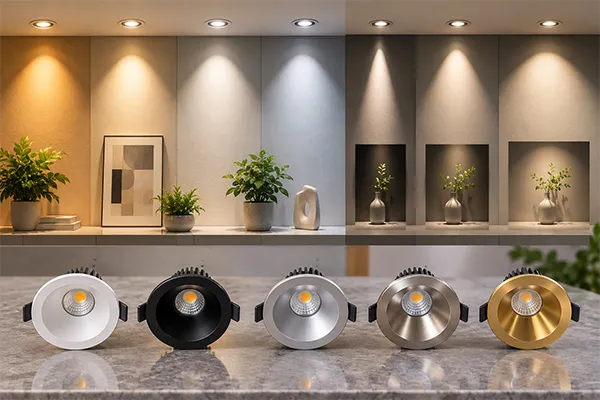
Warmer tones are often considered for hospitality, residential, and atmosphere-focused interiors.4 Neutral tones are often discussed for practical mixed-use spaces. Cooler-looking light may be requested in some commercial settings. These are general market patterns, not universal rules. A restaurant concept, retail brand, regional preference, wall finish, and daylight exposure can all change the decision.
Whenever possible, I encourage buyers to review samples in conditions that resemble the real project. A finish that looks appealing under one light source may look different once installed beside paint, tile, timber, stone, food, textiles, or merchandise.
CRI Is About Color Appearance, but It Is Not the Only Quality Measure
CRI, or Color Rendering Index, is commonly requested when a buyer wants objects and materials to appear more naturally under artificial light.5 A higher CRI request may be relevant for some retail, hospitality, residential, or display applications. Yet CRI should not be treated as a stand-alone guarantee of visual satisfaction.6
A buyer should also clarify:
- The materials or products being illuminated.
- The required color temperature.
- The intended application and viewing distance.
- Whether the project team has any particular color-quality criteria.
- Whether the buyer needs supporting documentation for the final configuration.
I recommend verifying the exact product documentation and test information that applies to the proposed configuration. Component changes, LED source selection, optical design, and order-specific requirements can affect the applicable product data.
Beam Angle and Wattage Should Follow Layout Conditions
Beam angle controls how concentrated or broad the light distribution appears.7 A narrow beam can help direct attention toward a feature or product display. A wider beam can contribute to broader ambient coverage. Neither option is automatically better.
Wattage and lumen output also need context. A high-output configuration may be useful in some mounting conditions, but it may be excessive in a low ceiling or close fixture spacing.8 Conversely, a low-output fitting may not support the intended effect in a taller or darker space.
| Parameter | Buyer should ask | Potential issue if selected in isolation |
|---|---|---|
| Color temperature | What mood, materials, and market expectations apply? | The room may feel inconsistent with the intended brand or interior finish. |
| CRI | What objects, materials, or merchandise need accurate appearance? | The buyer may pay for a specification that does not solve the actual visual need. |
| Beam angle | Is the goal broad coverage, accent lighting, or wall emphasis? | The layout may create dark gaps, bright spots, or unwanted glare. |
| Wattage/lumens | What are the mounting height, spacing, and target effect? | The installation may appear underlit or overlit. |
| Trim finish | Does the fitting need to blend in or create a visible design detail? | The ceiling appearance may not match the interior concept. |
Finish and Product Positioning Matter to Importers and Brands
For distributors, importers, and local lighting brands, the visible trim is not a minor detail. White, black, silver, gold-toned, or custom surface finishes can affect where a product sits in a catalog and which customer segment it serves.
At Upward Lighting, I discuss configurable options such as color temperature, wattage, beam angle, CRI, and surface finish with OEM/ODM customers. I recommend that buyers confirm which combinations are feasible for their final model, expected quantity, sample approval process, and delivery schedule. Not every combination has the same commercial conditions, component availability, or documentation requirements.
Why Must Installation Details Be Confirmed Before Ordering LED Downlights?
A downlight can have the right lighting specification and still fail the project if it does not fit the ceiling, work with the electrical arrangement, or arrive in a commercially practical batch. Installation details are often discovered late, when changing the product becomes costly and disruptive.
Before ordering LED downlights, buyers should confirm cut-out size, external diameter, recess depth, ceiling construction, driver arrangement, wiring needs, dimming or control compatibility, and installation access. They should also clarify quantities, samples, packaging, MOQ, batch consistency, and delivery timing so the selected model is technically and commercially usable.
Physical Dimensions Are Procurement Requirements
I have seen replacement inquiries where the customer initially focused on power and color temperature. Later, the customer shared the existing ceiling opening. That one detail changed the suitable product range immediately.
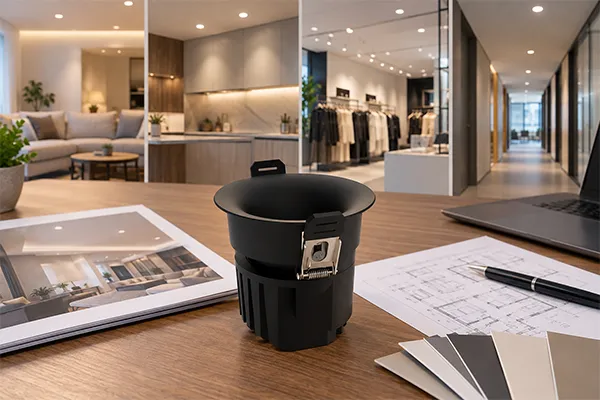
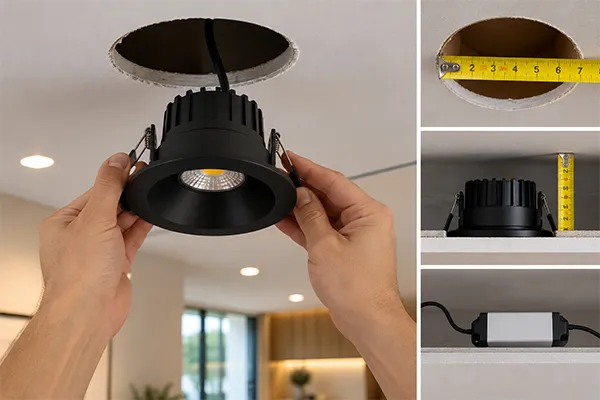
The cut-out size is essential for recessed LED downlights. So are the outer trim diameter and recess depth. A fitting may fit through the opening but still conflict with ceiling voids, insulation practices, ducts, structural elements, or other services. Spring clips, housing shape, driver location, and cable routing may also affect installation.
Buyers should request and verify dimensional drawings for the proposed configuration before committing to a large order. Site measurements remain important because actual building conditions can differ from drawings.
Driver and Control Requirements Need Clear Communication
The driver arrangement is another practical point. A buyer may need an integrated solution, a separate driver, a particular input arrangement, or compatibility with a control system. Dimming requests require especially careful confirmation. “Dimmable” is not enough information on its own.9
A better inquiry might state:
- The intended dimming or control method.
- The available electrical system and local project requirements.
- The desired driver arrangement.
- Whether compatibility testing is planned with the selected control equipment.
- Whether the project requires replacement drivers or service access after installation.
I recommend qualified electrical and project professionals evaluate compatibility in the final installation environment. A supplier can describe the proposed product configuration, but site wiring, controls, and local electrical requirements are application-specific.
Supply Planning Protects the Project and the Product Line
For a contractor, the concern may be phased delivery and matching appearance across project areas. For an importer, it may be MOQ, carton configuration, labeling, and repeat-order continuity. For a brand, it may be custom packaging and a stable specification that can remain in the catalog.
At Upward Lighting, we conduct a 100% aging test before shipment, typically lasting 4 to 8 hours, as part of our stated production process. Buyers should still confirm the agreed inspection approach, applicable product criteria, sample approval requirements, and final order conditions. An aging process does not remove the need for incoming inspection or project-level verification.
| Supply detail | Why buyers should clarify it early |
|---|---|
| Expected quantity | It affects pricing, production planning, customization feasibility, and MOQ discussions. |
| Sample requirement | It allows the buyer to review appearance, dimensions, and configuration before bulk approval. |
| Delivery window | It helps align production planning with site milestones or inventory replenishment. |
| Batch consistency | It matters when a project or catalog requires matching appearance and specification. |
| Packaging and labels | It affects retail presentation, warehouse handling, local channel requirements, and traceability. |
| Spare parts or replacement plan | It supports maintenance planning for longer-running projects and product programs. |
The commercially useful LED downlight is the one that fits the ceiling, aligns with the electrical plan, meets the approved sample, and can be supplied under agreed order conditions.
How Does the Target Market Change LED Downlight Requirements?
A product configuration that works for one country, customer channel, or past project may not meet the documentation, labeling, electrical, or commercial expectations of another destination. Buyers can lose time when they assume a previous purchase specification automatically transfers to a new market.
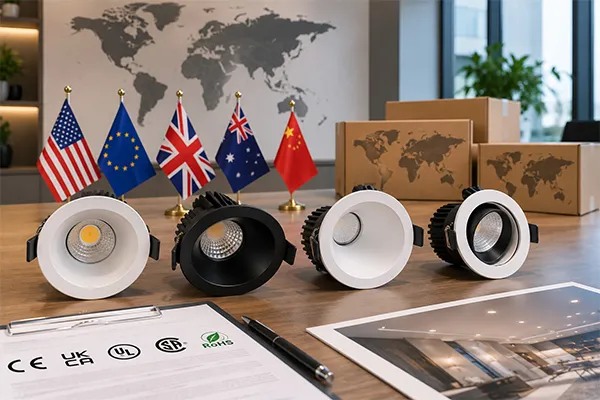
Target-market requirements can change the required LED downlight configuration, documentation, labeling, and compliance review. Buyers should identify the destination country and sales channel at the beginning of the sourcing process, then verify the applicable standards, certification documents, product markings, electrical requirements, and customer-specific conditions for the final product.10
Do Not Copy a Previous Market Specification Without Review
A distributor may have sold a certain model successfully in one market. A contractor may have used a similar product on a previous project. That history is helpful, but it should not replace a current review.
The new project may have different requirements for:
- Electrical input and driver configuration.
- Product markings and package labels.
- Safety or environmental documentation.
- Customer approval procedures.
- Local installation practices.
- Warranty expectations and service arrangements.
- Retail packaging or language requirements.
- Required test reports or declarations.
Upward Lighting supplies products that may hold certifications such as CE and RoHS. However, buyers should verify the current documents, product scope, destination-market relevance, and final configuration before relying on any certification claim. CE and RoHS are not universal substitutes for every country’s market-entry requirements, project specification, or customer approval process.11
Build Compliance Into the Request for Quotation
I suggest including the destination market in the first request for quotation. This small step can prevent a long chain of revisions later. For example, instead of asking only for “20W recessed downlights,” a buyer can state the country, channel, intended use, required documents, label requirements, and whether the product is for a tender, retail range, or private-label program.
A clear requirement brief may include:
| Requirement area | Information to provide |
|---|---|
| Destination | Country or countries where the products will be installed or sold |
| Customer channel | Contractor project, wholesale, retail, e-commerce, private label, or distribution |
| Required documents | Any documents requested by the customer, tender, local authority, or importer |
| Product labels | Required language, ratings, marks, brand name, model code, or barcode needs |
| Configuration | Wattage, CCT, CRI, beam angle, cut-out, finish, driver, and control request |
| Approval process | Sample testing, third-party review, customer sign-off, or project mock-up |
| Order conditions | Quantity, target shipment date, packaging, payment, and repeat-order expectations |
Treat Documentation as Part of Supplier Evaluation
A reliable supplier evaluation does not stop at a catalog image or a headline price. Buyers should ask whether the supplier can provide current drawings, product data, sample support, inspection information, packaging details, and applicable documents for review.
I encourage customers to keep approved samples, signed specifications, drawings, labels, and order confirmations linked to the final model code. This practice helps reduce confusion when a project is reordered months later or when a purchasing team changes.
For application-specific compliance decisions, buyers should consult qualified local professionals, test bodies, certification advisors, or legal compliance specialists as appropriate. My role is to support clear product communication and configurable supply, not to make universal regulatory determinations for every country or installation.
Frequently Asked Questions
What information should I send when requesting a LED downlight quote?
I recommend sending the application, destination country, quantity, target delivery date, ceiling cut-out, recess depth, desired color temperature, CRI, beam angle, wattage range, finish, driver or dimming request, and packaging needs. Photos, drawings, and existing product samples can also make the quotation more accurate.
How do I choose the right wattage for LED downlights?
I do not recommend choosing wattage alone. The right configuration depends on ceiling height, fixture spacing, room size, surface colors, lighting task, beam angle, and target visual effect. A qualified lighting professional can help with project-specific calculations or technical assessment when needed.
Why is cut-out size important for recessed LED downlights?
Cut-out size determines whether the fixture can be installed in the existing or planned ceiling opening. Buyers should also verify trim diameter, recess depth, spring clip arrangement, driver space, wiring access, and ceiling construction. A dimensional drawing and site measurement should be reviewed before bulk ordering.
Can I use the same LED downlight specification in every export market?
No. A specification that suits one market may not suit another market’s electrical, labeling, certification, documentation, or customer requirements. Buyers should identify the destination country early and verify applicable requirements for the final product configuration and intended sales channel.
Can OEM or ODM LED downlight options be customized?
Many LED downlight options can be discussed for OEM/ODM projects, including color temperature, wattage, beam angle, CRI, and surface finish. Feasibility depends on the final design, component availability, documentation needs, quantity, sample approval, MOQ, and delivery conditions. Buyers should confirm these details in writing before placing an order.
Conclusion
Selecting LED downlights starts with understanding the customer need behind the product request. I recommend defining the space, lighting task, ceiling conditions, visual requirements, target market, and procurement plan before comparing specifications or prices. Color temperature, CRI, beam angle, wattage, dimensions, drivers, documents, and packaging all work together. If you are sourcing configurable downlights for a project, distribution range, or private-label program, contact Upward Lighting with your application brief, target market, and expected quantity so we can discuss a practical OEM/ODM proposal.
"[PDF] Philadelphia International Airport Apron Lighting", https://www.energy.gov/sites/prod/files/2015/11/f27/2015_gateway_philadelphia-airport.pdf. Lighting-design guidance identifies the visual task, room geometry, mounting height, and intended distribution of light as relevant inputs to luminaire selection; the appropriate design remains dependent on the specific project conditions. Evidence role: general_support; source type: institution. Supports: Lighting-design guidance that relates luminaire selection and light distribution to visual tasks, room geometry, and mounting conditions.. Scope note: General design guidance does not prescribe a single downlight specification for every room. ↩
"[PDF] LED Lighting in a Performing Arts Building at the University of Florida", https://betterbuildingssolutioncenter.energy.gov/sites/default/files/attachments/2014_gateway_universityflorida.pdf. Interior-lighting references explain that surface reflectances, daylight, and luminaire layout alter the distribution and perceived appearance of light within a space; their combined effect must be assessed for the actual room. Evidence role: mechanism; source type: education. Supports: Lighting references explaining that room-surface reflectance, daylight contribution, and luminaire spacing affect illuminance distribution and visual appearance.. Scope note: The magnitude of each effect varies with room geometry, finishes, daylight conditions, and the selected luminaires. ↩
"[PDF] Understanding LM-79 Reports - Better Buildings Solution Center", https://betterbuildingssolutioncenter.energy.gov/sites/default/files/attachments/understanding_lm79_reports.pdf. Lighting-performance guidance distinguishes electrical input power from a luminaire's photometric output and distribution, which are affected by the LED system, driver, and optical design. Evidence role: mechanism; source type: government. Supports: Technical material showing that electrical power alone does not define a luminaire's lumen output, distribution, or visual performance.. Scope note: Trim design may influence glare and appearance, but its effect on the overall visual result is configuration-specific. ↩
"Influence of lighting colour temperature on indoor thermal perception", https://www.academia.edu/114727410/Influence_of_lighting_colour_temperature_on_indoor_thermal_perception_A_strategy_to_save_energy_from_the_HVAC_installations. Studies of lighting perception and design guidance generally associate lower correlated color temperatures with a warmer appearance and note their frequent use in residential and hospitality environments. Evidence role: general_support; source type: research. Supports: Research or lighting guidance linking lower correlated color temperatures with warmer visual impressions and describing their common use in residential or hospitality contexts.. Scope note: Color-temperature preference is culturally, contextually, and materially dependent and is not a universal design rule. ↩
"Purchasing Energy-Efficient Light Bulbs", https://www.energy.gov/cmei/femp/purchasing-energy-efficient-light-bulbs. The general color-rendering index (CRI) is a standardized metric comparing the color appearance of test samples under a source with their appearance under a reference illuminant of similar correlated color temperature. Evidence role: definition; source type: institution. Supports: A standards-based definition of the general color-rendering index and its purpose in evaluating color appearance under a light source.. Scope note: CRI does not fully characterize all aspects of color quality or predict preference for every illuminated object. ↩
"Text-Alternative Version: Understanding and Applying TM-30-15", https://www.energy.gov/cmei/ssl/text-alternative-version-understanding-and-applying-tm-30-15. Color-science guidance recognizes that CRI is useful for comparing general color fidelity but does not by itself describe every aspect of color rendition, saturation, preference, or visual satisfaction. Evidence role: expert_consensus; source type: research. Supports: Color-science literature explaining limitations of CRI and the use of complementary measures for evaluating color rendition.. Scope note: Alternative metrics also require interpretation in relation to the application, color temperature, and illuminated materials. ↩
"[PDF] CALiPER Application Summary Report 20: LED PAR38 Lamps", https://www1.eere.energy.gov/buildings/publications/pdfs/ssl/caliper_20_summary.pdf. Photometric guidance defines beam angle as the angular width of a beam according to a specified intensity criterion, making it a useful indicator of whether a luminaire distributes light more narrowly or broadly. Evidence role: definition; source type: institution. Supports: A photometric definition of beam angle and its relationship to the angular spread of luminous intensity.. Scope note: Beam angle alone does not describe the complete intensity distribution, spill light, glare, or on-site illuminance pattern. ↩
"[PDF] Technical and Aesthetic Performance for Business District LED ...", https://www.energy.gov/sites/prod/files/2014/09/f18/rci_led_perf_pgh.pdf. Lighting-design references show that luminaire brightness, mounting height, spacing, and observer geometry affect visual comfort and glare, so greater output is not automatically appropriate for low or densely spaced installations. Evidence role: mechanism; source type: education. Supports: Lighting-design material explaining that mounting height, spacing, luminance, and viewing geometry influence brightness and glare.. Scope note: Whether a particular installation is excessive requires project-specific photometric and glare assessment. ↩
"[PDF] LED Dimming: What you need to know - eere.energy.gov", https://www1.eere.energy.gov/buildings/publications/pdfs/ssl/dimming_webcast_12-10-2012.pdf. LED-control guidance notes that dimming performance depends on compatibility among the light source or driver, the dimmer or control system, and the electrical installation; a general dimmable designation alone does not establish compatibility. Evidence role: mechanism; source type: government. Supports: Technical guidance that LED dimming performance depends on the compatibility of the driver, dimmer or control protocol, and installation conditions.. Scope note: Compatibility testing may still be necessary for the specific driver, control device, load, and wiring arrangement. ↩
"Product Adaption | BETA - International Trade Administration", https://beta.trade.gov/article?id=Preparing-your-Product-for-Export-Product-Adaption. Market-access and conformity-assessment guidance states that product requirements, markings, documentation, and assessment procedures may vary by destination market and product category, requiring verification for the product placed on that market. Evidence role: general_support; source type: institution. Supports: International trade or conformity-assessment guidance showing that applicable product requirements and evidence of conformity vary by market and product category.. Scope note: Such guidance provides a framework and does not replace jurisdiction-specific legal, certification, or technical advice. ↩
"Romania - Labeling/Marking Requirements", https://www.trade.gov/country-commercial-guides/romania-labelingmarking-requirements. European Commission guidance explains that CE marking indicates conformity with applicable EU requirements for products within its scope, while RoHS is an EU restriction on certain hazardous substances; neither designation independently establishes conformity with all non-EU or customer-specific requirements. Evidence role: historical_context; source type: government. Supports: Official information on the jurisdictional scope of CE marking and the EU-specific nature of RoHS restrictions.. Scope note: Additional obligations depend on the destination jurisdiction, product category, import arrangement, and applicable local rules. ↩