Outdoor recessed lights fail fast when I choose the wrong waterproof level. Water enters the trim, rust starts, and my customer calls me back.
The best waterproof recessed lights for outdoor use are IP65 or higher LED recessed downlights with sealed fronts, anti-rust bodies, safe drivers, proper heat control, and certificates such as CE and RoHS. I choose IP65 for covered outdoor ceilings and IP67 or IP68 for harsher wet areas.
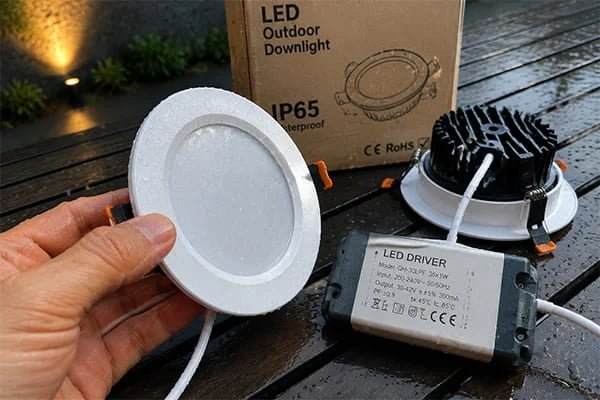
I have worked with many outdoor lighting projects, and I have learned one simple thing. A light may look good in a showroom, but outdoor use is a different test. Rain, humidity, dust, insects, heat, salt air, and voltage changes all push the product every day. I do not judge a waterproof recessed light only by its shape or price. I look at the full structure. I check the IP rating, sealing method, body material, driver quality, beam angle, color temperature, and test record. When I help a contractor, importer, or local lighting brand choose outdoor recessed lights, I always ask where the light will be installed first. A covered balcony, a hotel entrance, a carport, and a seaside villa do not need the same product. If I choose the correct specification at the beginning, the project will have fewer claims, fewer replacements, and a better customer experience.
What IP rating should I choose for outdoor recessed lights?
Waterproof labels can confuse buyers. I see many products called “outdoor lights,” but some of them cannot handle real rain or long humidity.
The best IP rating for outdoor recessed lights is IP65 for covered outdoor ceilings, IP67 for areas with heavy rain exposure, and IP68 for places with long water contact. I avoid IP44 or lower for serious outdoor use because those lights are not sealed enough.
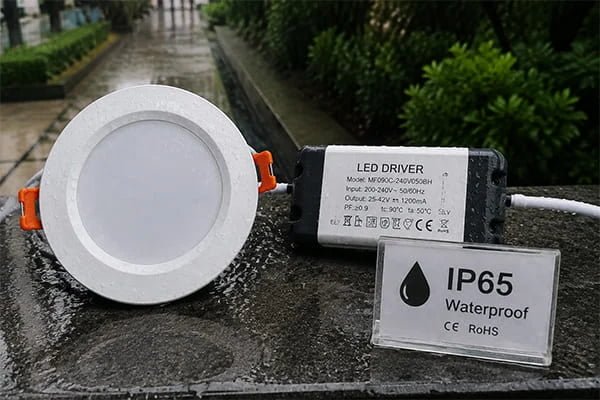
I treat the IP rating as the first filter. It does not tell me everything, but it protects me from many bad choices. IP means ingress protection. The first number shows dust protection. The second number shows water protection.1 For outdoor recessed lights, I usually start with IP65. This level means the fitting is dust tight and protected against water jets.2 I use it for soffits, balconies, covered corridors, outdoor ceilings, and building entrances. If the light is close to open rain, I move to IP67. If the light is in a place that may have water pooling or long wet contact, I look at IP68.3 I also check if the rating is for the full product or only the front face. Some lights have an IP65 front but a weaker back side. That detail matters during installation.
| IP Rating | My Use Case | What I Check |
|---|---|---|
| IP44 | Indoor damp area only | I do not use it for real outdoor projects |
| IP54 | Semi-protected area | I check if rain can reach the light |
| IP65 | Covered outdoor ceiling | I check gasket, trim, and driver protection |
| IP67 | Heavy rain area | I check cable entry and full body sealing |
| IP68 | Long water contact | I check test report and real application limit |
I also ask for the test method when the project is important. A good supplier should explain the sealing design. I look for silicone rings, tight lens fit, strong clips, and safe cable entry. If the light body has gaps or thin plastic parts, I do not trust the IP number only. In my own factory work, I also pay attention to aging tests because waterproof performance and heat performance must work together.
Which material is best for waterproof recessed lights outdoors?
A cheap trim can look fine on day one. I have seen outdoor lights become yellow, rusty, or loose after one rainy season.
The best materials for outdoor recessed lights are die-cast aluminum with powder coating, stainless steel trims for harsh areas, and high-quality PC or glass lenses. I choose anti-rust surface treatment when the project is near the sea or in high humidity.
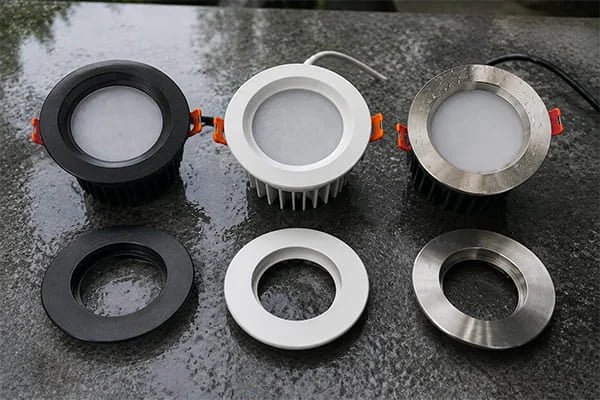
I do not choose material only by weight. I choose it by the place where the light will work. Die-cast aluminum is a common choice for LED recessed downlights because it has good heat control and stable strength.4 It can be painted in white, black, silver, or special colors. A good powder coating helps the surface resist moisture and scratches. If the project is near the sea, I become more careful. Salt air can damage weak coatings fast.5 In that case, I ask for better surface treatment, stainless steel options, or stronger anti-corrosion tests. I also check the spring clips because clips can rust before the main body fails. A small rusty clip can still create a big service problem.
| Material Part | Good Option | My Main Concern |
|---|---|---|
| Housing | Die-cast aluminum | Heat control and coating quality |
| Trim | Aluminum or stainless steel | Rust resistance and color stability |
| Lens | Tempered glass or good PC | Yellowing, cracking, and light output |
| Gasket | Silicone | Long-term sealing under heat |
| Clips | Stainless steel or treated steel | Rust and holding force |
I also look at the lens and sealing ring. A lens that turns yellow will make the light look old and reduce output.6 A weak gasket may become hard after heat cycles. Then water can enter slowly. Outdoor recessed lights often run for many hours each night, so heat is always part of the material question. If the heat sink is too small, the LED chip and driver will age faster.7 This is why I do not chase the lowest price only. I prefer a balanced design. The housing must protect the LED, remove heat, and keep a clean look after long outdoor use.
Which light performance matters most for outdoor recessed lights?
Many buyers only ask for wattage. I think wattage is not enough because outdoor lighting must give comfort, safety, and the right visual effect.
The key performance points are lumen output, beam angle, color temperature, CRI, glare control, and dimming choice. I match these points to the outdoor space instead of using one product for every project.
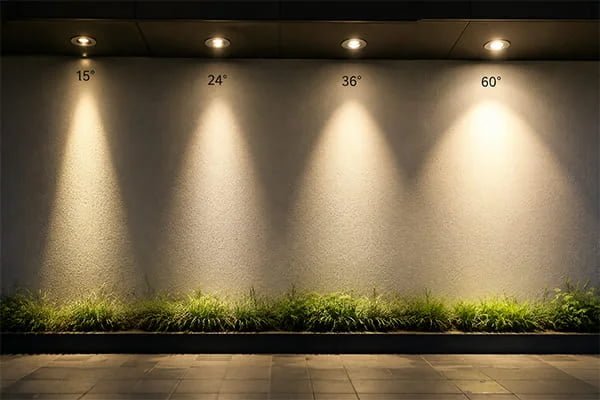
I always ask what the space needs before I suggest wattage. A hotel entrance needs a different feeling from a carport. A villa terrace needs soft comfort. A commercial corridor needs clear guidance and safety. Wattage only tells me power use. Lumens tell me light output. Beam angle tells me how the light spreads.8 A narrow beam can highlight a wall or column. A wide beam can light a walking area more evenly. Color temperature also changes the feeling.9 Warm white, such as 2700K or 3000K, creates a calm and high-end look. Neutral white, such as 4000K, looks clean and practical. Cool white, such as 5000K or 6500K, may work for some utility areas, but I use it carefully because it can feel harsh.
| Project Area | My Usual CCT Choice | My Usual Beam Choice | My Reason |
|---|---|---|---|
| Villa terrace | 2700K-3000K | 36° or 60° | I want a warm and relaxed mood |
| Hotel entrance | 3000K-4000K | 24° to 60° | I want a clear but premium look |
| Outdoor corridor | 4000K | 60° or wider | I want safe and even lighting |
| Carport | 4000K-5000K | Wide beam | I want visibility and function |
| Retail outdoor ceiling | 3000K-4000K | Mixed beams | I want a better display effect |
I also care about CRI. I usually suggest CRI 80 for standard outdoor projects. I suggest CRI 90 when the project needs better color quality10, such as luxury hotels, branded stores, and high-end homes. Glare control also matters. Outdoor recessed lights are often placed above eye level, but strong glare can still make people uncomfortable. Deep reflectors, frosted lenses, and proper beam design can help. If the project needs dimming, I check the dimming system early. Triac, 0-10V, DALI, and smart control need different drivers. I do not leave this question until the final order because wrong dimming creates flicker and complaints.11
How can I judge driver quality and safety for outdoor recessed lights?
A waterproof body is not enough. I have seen lights fail because the driver was weak, even when the trim and housing looked strong.
I judge driver quality by safety certification, stable output, surge protection, flicker control, temperature rating, and warranty record. For outdoor use, I also check if the driver position is protected from water, heat, and poor ventilation.
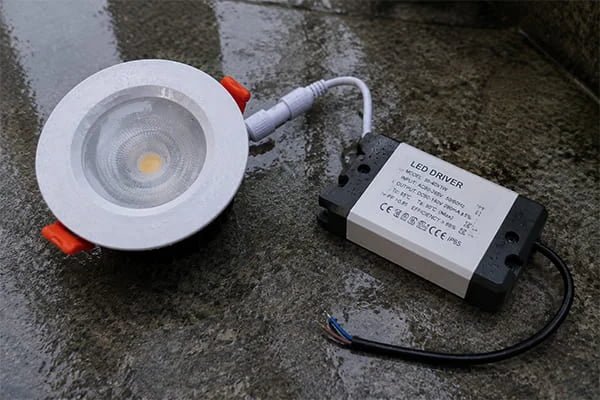
I see the driver as the heart of the LED recessed light. If the driver is unstable, the whole product becomes unstable. Outdoor projects can have voltage changes, long working hours, and high ambient temperature. A low-cost driver may save money at the start, but it can create bigger costs later. I check input voltage first. Some markets need 220-240V. Some need 110-120V. Some projects ask for wide voltage. I also check the driver brand or driver specification. I look at power factor, efficiency, isolation type, temperature range, and surge protection. In some outdoor projects, I suggest stronger surge protection because lightning and grid changes can damage electronics.12
| Driver Point | What I Prefer | Why I Care |
|---|---|---|
| Input voltage | Match local market | I want stable operation |
| Safety type | Isolated driver when needed | I want better electrical safety |
| Flicker | Low flicker or flicker-free | I want visual comfort |
| Surge protection | Higher level for outdoor use | I want fewer failures |
| Temperature rating | Suitable for ceiling conditions | I want longer life |
| Certification | CE, RoHS, and other needed marks | I want easier market access |
I also check how the driver is installed. Some recessed lights have an integrated driver. Some have an external driver. An external driver can be easier to replace, but it needs a safe and dry place. An integrated driver can make installation simpler, but heat design becomes more important. I also ask how the product is tested before shipping. In our own production work, we do 100% aging tests before shipment. We usually run aging for 4 to 8 hours because I want early failures to appear in the factory, not at the project site. I also check lumen maintenance and surface temperature during testing. This habit helps me reduce risk for contractors and importers.
What installation details should I confirm before ordering?
A good light can still fail if the ceiling cutout is wrong or the cable entry is not sealed. I have seen simple installation mistakes cause big disputes.
Before ordering, I confirm cutout size, ceiling depth, cable type, driver location, insulation contact rules, mounting clips, drainage risk, and maintenance access. I also confirm if the IP rating stays valid after installation.
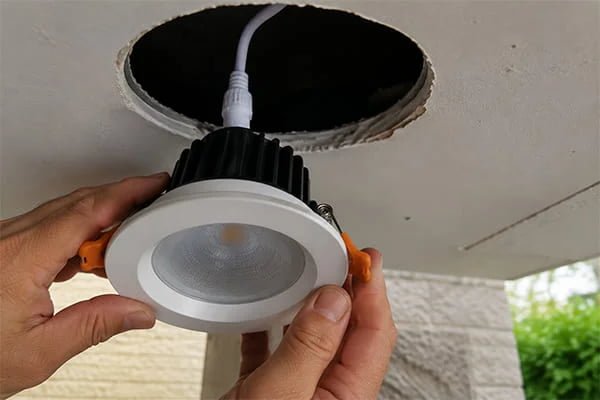
I always ask for the installation drawing before I confirm a recessed light order. The cutout size must match the ceiling plan. If the cutout is too large, the trim may not cover the hole. If it is too small, the installer may damage the ceiling or the light. Ceiling depth is also important. Some outdoor soffits have limited space. A high-power downlight with a large heat sink may not fit. I also ask about the ceiling material. Gypsum, aluminum panel, wood soffit, and concrete all need different installation care. The mounting clips must hold the light firmly without bending or rusting. If the project is in a public area, I also think about future maintenance. A light that is hard to remove can slow down service work.
| Installation Item | My Question | My Reason |
|---|---|---|
| Cutout size | What is the exact hole size? | I want clean fitting |
| Ceiling depth | Is there enough space above? | I want heat and driver safety |
| Cable entry | Is the cable sealed correctly? | I want the IP rating to stay valid |
| Driver location | Where will the driver sit? | I want easy service and safe operation |
| Ceiling type | What material is used? | I want stable mounting |
| Maintenance access | Can workers replace it later? | I want lower service cost |
I also remind customers that waterproof does not mean careless installation. If the cable joint is left open, water can enter from the wiring side. If the driver is placed where water collects, the light can still fail. I ask installers to use proper connectors and follow local electrical rules. For outdoor ceilings, I also consider airflow. LED lights need heat dissipation. If insulation covers the heat sink, the temperature may rise and reduce lifetime. I prefer to discuss these details before mass production. A small check at the sample stage can prevent a large mistake in a container order.
How should I choose a supplier for waterproof recessed lights?
A product sheet can look professional. I still need to know if the supplier can control quality, delivery, and custom details.
I choose a supplier that can provide OEM or ODM support, fast response, clear test records, CE and RoHS compliance, stable aging tests, competitive pricing, and flexible order quantities. I also value honest advice over cheap promises.
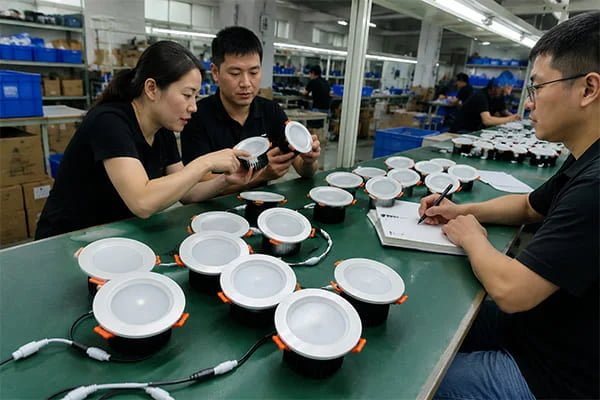
I work with buyers who serve contractors, wholesalers, importers, distributors, and local lighting brands. Their needs are not the same, but their risks are similar. They need stable products, fast answers, fair prices, and fewer after-sales problems. I do not think a supplier should only sell what is in stock. A good supplier should help match the product to the project. For waterproof recessed lights, this may include custom wattage, color temperature, beam angle, CRI, trim color, driver type, and packaging. If the supplier understands OEM and ODM work, the buyer can build a more suitable product line. This is useful for brands and importers who want to stand out in their local markets.
| Supplier Ability | What I Look For | Why It Helps My Buyer |
|---|---|---|
| Custom options | CCT, wattage, beam, CRI, trim color | I can match different projects |
| Fast quotation | Clear price and lead time | I can reply to my customer faster |
| Quality control | 100% aging test | I can reduce field failure |
| Certificates | CE, RoHS, and market documents | I can support import and sales |
| Supply chain | Stable parts and short lead time | I can handle repeat orders |
| Small MOQ support | Flexible trial orders | I can test the market first |
I also pay attention to communication. A supplier should answer technical questions clearly. If I ask about IP rating, driver brand, material, or aging test, I expect direct answers. I do not like vague words such as “good quality” without proof. I prefer photos, test records, drawings, and real project references. Since our factory is in Zhongshan, China, and we have focused on LED downlights for many years, I know how much the supply chain matters. A complete local supply chain can make quotation faster and pricing more competitive. It can also support custom orders in a practical way. For outdoor recessed lights, I would rather spend time on the specification before production than spend time solving complaints after delivery.
Conclusion
I choose waterproof recessed lights by IP rating, material, driver, light performance, installation needs, and supplier control. This choice protects the project and the buyer.
"IP code - Wikipedia", https://en.wikipedia.org/wiki/IP_code. The IEC 60529 IP Code classifies enclosure protection against ingress, with the first numeral describing protection against solid foreign objects and dust and the second numeral describing protection against water ingress. Evidence role: definition; source type: institution. Supports: A neutral standards or technical reference should define the IP code and explain the meaning of the first and second numerals.. ↩
"IP Ratings Explained | Ingress Protection Rating | IP Codes", https://clarionuk.com/resources/ip-ratings/. Under the IEC IP Code, an IP65 enclosure is rated dust-tight and protected against water jets, which supports its use as a baseline ingress rating for exposed but non-submerged luminaires. Evidence role: definition; source type: institution. Supports: The source should confirm that IP65 combines complete dust protection with protection against water jets.. Scope note: The rating describes standardized test conditions and does not by itself prove durability in every outdoor installation. ↩
"IP67 Testing: Dust Test and Temporary Immersion IEC 60529", https://www.ingressprotectiontest.com/?l=test-ip67-protection-against-dust-ip6x-immersion-ipx7-cei-en-iec-60529. The IEC IP Code defines IP67 as protection against temporary immersion and IP68 as protection under manufacturer-specified continuous-immersion conditions, giving technical context for selecting higher ratings where water contact is more severe. Evidence role: definition; source type: institution. Supports: The source should explain that IP67 relates to temporary immersion and IP68 to conditions specified for continuous immersion or more severe water exposure.. Scope note: IP68 conditions are manufacturer-specified, so the citation supports the rating category but not the suitability of a particular product without its test report. ↩
"[PDF] Thermal Management of White LEDs - eere.energy.gov", https://www1.eere.energy.gov/buildings/publications/pdfs/ssl/thermal_led_feb07_2.pdf. Studies of LED luminaire thermal management commonly identify aluminum housings and heat sinks as effective components for conducting heat away from LED packages because of aluminum’s favorable thermal conductivity and manufacturability. Evidence role: mechanism; source type: paper. Supports: The source should support that aluminum is widely used in LED luminaire housings or heat sinks because of its thermal conductivity and structural characteristics.. Scope note: This supports the material rationale but does not establish that every die-cast aluminum recessed light has adequate thermal design. ↩
"Marine Atmospheric Corrosion of Carbon Steel: A Review - PMC - NIH", https://pmc.ncbi.nlm.nih.gov/articles/PMC5506973/. Research on atmospheric corrosion identifies chloride deposition in marine environments as a major factor accelerating metal corrosion and degrading insufficient protective coatings. Evidence role: mechanism; source type: research. Supports: The source should explain that chloride-containing marine atmospheres accelerate corrosion of metals and can compromise inadequate protective coatings.. Scope note: The evidence is general to metals and coatings in marine atmospheres and does not test the specific recessed-light materials described in the article. ↩
"Effect of Yellow-Tinted Lenses on Visual Attributes Related to Sports ...", https://pmc.ncbi.nlm.nih.gov/articles/PMC3661891/. Research on polymer weathering reports that yellowing and other optical degradation reduce transmittance, which can lower the delivered light output of luminaires using plastic lenses. Evidence role: mechanism; source type: paper. Supports: The source should show that weathering or aging can yellow polymer optical materials and reduce light transmission.. Scope note: The evidence is material-specific and may vary by polymer grade, UV stabilizer, and outdoor exposure conditions. ↩
"[PDF] LED LUMINAIRE LIFETIME: Recommendations for Testing and ...", https://www1.eere.energy.gov/buildings/publications/pdfs/ssl/led_luminaire-lifetime-guide.pdf. LED reliability literature shows that higher junction and driver temperatures accelerate degradation mechanisms, reducing lumen maintenance and shortening component lifetime when thermal management is inadequate. Evidence role: mechanism; source type: research. Supports: The source should explain that elevated junction or ambient temperatures reduce LED lumen maintenance and can shorten electronic driver life.. Scope note: The relationship is well established, but the exact lifetime reduction depends on the LED package, driver design, operating current, and ambient conditions. ↩
"Lumens and the Lighting Facts Label - Department of Energy", https://www.energy.gov/energysaver/lumens-and-lighting-facts-label. Photometric references define the lumen as the SI unit of luminous flux and use beam angle to describe the angular spread of light from a lamp or luminaire. Evidence role: definition; source type: institution. Supports: The source should define lumens as luminous flux and beam angle as a measure of light distribution.. ↩
"Effect of warm/cool white lights on visual perception and mood in ...", https://pmc.ncbi.nlm.nih.gov/articles/PMC8481791/. Lighting-perception studies report that correlated color temperature influences occupants’ impressions of warmth, comfort, and spatial atmosphere, providing context for selecting warmer or cooler outdoor lighting. Evidence role: general_support; source type: paper. Supports: The source should support that correlated color temperature affects perceived warmth, comfort, or atmosphere in illuminated spaces.. Scope note: Perceptual responses vary with illuminance, culture, adaptation, surface colors, and application, so the evidence supports the general relationship rather than a fixed design rule. ↩
"Color rendering index - Wikipedia", https://en.wikipedia.org/wiki/Color_rendering_index. Lighting guidance defines the Color Rendering Index as a scale for comparing how accurately a light source renders colors, with higher CRI values generally indicating better color rendering under that metric. Evidence role: definition; source type: institution. Supports: The source should define CRI and explain that higher CRI values indicate more accurate color rendering under the metric.. Scope note: CRI is an imperfect color-quality metric and does not alone determine visual quality, especially for all LED spectra or outdoor applications. ↩
"[PDF] Flicker: Understanding the New IEEE Recommended Practice", https://www.energy.gov/sites/default/files/2022-11/ssl-miller-lehman_flicker_lightfair2015.pdf. Technical studies of LED lighting note that mismatches between LED drivers and dimming controls can produce temporal light modulation, including visible flicker associated with visual discomfort and dissatisfaction. Evidence role: mechanism; source type: research. Supports: The source should explain that LED flicker can result from driver-control incompatibility and that flicker can affect visual comfort.. Scope note: The presence and severity of flicker depend on the driver design, dimmer type, load level, and installation conditions. ↩
"[PDF] NIST recommended practice guide : surges happen! how to protect ...", https://nvlpubs.nist.gov/nistpubs/Legacy/SP/nistspecialpublication960-6.pdf. Electrical power-quality guidance identifies lightning events and switching transients as sources of overvoltage surges that can damage electronic equipment, supporting the use of surge protection in exposed lighting installations. Evidence role: mechanism; source type: institution. Supports: The source should support that lightning and electrical transients can create overvoltage surges capable of damaging electronic equipment, including lighting electronics.. Scope note: The citation supports the general electrical risk; actual damage risk depends on local lightning activity, wiring layout, grounding, and the luminaire’s protection design. ↩