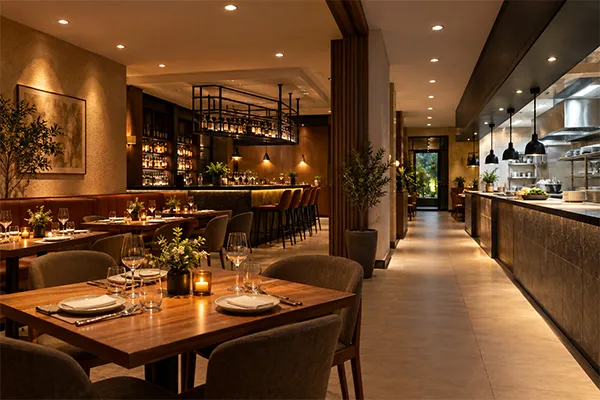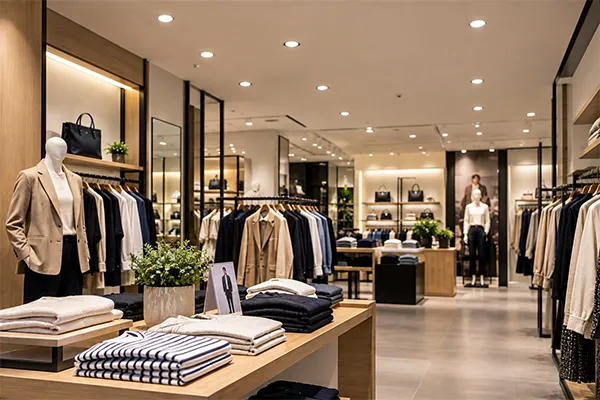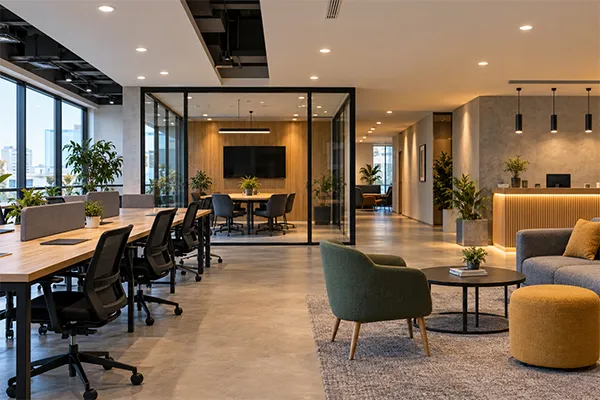
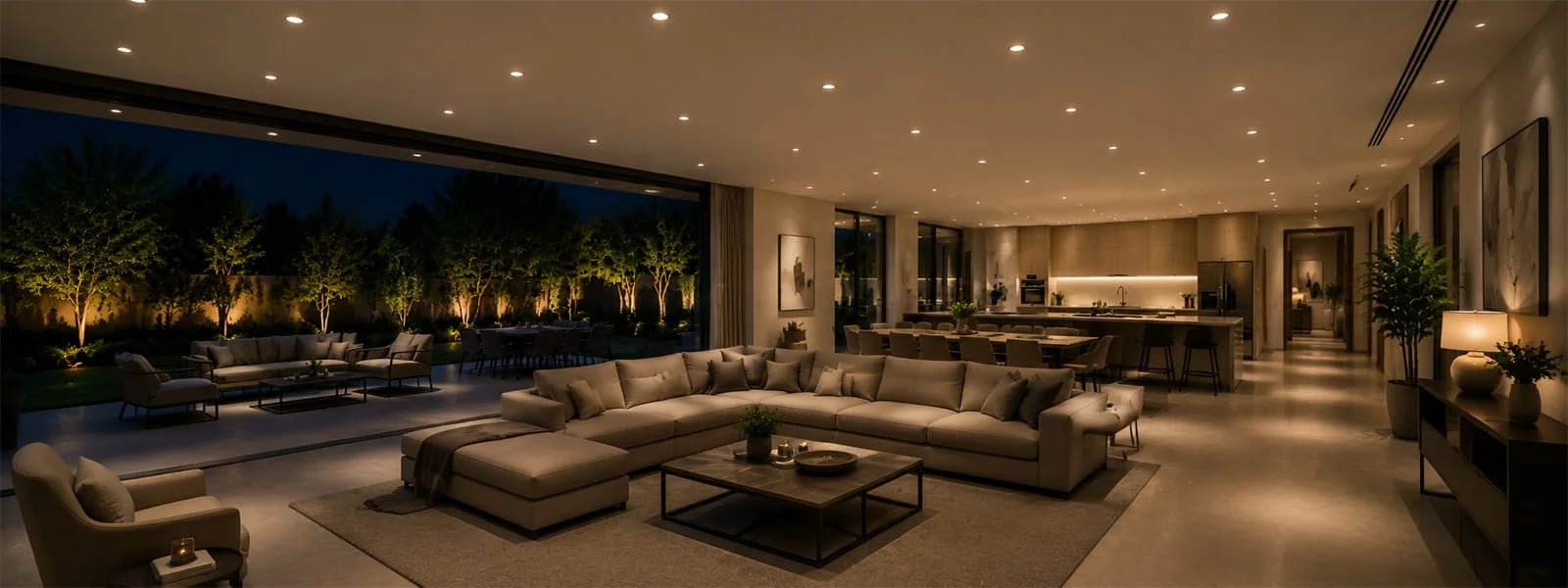
Commercial LED downlights remain relevant because commercial spaces constantly need reliable, adaptable base lighting. However, buyers can lose margin and trust when they choose only by price, wattage, or headline lumens. We see a better path: match the downlight range to local applications, installation needs, compliance expectations, and supply-chain realities.
Commercial LED downlights continue growing worldwide because offices, retail stores, hospitality spaces, public areas, and renovation projects need efficient, consistent general lighting.1 Yet growth is not uniform across every market or channel. Buyers achieve better results when they select application-fit specifications, verify compliance requirements, and work with suppliers that can maintain consistent quality and replacement continuity.
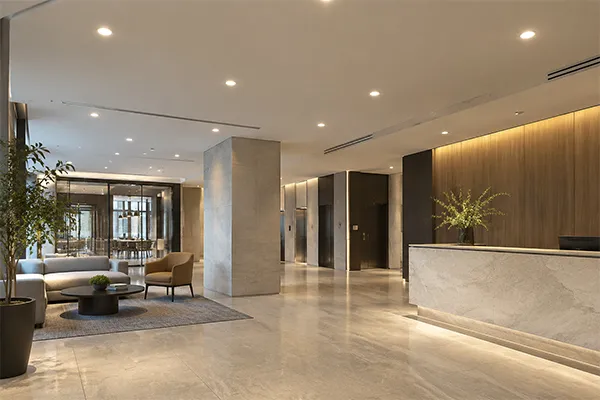
The opportunity is not simply to add more low-cost SKUs to a catalog. The stronger opportunity is to build a commercial lighting range that installers can fit easily, end users can accept confidently, and distributors can replenish without unexpected specification changes.
Why Do Commercial LED Downlights Remain Important for Commercial Spaces?
Commercial LED downlights solve a common problem in commercial interiors: spaces need broad, clean, repeatable lighting without making the ceiling look crowded.2 A poor fixture choice can create glare, uneven illumination, installation delays, or inconsistent color across a site.3 We believe a well-planned downlight range addresses these issues.
Commercial LED downlights remain important because they provide flexible ambient lighting for new fit-outs and renovation work. Their recessed or surface-integrated appearance suits many commercial environments, while selectable wattage, beam angle, color temperature, and trim options allow buyers to adapt products to different ceiling heights, room layouts, and local preferences.4
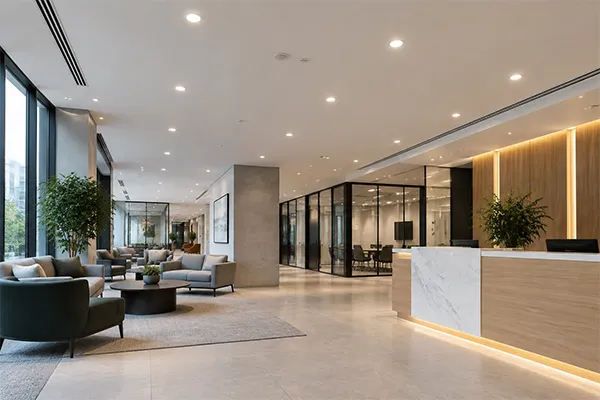
Commercial lighting demand is durable, but not identical everywhere
We avoid treating worldwide demand as one uniform market. Different countries, customer groups, and project types move at different speeds. A distributor serving small retail fit-outs may need fast-moving standard models. A local lighting brand may instead need differentiated finishes, private labeling, and a controlled SKU strategy. A contractor may care most about cutout compatibility, delivery timing, and ease of replacement.
At Upward Lighting, we often receive overseas inquiries that begin with a simple request such as “a 12W downlight with high lumens.” During the quotation discussion, the real requirements usually become more specific. The buyer may need:
- A cutout that matches existing ceiling openings
- A warm white option for hospitality projects
- A neutral white option for offices or general retail
- A wider beam angle for lower ceilings
- A higher CRI5 requirement for merchandise presentation
- A particular white, black, silver, or custom trim finish
- A compact carton arrangement for channel distribution
- Consistent availability for future replenishment orders
These details explain why the commercial downlight category remains useful. It is not a single product. It is a platform that can be configured for many practical uses.
Where downlights fit best
Commercial LED downlights are commonly evaluated for:
| Commercial environment | Typical lighting priority | Downlight consideration |
|---|---|---|
| Offices | Comfortable general illumination | Glare control, color consistency, suitable beam spread |
| Retail stores | Product visibility and visual appeal | CRI, beam angle, color temperature, trim appearance |
| Hotels and restaurants | Atmosphere and visual comfort | Warm color temperature, finish quality, dimming compatibility |
| Corridors and lobbies | Reliable everyday lighting | Easy installation, replacement continuity, driver reliability |
| Clinics and service spaces | Clear, balanced illumination | Light quality, clean appearance, controlled glare |
| Building-material channels | Broad resale suitability | Popular cutouts, standard wattages, stable packaging and supply |
A downlight is not automatically the right answer for every ceiling or task. High-bay areas, precision task zones, exterior spaces, and very high ceilings may require other lighting formats. We encourage buyers to review the lighting plan and installation environment with qualified professionals for application-specific decisions.
Are All Commercial LED Downlights Interchangeable?
Two downlights can show the same wattage, lumen figure, or certification mark on a specification sheet and still behave very differently during installation and project acceptance. That difference creates risk for buyers. It can lead to rework, complaints, delayed handover, and costly replacement orders after the original project has closed.
Commercial LED downlights are not interchangeable because their actual suitability depends on installation dimensions, optical design, thermal management, driver construction, finish quality, color consistency, and batch control.6 Buyers should compare complete specifications and samples rather than treating wattage, lumen output, or a single certificate as proof of equivalent quality.
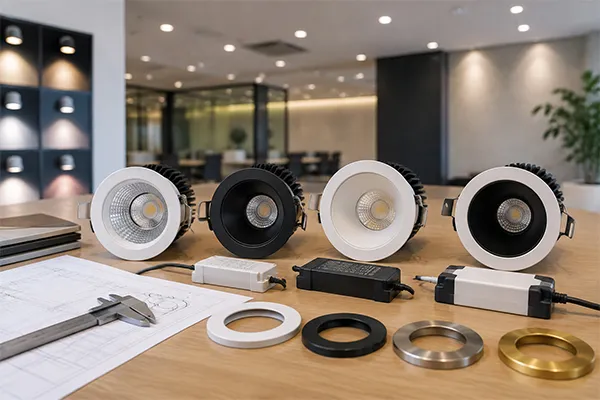
Headline specifications tell only part of the story
Wattage and lumen output are useful starting points, but they are not a full procurement decision. A fixture with a strong lumen figure may still be unsuitable if it produces excessive glare, does not fit the ceiling cutout, or cannot manage heat adequately in the intended installation condition.7
We recommend reviewing the specification as a complete system.
| Evaluation factor | Why it matters | Buyer question |
|---|---|---|
| Cutout size | Prevents ceiling rework and installation delays | Does the fixture match existing or planned openings? |
| Outer diameter and height | Affects ceiling clearance and visual fit | Is there enough ceiling void space for the fixture and driver? |
| Wattage | Influences energy use and light output potential | Is the wattage suitable for the lighting layout? |
| Lumen output | Supports illumination calculations | Is the output tested and appropriate for the application? |
| Beam angle | Affects light distribution and uniformity | Will the beam create even coverage at the mounting height? |
| Color temperature | Shapes the visual environment | Does the project need 3000K, 4000K, 6500K, or another option? |
| CRI | Influences color appearance | Is the specified CRI appropriate for retail, hospitality, or general use? |
| Driver design | Affects electrical and operational performance | What driver type, input range, and dimming options apply? |
| [Thermal design | Supports long-term operating stability](https://tsapps.nist.gov/publication/get_pdf.cfm?pub_id=912240)%%%FOOTNOTE_REF_8%%% | How is heat managed within the fixture body? |
| Trim and finish | Affects appearance and brand positioning | Is the white, black, silver, or custom finish consistent? |
Installation compatibility often becomes the real issue
In our experience, installation questions are among the most important questions in commercial lighting procurement. A buyer may have a ceiling cutout of 90 mm, while a proposed fixture requires 95 mm. That 5 mm difference can become a major issue when hundreds of units are already planned for a project.
The same principle applies to driver placement. Some installations have limited ceiling void depth. Others require accessible drivers for maintenance. Some projects need remote drivers, while others favor integrated configurations. These are not minor details. They influence labor time, site acceptance, and future service work.
Batch consistency affects the buyer’s reputation
A sample can look excellent while later batches show visible variation in trim color, CCT appearance, brightness, or mechanical dimensions.9 This is why procurement teams should ask about consistency controls, sample approval, and specification confirmation before placing a larger order.
We suggest buyers establish a clear approval record that includes:
- Product photos and physical sample confirmation
- Wattage, lumen, CCT, CRI, and beam-angle specifications
- Cutout, outer diameter, and height dimensions
- Finish color and trim style
- Driver input and dimming requirements
- Packaging, labeling, and branding details
- Agreed replacement or continuity expectations for repeat orders
This process is especially important for commercial LED downlights that will be sold through a distributor network or specified repeatedly by contractors.
How Should Buyers Select Commercial LED Downlights by Application?
Buyers face a difficult balance. They want a compact range that is easy to stock, but commercial customers often ask for different light colors, beam patterns, finishes, and installation dimensions. A catalog with too few options can lose projects. A catalog with too many uncontrolled options can create inventory and replenishment problems.
Buyers should select commercial LED downlights by starting with the intended space, mounting conditions, customer segment, and local buying habits. They should then build a controlled range around the most practical cutouts, wattages, color temperatures, beam angles, and finishes instead of importing a broad assortment without a defined application strategy.
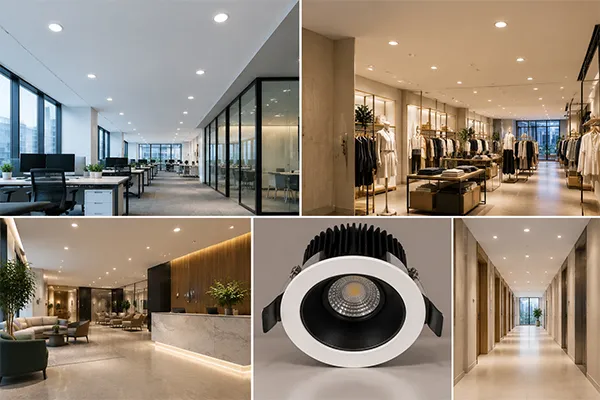
Start with the environment, not the lowest quotation
The best SKU mix depends on what the buyer intends to serve. For example, a wholesaler supplying electrical contractors may prioritize standard dimensions and fast replenishment. A local brand serving interior designers may need premium trim finishes, warmer CCT options, and higher color-rendering choices. A project contractor may focus on approved samples, reliable delivery schedules, and consistent specifications across several shipment batches.
We normally encourage buyers to map their range in layers.
1. Build a core, repeatable range
A core range should cover the most common commercial requirements without creating unnecessary inventory complexity. It may include selected combinations of:
- Common cutout sizes used in the target channel
- Several practical wattage levels
- Popular color temperatures, such as warm white and neutral white
- A limited number of beam-angle options
- Standard white and black finishes where relevant
- Non-dimmable and dimmable configurations based on demand
The exact combination should come from the buyer’s own sales data, installer feedback, and local project requirements. We do not recommend copying another market’s SKU list without reviewing local conditions.
2. Add differentiated project or brand options
Once the core products are stable, buyers can add options that create channel differentiation. OEM/ODM development can help support this approach. At Upward Lighting, we can discuss customization of color temperature, wattage, beam angle, CRI, and surface finish colors according to the product brief.
For example, a local brand may create a focused hospitality series with warmer CCT, black anti-glare trims, and selected beam angles. A building-material channel may prefer a straightforward white-trim series with clear cartons and easy-to-understand wattage choices.
Customization is valuable when it supports a clear market position. It is less valuable when every order changes without a forecast or replacement plan.
3. Evaluate the ceiling and electrical conditions
A well-designed product can still fail commercially if it does not suit the installation environment. Buyers should confirm:
- Ceiling material and thickness
- Cutout tolerance and spring-clip suitability
- Ceiling void depth
- Driver location and wiring access
- Input voltage and frequency
- Dimming protocol, if required
- Ambient temperature and ventilation conditions
- Moisture or IP requirements where applicable
- Local project documentation requirements
Qualified lighting, electrical, and installation professionals should review application-specific decisions. We can support product specification discussions, but the final site design and compliance assessment should reflect the actual project conditions.
How Can Supplier Control Reduce Downlight Procurement Risk?
Procurement risk does not appear only when a product fails. It can appear when quotations are slow, specifications change between orders, samples are not documented, delivery timing becomes uncertain, or a supplier cannot support a small initial launch. These issues can affect a buyer’s ability to win and retain commercial customers.
Supplier control reduces commercial LED downlight procurement risk when the supplier confirms specifications clearly, supports sample and small-batch evaluation, performs defined pre-shipment quality checks, communicates quickly, and maintains an organized supply process. Buyers should treat these controls as risk-reduction measures, not as guarantees that no defects or field issues will ever occur.

Quality control should be visible in the buying process
At Upward Lighting, every product undergoes a 100% aging test of 4 to 8 hours before shipment. We use this process as a pre-shipment quality-control step to identify obvious operational issues before goods leave our facility.
However, we state the boundary clearly: an aging test does not prove lifetime performance, guarantee maintenance-free operation, or eliminate the possibility of future failures.10 Actual operating life depends on factors such as installation quality, electrical conditions, thermal environment, usage pattern, and the product configuration.
Buyers should ask suppliers how they manage quality at several stages:
| Procurement stage | Useful supplier control | Buyer benefit |
|---|---|---|
| Inquiry | Clear specification review | Fewer misunderstandings before quotation |
| Sampling | Approved sample and documented requirements | Better alignment before volume production |
| Production | Defined component and assembly controls | Improved batch consistency |
| Pre-shipment | Aging test and visual inspection process | Opportunity to identify obvious issues before dispatch |
| Packaging | Label, carton, and quantity verification | Reduced channel and warehouse confusion |
| Repeat orders | Reference to approved specifications | Better replacement continuity |
Fast communication is an operational advantage
Commercial projects often move quickly. A buyer may need revised drawings, a quotation update, a new finish option, or a packaging confirmation before they can submit a tender or launch a product listing. Slow communication can cause a buyer to miss the opportunity even when the product itself is suitable.
Our team supports direct inquiry, quotation, specification, OEM/ODM, quality-control, and market-entry compliance conversations with overseas customers. We also support small-batch orders where appropriate, which can help buyers test a commercial range before committing to larger inventory.
I have seen a recurring pattern in quotation discussions: the first request is often broad, but the final product brief becomes precise only after the buyer considers the channel. That is why we favor structured communication over rushed assumptions.
A good quotation is not only a price document. It is an early control point for dimensions, technical options, packaging, lead time, and commercial expectations.
Certifications require project-specific verification
Upward Lighting products hold CE and RoHS certifications. These documents can support discussions around safety, environmental, and market-entry requirements in relevant contexts. Still, buyers should verify the validity, scope, document-product match, and target-market requirements for each intended destination and project.
CE and RoHS should not be treated as universal approval for every country, installation, customer, or tender.11 A project may require additional test reports, local registrations, marking rules, or documentation. Buyers should consult qualified compliance professionals or local authorities when the application requires it.
Frequently Asked Questions
Why are commercial LED downlights popular in renovation projects?
Commercial LED downlights can suit renovation projects because many models offer compact forms, common cutout options, and flexible light specifications. However, buyers should confirm existing ceiling openings, available void depth, wiring conditions, and replacement needs before selecting a model for a renovation program.
What should I compare besides wattage and lumens?
Buyers should compare cutout size, outer dimensions, beam angle, color temperature, CRI, glare characteristics, driver details, thermal design, trim finish, packaging, and batch consistency. These factors can affect installation cost, project acceptance, customer satisfaction, and the ability to supply matching replacements later.
Can OEM/ODM customization help a local lighting brand?
Yes. OEM/ODM customization can help a local lighting brand create differentiated commercial LED downlights through selected wattages, CCT options, beam angles, CRI levels, finish colors, packaging, and branding. Buyers should keep customized ranges controlled so they can manage inventory and repeat-order continuity effectively.
Does a 4–8 hour aging test guarantee a long product lifetime?
No. A 4–8 hour 100% aging test is a useful pre-shipment quality-control procedure, but it does not guarantee a specific lifetime or zero future defects. Field performance also depends on electrical supply, installation quality, ambient temperature, ventilation, operating hours, and application conditions.
Are CE and RoHS enough for every export market?
No. CE and RoHS documents may be relevant for certain markets and product requirements, but they are not universal approval for every destination or project. Buyers should verify current target-market regulations, project specifications, document scope, and any additional local compliance obligations before ordering.
Conclusion
Commercial LED downlights continue to offer strong potential because commercial spaces need practical, adaptable, and visually clean base lighting. Still, successful buyers do not treat every model as interchangeable or every market as identical. We recommend building an application-led range, verifying cutouts and technical details, documenting approved specifications, and reviewing compliance requirements for each destination. At Upward Lighting, we help overseas buyers develop commercial LED downlight ranges through responsive quotations, OEM/ODM options, small-batch support, and defined pre-shipment quality-control processes. Contact us to discuss your next commercial lighting specification or sourcing plan.
"Upgrade Your Lighting", https://www.energystar.gov/buildings/save-energy-commercial-buildings/ways-save/upgrade-lighting. International energy-agency reporting documents the continued transition toward LED lighting and its importance for reducing lighting energy use in buildings, including commercial applications. Evidence role: statistic; source type: institution. Supports: Independent evidence on LED adoption and the role of efficient lighting in commercial building energy use and retrofit activity.. Scope note: Broad lighting-market evidence does not by itself measure demand for recessed commercial downlights in every country or sales channel. ↩
"Ambient lighting - Wikipedia", https://en.wikipedia.org/wiki/Ambient_lighting. Architectural-lighting references define ambient or general lighting as illumination intended to provide an overall level of visibility and visual comfort within an interior space. Evidence role: definition; source type: education. Supports: The role of ambient or general lighting in providing overall illumination within interior environments.. Scope note: Whether recessed luminaires make a ceiling appear less crowded is an aesthetic judgment that depends on the specific design. ↩
"Solid-state lighting metrology", https://www.nist.gov/programs-projects/solid-state-lighting-metrology. Lighting research and CIE-based guidance recognize glare, illuminance uniformity, and chromaticity consistency as factors affecting visual comfort and the perceived quality of illuminated interiors. Evidence role: mechanism; source type: research. Supports: That luminaire photometry, placement, glare control, and LED color consistency affect perceived visual comfort and uniformity.. Scope note: The evidence does not establish that every unsuitable fixture choice will cause schedule delays, which also depend on project management and installation conditions. ↩
"LED Light Beam Angles", https://greencreative.com/lighting-academy/lighting-guide/led-light-beam-angles/. Lighting-design guidance explains that luminaire photometry, mounting height, spacing, and correlated color temperature affect light distribution and the visual character of interior spaces. Evidence role: mechanism; source type: education. Supports: Lighting-design guidance explaining that luminaire distribution, mounting geometry, and correlated color temperature influence illumination patterns and visual conditions.. Scope note: Such guidance supports the design principle, not the suitability or performance of any particular downlight model. ↩
"Color rendering index", https://en.wikipedia.org/wiki/Color_rendering_index. The International Commission on Illumination defines the general colour rendering index as a measure derived from the color shifts of specified test-color samples when illuminated by a source relative to a reference illuminant. Evidence role: definition; source type: institution. Supports: The definition of the general color rendering index and its use in describing the fidelity of color appearance under a light source.. Scope note: CRI does not fully characterize all aspects of color preference, saturation, or the suitability of a source for every retail or hospitality application. ↩
"Luminaires V2 0 Draft 2.pdf", https://www.energystar.gov/sites/default/files/Luminaires%20V2%200%20Draft%202.pdf. U.S. Department of Energy technical guidance notes that LED luminaire performance and reliability are influenced by optical design, driver electronics, thermal management, and the integration of system components. Evidence role: general_support; source type: government. Supports: That LED luminaire performance depends on interacting optical, electrical, thermal, and mechanical characteristics beyond nominal wattage and light output.. Scope note: This supports the general non-equivalence of luminaires with similar headline ratings but does not assess the quality of any named product or production batch. ↩
"[PDF] Application Summary Report 14: - LED Downlight Retrofit Units", https://www1.eere.energy.gov/buildings/publications/pdfs/ssl/caliper_14_summary.pdf. Department of Energy LED guidance describes luminous output as one component of luminaire performance and emphasizes that thermal conditions and optical design affect reliability and visual comfort. Evidence role: mechanism; source type: government. Supports: That luminous flux is only one performance attribute and that thermal environment and optical control affect LED luminaire operation and visual comfort.. Scope note: The guidance does not determine whether a given product fits a particular ceiling opening or meets a project's lighting calculation. ↩
"DEVELOPMENT OF A FULLY AUTOMATED LED ...", https://tsapps.nist.gov/publication/get_pdf.cfm?pub_id=912240. U.S. Department of Energy LED technology guidance states that thermal management is important because operating temperature affects LED light output, color characteristics, and the reliability of LEDs and associated electronics. Evidence role: mechanism; source type: government. Supports: That elevated operating temperatures can affect LED light output, color characteristics, and component reliability, making thermal management significant.. Scope note: General thermal guidance cannot predict the service life of a specific luminaire without its measured temperatures, components, and operating environment. ↩
"Solid-state lighting metrology - NIST", https://www.nist.gov/programs-projects/solid-state-lighting-metrology. CIE-related research on LED color consistency describes chromaticity variation as a measurable production and system-performance issue commonly controlled through binning and specified tolerance regions. Evidence role: mechanism; source type: research. Supports: That LEDs and luminaires can vary in chromaticity and that color-consistency tolerances are measured and managed in production.. Scope note: Color-consistency literature does not demonstrate variation in a particular supplier's trim finish, lumen output, or mechanical dimensions. ↩
"8.3.1.4. Accelerated life tests", https://www.itl.nist.gov/div898/handbook/apr/section3/apr314.htm. U.S. Department of Energy guidance on LED lifetime measurement distinguishes short operational or screening tests from lumen-maintenance and reliability assessments based on defined long-term test data and projection methods. Evidence role: mechanism; source type: government. Supports: That LED lifetime and lumen-maintenance projections require defined long-duration test data and methods rather than a brief operational screening test.. Scope note: Lifetime-test methods may characterize particular LEDs or luminaires under specified conditions and do not guarantee field performance in all installations. ↩
"EU WEEE_RoHS", https://www.trade.gov/eu-weeerohs. European Commission guidance explains that CE marking indicates conformity with applicable European Union requirements for a product placed on the EU market, while RoHS restricts specified hazardous substances in electrical and electronic equipment within its scope. Evidence role: definition; source type: government. Supports: The scope of CE marking and the EU Restriction of Hazardous Substances framework, including their relationship to applicable EU legislation.. Scope note: EU compliance information does not establish conformity with non-EU rules, local installation codes, tender conditions, or product-specific documentation requirements. ↩